This week we welcome guest author, Chris Nickson, who tells us about his new exhibition soon to be launched at Leeds Central Library.
We generally think of a place as we see it now. That’s completely natural, it’s the way our brains work. But what we’re seeing is only today’s reality. Towns and cities are constantly evolving: buildings are torn down and erected, roads widened. Houses appear where there was once open land.
You get the idea.
I’ve always believed I know Leeds and its history pretty well. After all, my novels are set here, in different periods. Every day I imagine it in different decades in my head. But once I began to take a closer look at one small period, the 30 years between 1890 and 1920 for the exhibition A Copper’s Eye: Tom Harper’s Leeds, I realised I still have so much to learn.
Those three decades are the time frame for the 11 novels in the Harper historical crime series, which see Tom rise from detective inspector working out of Millgarth police station, all the way to chief constable. He’s married to Annabelle, who owns the Victoria public house at 8, Roundhay Road in Sheepscar. A suffragist, she becomes a poor law guardian after a change in the law allows her to run for the office.
In my books I’ve always tried to make Leeds as real as possible to the reader. I want them to smell it, hear it, walk on the cobbles. Some of the incidents I described actually occurred, like the Leeds Gas Strike of 1890, which formed the backdrop of Gods of Gold. A few real people slipped into the novels. Why not? They’re part of our history.
A global war decimated a generation of young men. The Spanish flu took its toll on Leeds. The economy changed and we slowed as a city of industry.
The intention behind the exhibition is to showcase some of those real events and people who are in the novels. To let people see them and bring them off the page.
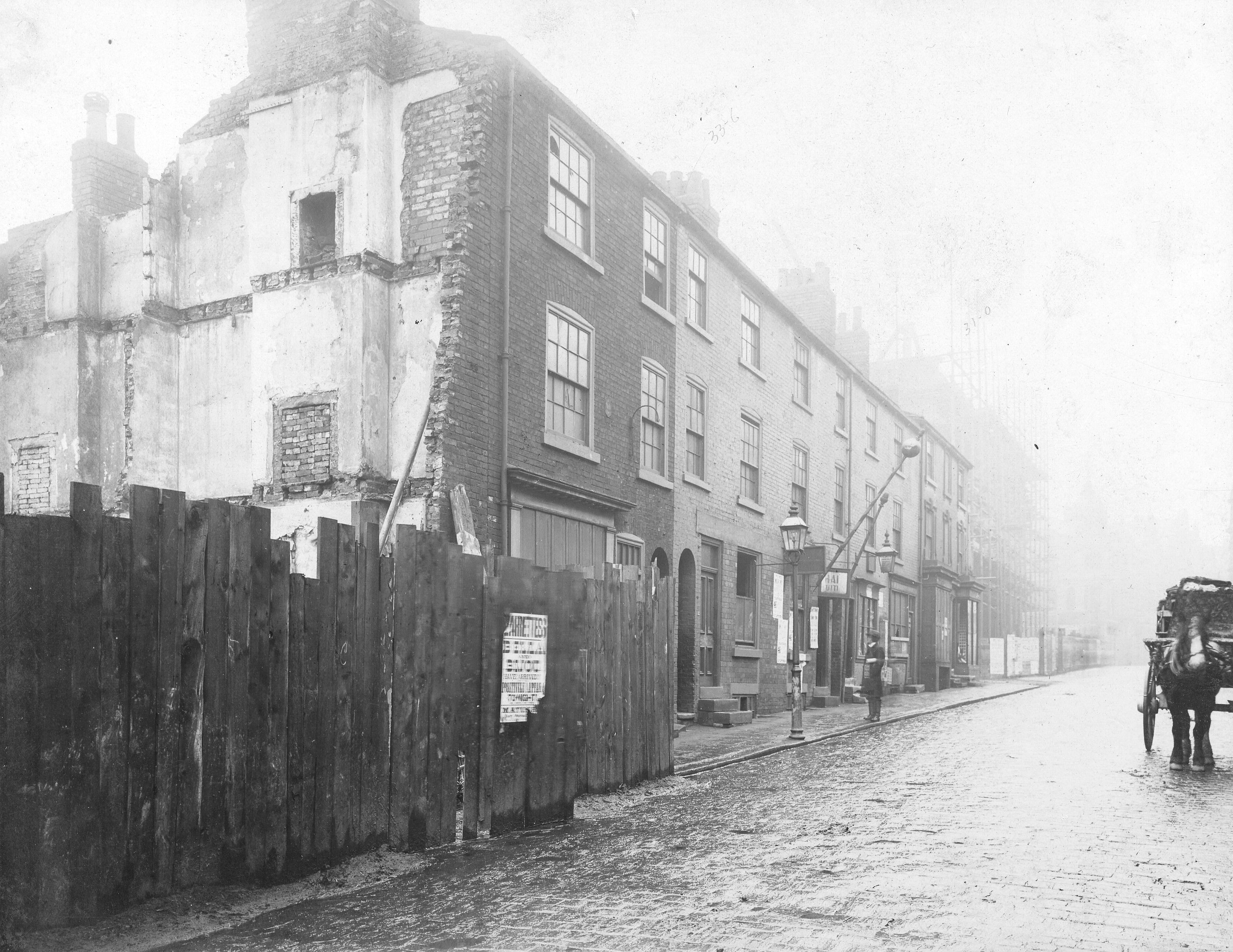
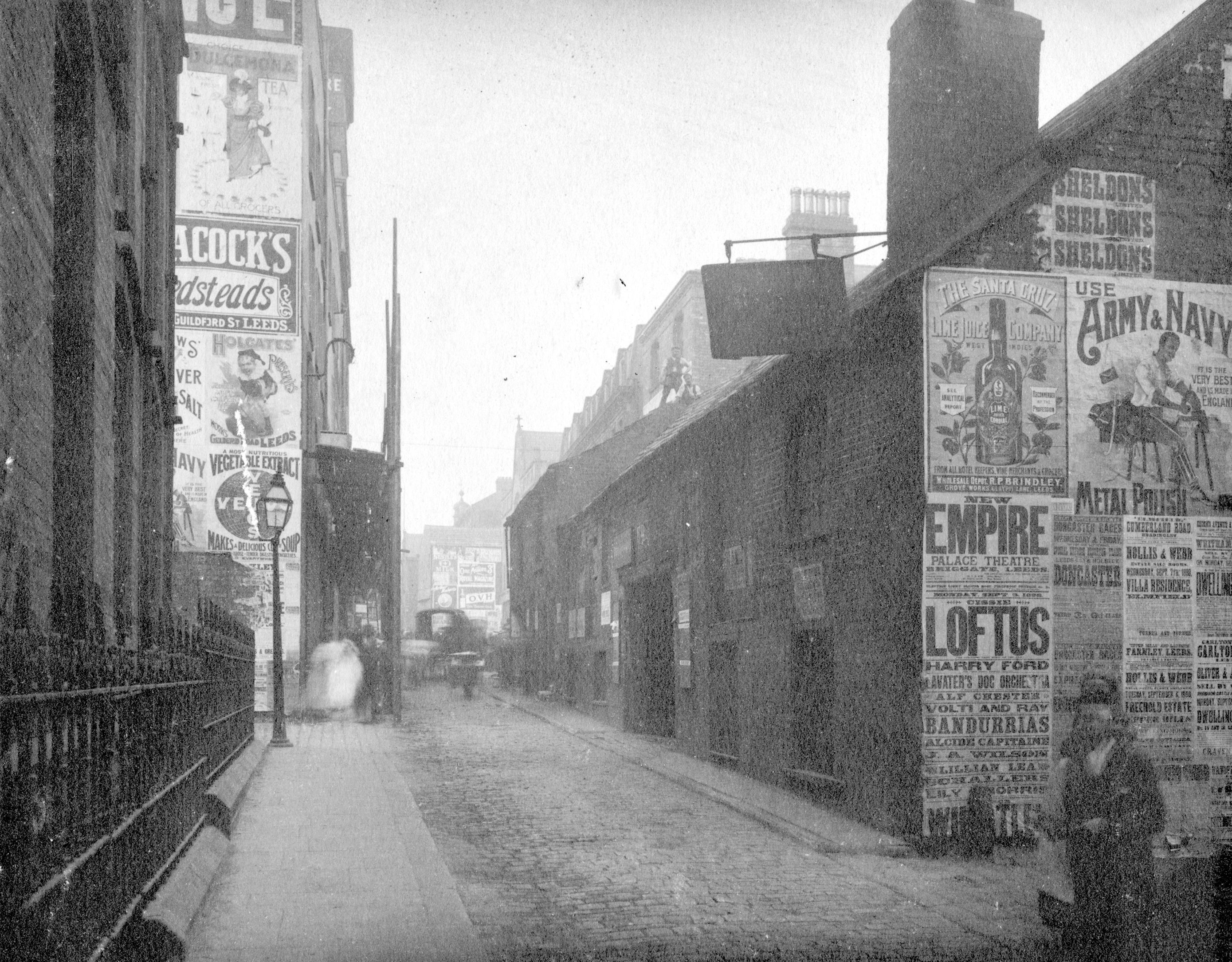
Old images from the remarkable Leodis archive of Great George Street and Lands Lane show a place that’s unrecognisable to our modern eyes. Even in the brief few years that the exhibition covers, Leeds changed so much. The grandeur of Albion Place (where Mary Harper, Tom and Annabelle’s daughter, has her secretarial agency) took shape. County Arcade, the glamorous beauty that connects Vicar Lane and Briggate, was built in 1900, tearing the heart out of the small courts and yards that were once homes to hundreds of people.
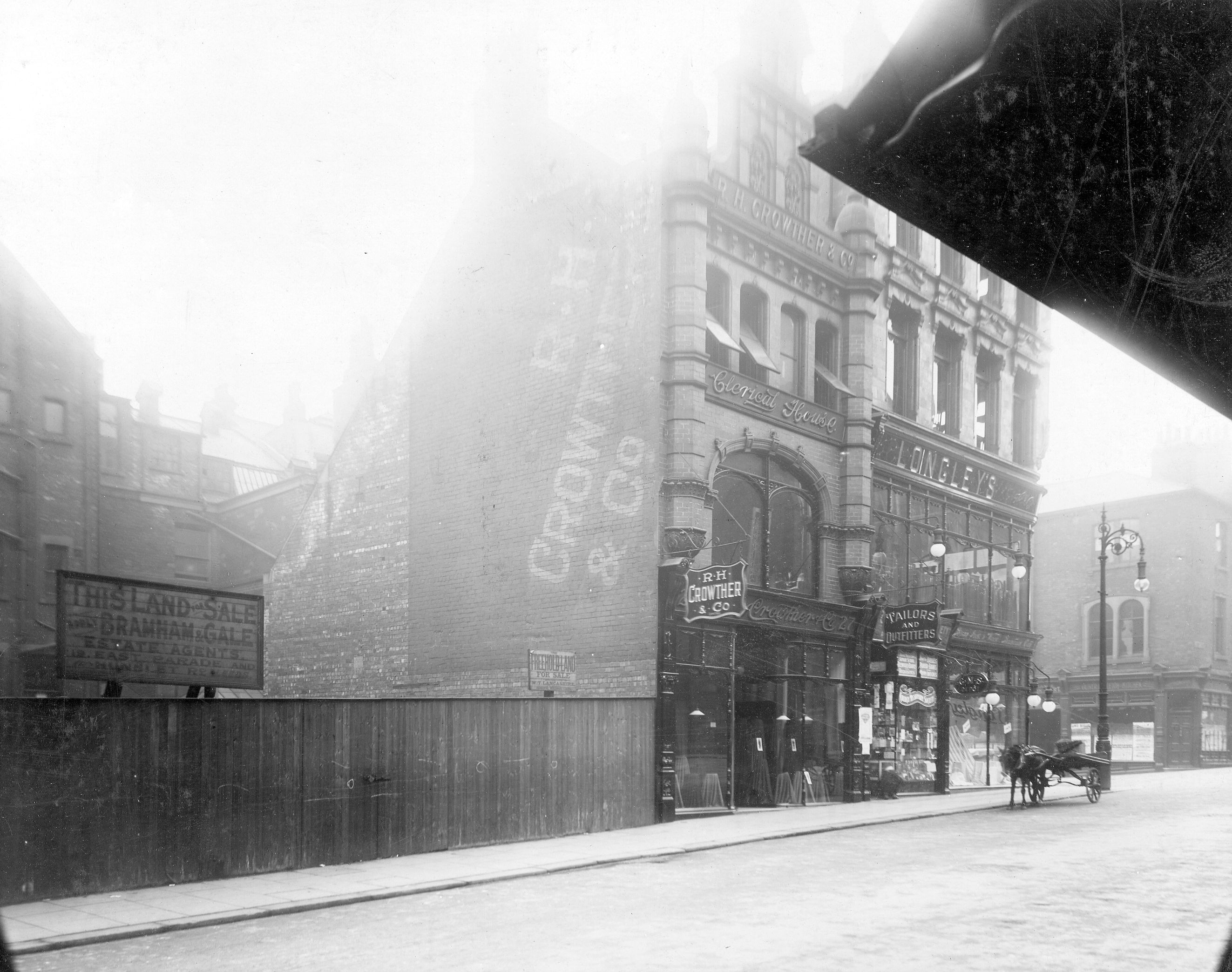
Cities evolve. They grow and change their character; it’s a necessity. A look at these old photos shows that. What really caught my eye, though, was the remarkable detail in the hi-res images. Study them and they come alive. They’re moments in time, and the archive really is filled with treasure. I’ve been spoilt for choice in selecting pictures for the exhibition, and I’m grateful to the staff in the Local and Family History Library for all their help, and the original idea of staging the exhibition.
I’ve chosen to bookend the exhibition with two shots looking up Briggate, from the 1890s and 1920s. It’s the one street that everyone in Leeds knows, the spine of the city centre. You can spot a few landmarks, like the clock above the entrance to Queens Arcade; it’s still there today. But plenty has changed, too. Not just in the century or more since these photos were taken, but in the three decades that separate them.
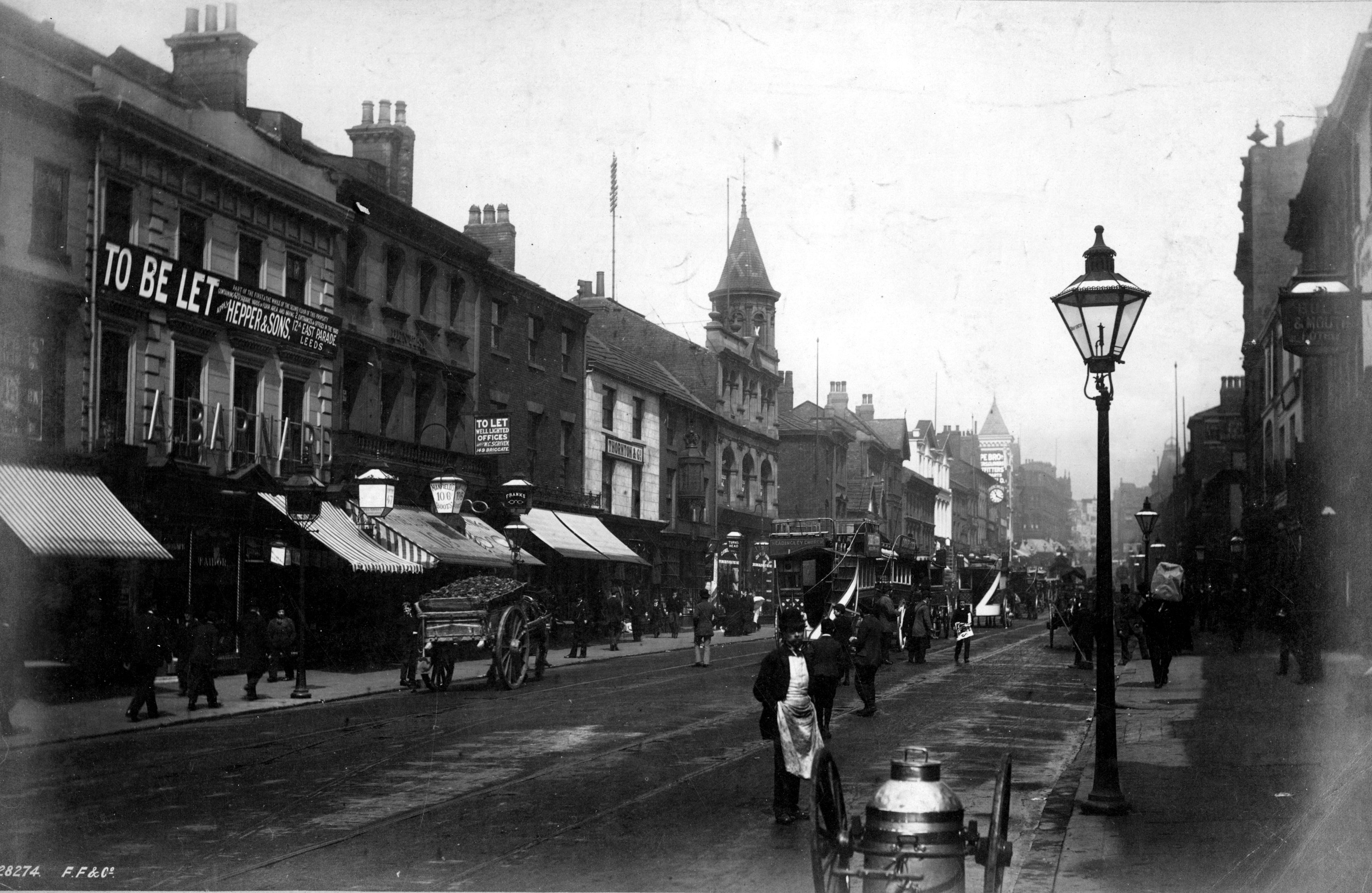
Leeds shaped me. It’s in my DNA, it’s in my bones. I grew up here, I moved back here. I’m trying to understand it by writing about it. For all its faults, I’m proud of it.
To close it all out I’m going to put up a sign: This history is your history. I hope you’ll see it that way. Whether your family’s been here for two hundred years or two days, you’re a part of this living, changing, growing place where we all live.
A Copper’s Eye: Tom Harper’s Leeds, 1890-1920 runs from 25th September to 7th October in the Local and Family History Library on the 2nd floor of Leeds Central Library. There will be a free event at 6.30 pm on 2nd October, with some micro talks about events, and some special guests, plus a recorded song adapted from a Tom Maguire poem by industrial ballad singer Jennifer Reid (Gallows Pole). The event is free but booking is essential.
Chris Nickson’s final novel in the Tom Harper series, Rusted Souls, is out now. Search the library catalogue to reserve your copy.
Delve into the Leodis archive here.
 The Secret Library | Leeds Libraries Heritage Blog
One Comment Add yours