Library and Digital Assistant Jan Pinder has been researching the history of Horsforth in our Central Library collections. This week on the Secret Library we hear some of Jan’s highlights from that work, as well as news of a research guide to aid other researchers into the Horsforth area, part of a series of guides exploring the towns and suburbs around the Leeds area…
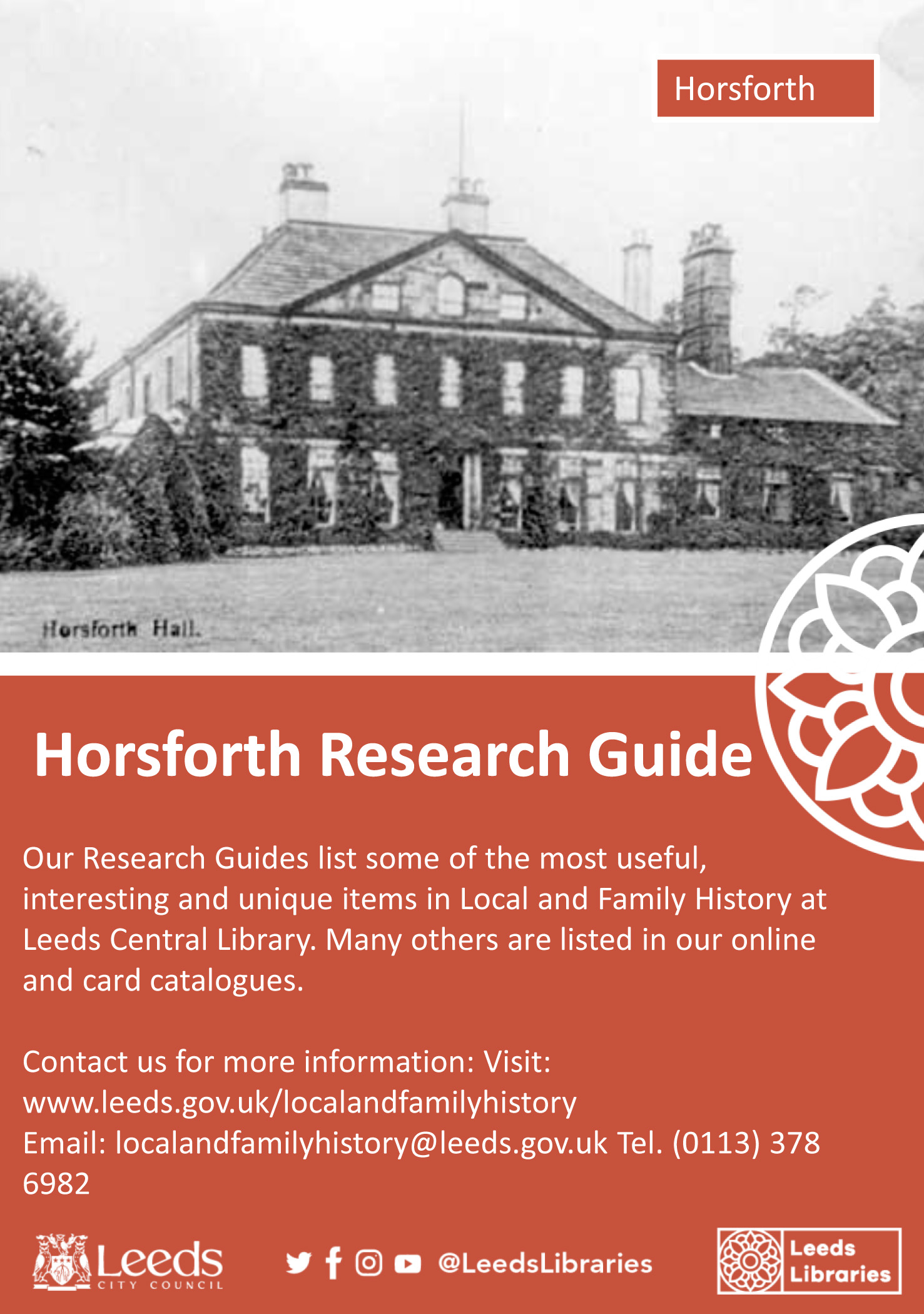
This Horsforth Research Guide has been designed as a starting point for anyone who is interested in the history of Horsforth. It covers the general history of the town, collections of images, newspapers and newsletters, maps, religion in Horsforth, education and industry. The variety of topics have been selected to demonstrate the wide range of items and resources available at the Central Library relating to Horsforth. This post will focus on a number of interesting (but maybe little known) Horsforth historical facts, events and stories, details of which can be found in the Guide.
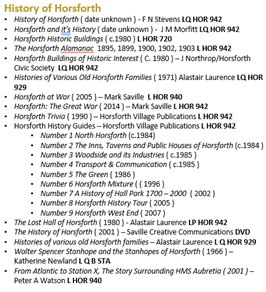
The History of Horsforth section of the Guide lists a number of books and publications that reflect the rich and varied history of the town and also reveal some of those interesting facts, events and stories that have helped shape Horsforth’s unique history.
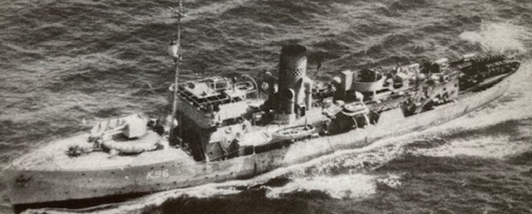
For example, did you know that Horsforth has a link to the capture and seizure of an enigma machine during World War II? In November 1941 the HMS Aubrietia was adopted by the people of Horsforth, who raised £241 000 following a warship week National Savings Campaign, which was over twice the target figure of £120 000. That year the Aubrietia was active as a convoy escort when she sighted and depth charged the German submarine U-110, leading to the capture and seizure of a German Naval Enigma (enigma machine) and it’s code book. For more information please see From Atlantic to Station X, The Story Surrounding HMS Aubrietia (2001 ) – Peter A Watson L HOR 94
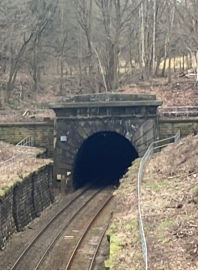
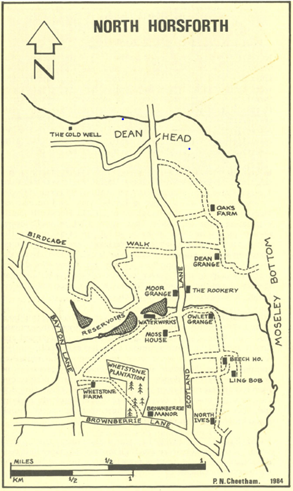
The Horsforth History Guides, published by Horsforth Village Publications, provide lots of detailed information on the history of the town. For example, numbers 1 and 4 (North Horsforth and Transport and Communication L HOR 942) describe the impact of the opening of both the railway line and the Bramhope tunnel in 1849. Almost two thousand men and three hundred horses had been employed to move thousands of wagonloads of earth each day during the construction of the tunnel, which is still said to be one of the longest in Britain. At the end of the working day, scenes of drunkenness and violence were common amongst the workers, as they had little to do but drink. It is reported that when the contractor tried to cut off alcohol supplies troops had to be called in to restore order! A beer house named the Bay Horse was consequently opened at Dean Grange by the owner Robert Ingham and boxing matches promoted there to divert and amuse his customers. Although the beerhouse is long gone, The Bay Horse Bridge still stands today.
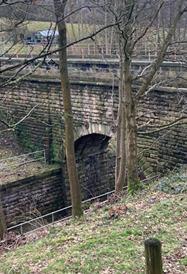
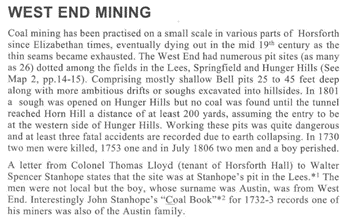
Over the years Horsforth has unfortunately had its fair share of tragedies. A number of men were killed during the construction of the Bramhope tunnel and many more have perished in coal mining accidents during the eighteenth and nineteenth centuries. Over the years Horsforth has had several pits, comprising mostly of shallow Bell Pits. Working these pits could be extremely dangerous and at least three fatal accidents are recorded due to the earth collapsing. This included the Hunger Hills pit disaster of 1806 when two men and a local boy were trapped and died. Please see Horsforth History Guide Number 9 (Horsforth West EndL HOR 942)
Another tragic story from Horsforth’s past can be found in Horsforth History Guide Number 5, (The Green L HOR 942). On 10 June 1891 the body of six-year-old Barbara Waterhouse was found in a doorway in Alexander Street in Leeds City Centre, just to the rear of the Central Library. Her murder shocked the people of Horsforth, who had been searching for her since she was reported missing from her home in Alma Yard four days earlier.
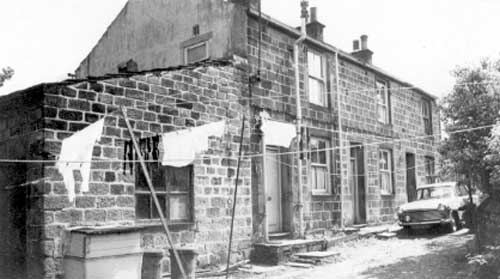
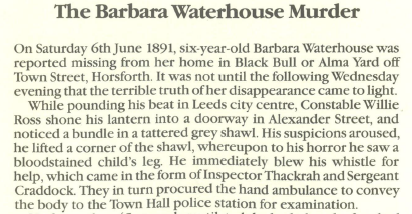
Walter Turner, a 32 year old weaver was charged with the murder. He lived in a nearby house on Back Lane (formerly the Boot and Shoe Beerhouse) with his mother Ann. Mrs Turner reportedly told a friend that she had found the body of a young child in her cellar. She then helped Walter to dispose of the body by bundling the body into a large tin box, transporting it to Leeds and leaving it in the doorway on Alexander Street. Turner was hanged at Armley Jail on 18 August 1891 (see Horsforth History Guide Number 5 The Green L HOR 942 ).However, Barbara’s injuries bore a resemblance to a similar crime at Manningham in Bradford two years earlier and some have speculated in recent years that Turner may not have been responsible for the murder, merely the disposal of the body.
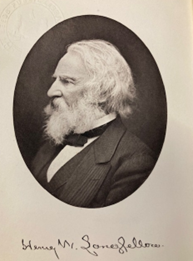
Horsforth also has a notable literary connection. The distant ancestors of the well-known American poet Henry Wadsworth Longfellow (1807 – 1882) came from Horsforth and were first mentioned in Horsforth records in the 1600s. At some date during the 1670s a William Longfellow, the great-great-great grandfather of the poet, took the brave decision to sail to New England (now the US) and settled there. It is probable that the modern place name Poet’s Place in Long Row is linked to the family, although it is thought that the site of the Longfellow home was the present Bedford Court on Broadgate Lane, now a care community for the elderly (for more details please see Horsforth History Guide Number 8 Horsforth History Tour L HOR 942).
Horsforth played an active role in the war effort for both the first and second world wars. Horsforth: The Great War L HOR 942 provides an in depth insight into life in Horsforth during World War I. Besides listing the shops and business premises in Horsforth at the start of the war, it also has profiles of individual soldiers and their families, together with cuttings from each year detailing both local and global events as the war progressed. There are sections on the Munitions Factory at Newlay, the Belgian refugees who were evacuated to the town and the role played by the women of Horsforth. The individual profiles are particularly poignant as they demonstrate the devastating personal experiences of Horsforth families. For example, we are introduced to the Rushworth family, who lived at North Ives Farm, off Scotland Lane. They had six children, the eldest two sons being old enough to serve in WWI. Both were killed in action, Alec in 1916 aged 20 and Thomas in 1917 aged 19. Alec had been training to be a teacher when he enlisted. He saw some fierce fighting and was awarded the Military Medal, although his parents only found out about this after his death. Alec sustained fatal wounds when a shell landed a direct hit on his dug-out. Thomas was joining his father in farming. He joined up after receiving a white feather ( which denoted cowardice ) in the post just as he turned 18. On enlisting, Thomas was posted to France and was soon promoted to Lance Corporal. Thomas met his death when a shell landed whilst he was sitting around a fire with other soldiers. His body was never found and he is commemorated at the largest Commonwealth War Cemetery in the world, one of 8 500 soldiers with no known grave.
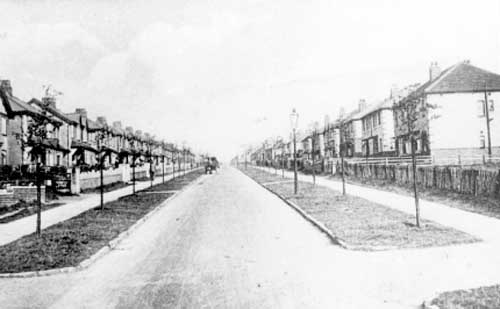
Stanhope Drive in Horsforth was completed in 1922 and was to be a memorial to all those who had fallen in the Great War. That year a tree for each of the 201 who had died (then the official number) was planted on either side of the road and three years later a brass plaque with the name of each soldier was added.
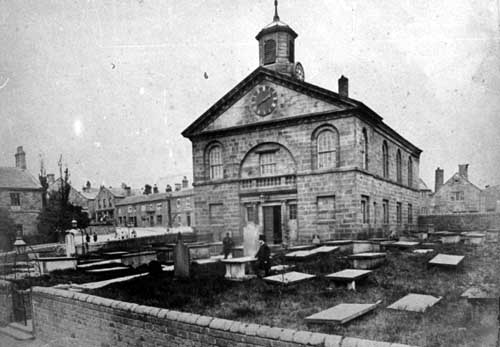
Special mention should be made of the Leodis website, from which several photos on this post have been taken. Leodis has an extensive collection of hundreds of interesting photographs of Horsforth in the past, including the one shown below of the Bell Chapel on the Green. A chapel existed on this site from the sixteenth century, but the one shown in the photograph was dated from around 1757. As the town grew it became far too small to cope with the demands of its parishioners and services were transferred to the new and much larger St Margaret’s church in 1883. The Bell Chapel was finally demolished in 1885-6, but one of the clock stone faces remains in the garden of rest (see Horsforth History Guide Number 5 The Green L HOR 942
Finally, a post on Horsforth history would not be complete without a mention of Horsforth Museum, situated on the Green at the bottom of Town Street. Open from Easter to the end of November, it houses a range of interesting exhibits which are drawn from all aspects of life in and around Horsforth. These include exhibits from the two world wars, including information and artefacts relating to the story of the Corvette Aubrietia and its role in the capture of the enigma machine. In addition, there are also regular talks and events for those interested in Horsforth’s history. For further information please visit https://horsforthvillagemuseum.wordpress.com/
To see the full set of area research guides – including the Horsforth one – please visit our Research and Collection Guides page
 The Secret Library | Leeds Libraries Heritage Blog
3 Comments Add yours