To mark Earth Day 2024 we welcome Dr. Henry Irving from Leeds Beckett University, who follows a popular talk given at the Central Library last week with an article exploring the surprising recent history of waste and bins in Leeds…
Update: Dr Irving’s talk is now available to view on YouTube
If I asked you to name a significant place in your home, the rubbish bins might not be your first answer. But bins are a place where plenty of significant things come together. The way we use them is shaped by habit, but also by competing concerns about resources, value, and public health. In the most obvious way, what we put in the bin connects the things we buy to the world around us. Bins are physical symbols of the way we understand waste – and places where our private lives interact with a range of local, national, and international laws.

I recently gave a talk about bins at Leeds Central Library. The talk was called ‘A History of Leeds in Five Bins’ and was part of the Cultural Conversation lecture series. It told a story that began with Victorian ash pits and ended with the modern wheelie bin. But I warned that it was not a simple story of progress. Our relationship with waste has instead involved moments of rapid change and plenty of paths not followed. If you want to hear the whole thing, you can watch a recording of the lecture here: https://www.youtube.com/watch?v=oIeLaMkFXng
There was a very good reason for talking about bins in Leeds. That is because our city was at the forefront of many changes that are easily taken for granted.
The most obvious is the use of a wheelie bin to collect a mix of materials for recycling. People who work in the waste sector call this a ‘comingled’ collection, although they usually refer to ‘green bins’ when talking to anyone who is not an expert. Many councils use a green bin system. It is also the preferred option in government plans for ‘Simpler Recycling’ in England. And it is a system that can be traced back to Leeds in the early 1990s.
The story begins in the Kirkstall valley. This part of the city has a long association with waste management. The old Corporation of Leeds opened a state-of-the-art incinerator there in the 1940s. It burnt most of the city’s waste until the 1970s, when increasing amounts were sent to landfill. A waste transfer station was built on a nearby site. It is now home to the Kirkstall Household Recycling Centre and an award-winning reuse shop called Revive.
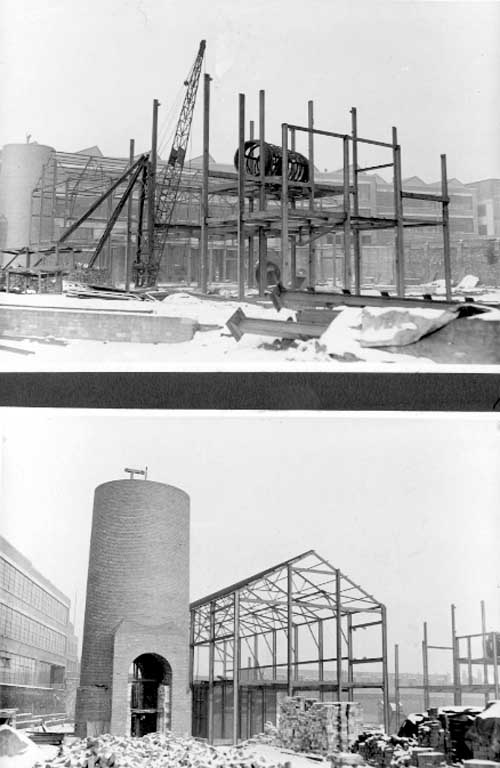
In May 1990, one hundred and eleven volunteers living near the waste transfer station were invited to take part in a recycling experiment. The project was the brainchild of a social enterprise called Save Waste and Prosper (or SWAP). It was designed to work out how much waste could realistically be recycled in our homes. The findings were then fed into a bigger project run by Leeds City Council, which eventually settled on a recycling system using green wheelie bins.
The first green bins appeared in Chapel Allerton in November 1990. They were decorated with stickers explaining how they should be used and accompanied by a sorting guide, a promotional video, and the number for a telephone hotline. The new system was called SORT – an acronym for Separate Out Recyclables Today. A selection of pamphlets and reports from the time are now held in the Local and Family History library.

Leeds was not alone in trying to stem the amount of waste that went to landfill. Sheffield had been crowned ‘Britain’s first recycling city’ in 1989 for setting up an ambitious network of paper, glass and metal can banks. People living in Bristol also enjoyed a kerbside recycling scheme run by the charity Friends of the Earth. But what made the Leeds scheme different is that it was run by the local authority and fully integrated with standard refuse collections. It was a model for things to come.
The experiments also helped determine the shape of our green recycling bins. The first SORT bins were made by a German waste management company with offices in Bradford. Its bins were split in half, so paper and card could be kept separate from metals and plastics. As the system was rolled out to more and more houses, mistakes became more common, and the council decided a mixed collection was better than nothing.
Throughout the 1990s, Leeds’s green bin system was held up as an example of best practice. It was introduced at a time when around 90 per cent of household waste was sent to landfill and no more than 3 per cent was recycled. Those responsible also hoped that it would raise wider environmental consciousness, encouraging people to reduce the amount of waste they produced in the first place.
While the SORT system has not achieved all the ambitions placed on it at the outset, it remains at the heart of the way Leeds deals with waste. And Leeds City Council have just announced one of the biggest changes in thirty years – with glass soon to be accepted in green bins. This is not a simple story of progress. But it might be a good opportunity to imagine what a future historian will say about the way we understand waste and our connection to the world around us.
 The Secret Library | Leeds Libraries Heritage Blog
Dr Henry Irving may like to consider (if he is not aware) of the Woolcombers report of 1845 in Bradford (by Sadler I think) that detailed the filth and unsanitary conditions that many of its citizens had to endure. When there work was replaced by machines their lot became even worse as they were then unemployed.