As part of Armed Forces Day month, Library and Digital Assistant Joey Talbot brings us the fascinating story of American Civil War veterans buried in Leeds…
This is the first part of this article – you can find part two here
Back in March, we received an email about gravestone inscriptions at Leeds General Cemetery in Woodhouse. The email was from Andrew Hopkinson of Sons of Union Veterans of the Civil War (SUVCW), and its timing couldn’t have been better.
He was looking to find out about two American Civil War veterans who were buried in the cemetery. This is tricky because Leeds General Cemetery sits within what is now the University of Leeds campus, and in 1965 it was converted into a public open space now known as St George’s Field. When this happened, most of the headstones were removed.
As it happens, I was heading to Leeds University anyway later that day, and I took a quick look in St George’s Field while I was there. The headstones in question seemed to have gone, but the enquiry piqued my interest. First of all, why were American Civil War veterans buried in Leeds? Were these Americans who later moved to the UK, or were they Brits, and if so what led to them fighting in the United States? But it was also timely because we had just started planning how to mark Armed Forces Day, and this seemed like a great avenue to explore further.
My questions about the veterans were soon answered, since Hopkinson and SUVCW Graves Registration Officer Michael Hammerson had already done extensive research into the history of these men and other American Civil War veterans buried in the UK. The two men buried at Leeds General Cemetery were William Hails Glover and John Hindle Stafford, and both were Yorkshire born and bred.
William Hails Glover was born in Leeds in 1833. He enlisted at Albany, New York, in 1858, serving first in the 1st United States Dragoons, then with the 3rd United States Artillery, which played a leading role in repulsing the Confederate attack at Malvern Hill, Virginia, and was part of the siege of the Confederate stronghold of Vicksburg, Mississippi. Glover’s five-year enlistment expired three weeks before the city surrendered.
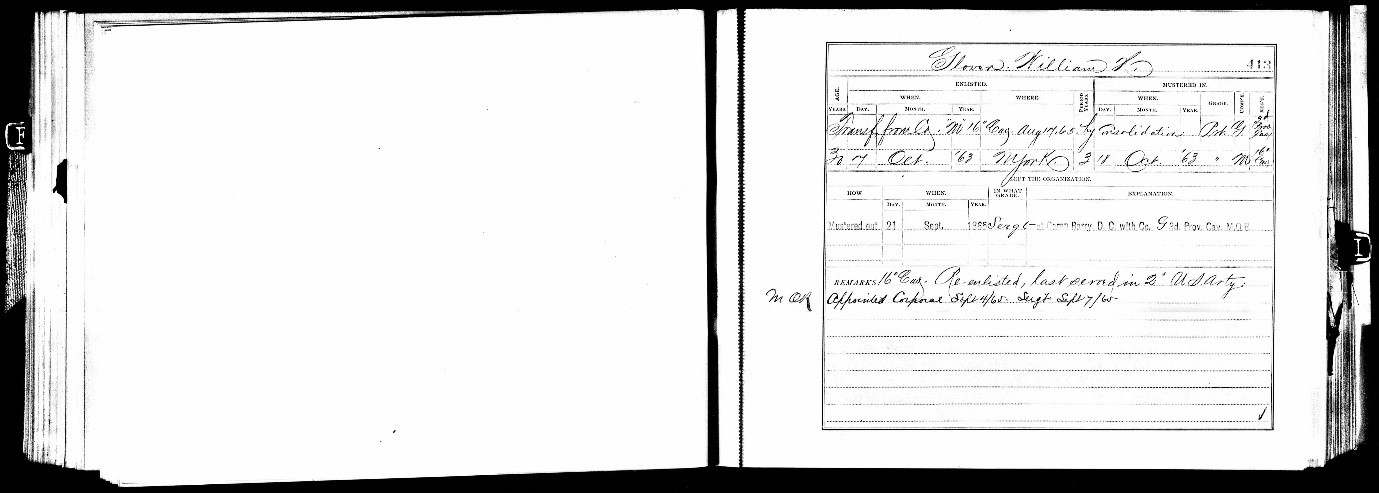
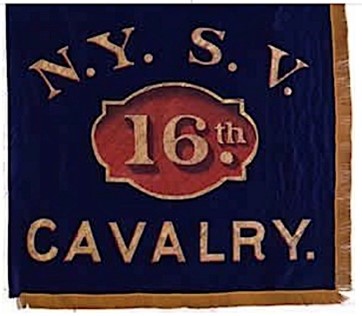
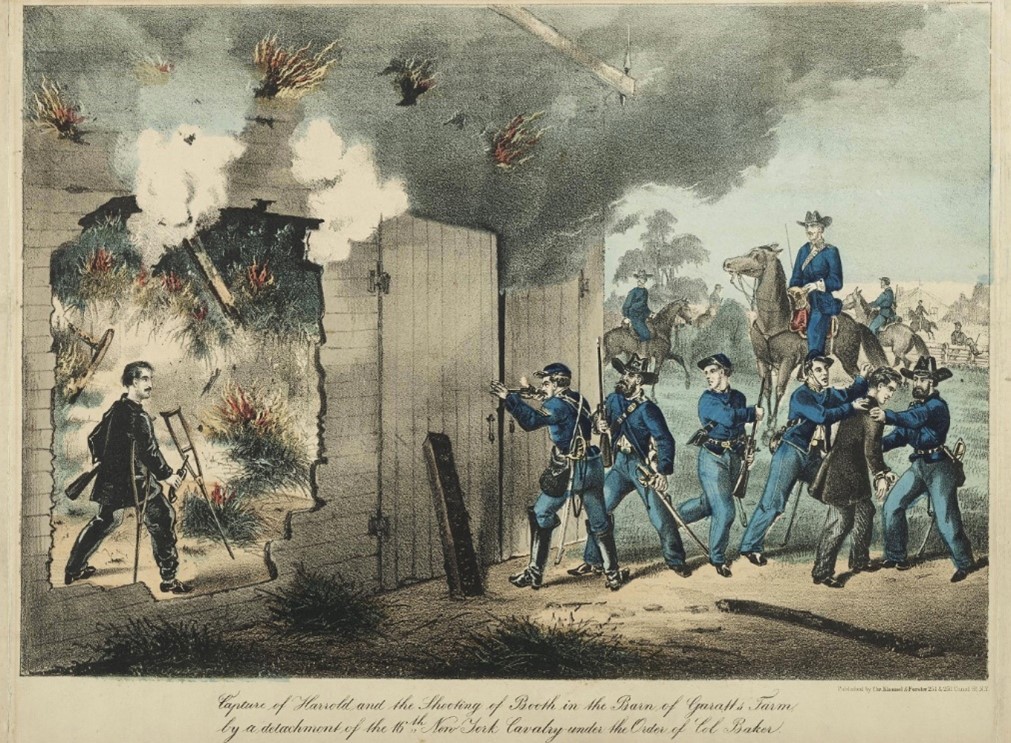
After his discharge, he re-enlisted with the 16th New York Volunteer Cavalry. This regiment is of particular interest, because in the hunt for President Lincoln’s assassin in April 1865, it was a detachment of the 16th New York Cavalry that cornered the fleeing actor John Wilkes Booth in a tobacco barn near Port Royal, Virginia. Booth refused to surrender and was shot and killed. Each of the 26 men in the detachment received a $1,658.58 reward. We don’t know whether Glover was a member of this detachment, but it’s intriguing to think that he might have been.
Glover was mustered out on 21st September 1865. He returned to Leeds, and his trade was listed in the 1871 Census as Librarian. This was exciting news. Could he have even worked in Leeds Central Library? Consulting our historic trade directories from the 1870s, I searched the municipal pages and soon found William Glover listed as Librarian at the Leeds Mechanics’ Institute. This was a key literary and educational establishment of nineteenth century Leeds, which opened its new premises in 1868 in the building on Cookridge Street which now houses Leeds City Museum.
Porter’s Directory of Leeds & Neighbourhood, 1872, describes the Mechanics’ Institute as follows:
Leeds Mechanics’ Institute and Literary Society, Cookridge Street, is a magnificent building, in the Italian style of architecture, of a rectangular form. It was erected in 1865-8, at a cost of over £20,000, from designs by C. Brodrick, Esq., the architect of the Town Hall, and is unequalled by any similar institution in the kingdom. It contains a lecture hall, library, reading-room, and fine-art gallery. The lecture hall will accommodate about 1,700 persons. The library has been carefully selected, and contains upwards of 16,000 volumes, amongst which are many of great rarity. The reading-room is a spacious and noble apartment, and is abundantly supplied with the London and chief provincial newspapers, periodical magazines, &c. In connection with the institution is a commercial and mathematical day school, and there are evening classes for males, under the superintendence of the masters of the day school. There is also a ladies’ educational institution ; and there are evening classes for adult females , under the superintendence of the governesses of the ladies’ educational institution. Mr. Thomas Dawson, president ; Jonathan Ogden Dayson, secretary ; Wm H. Glover, librarian ; James Asquith, hallkeeper.
The Annual Reports of the Leeds Mechanics’ Institution show that Glover took the post of Collector and Assistant Librarian (although this seems to have been frequently referred to as ‘librarian’) sometime between January 1867 and January 1868. He remained in this post until the year of his death, 1892. I hoped his long service might get a mention of some kind in the next year’s annual report, but there was nothing.
In the post-war decades, William Glover moved house many times: records from 1871, 1881, 1888, 1891 and 1892 have him living at a different address each time. Whether or not this was normal for the era, I’m not sure, but his final 1892 address was on the same street as John Hindle Stafford, the other veteran buried at Leeds General Cemetery, opening up the possibility that they knew each other.
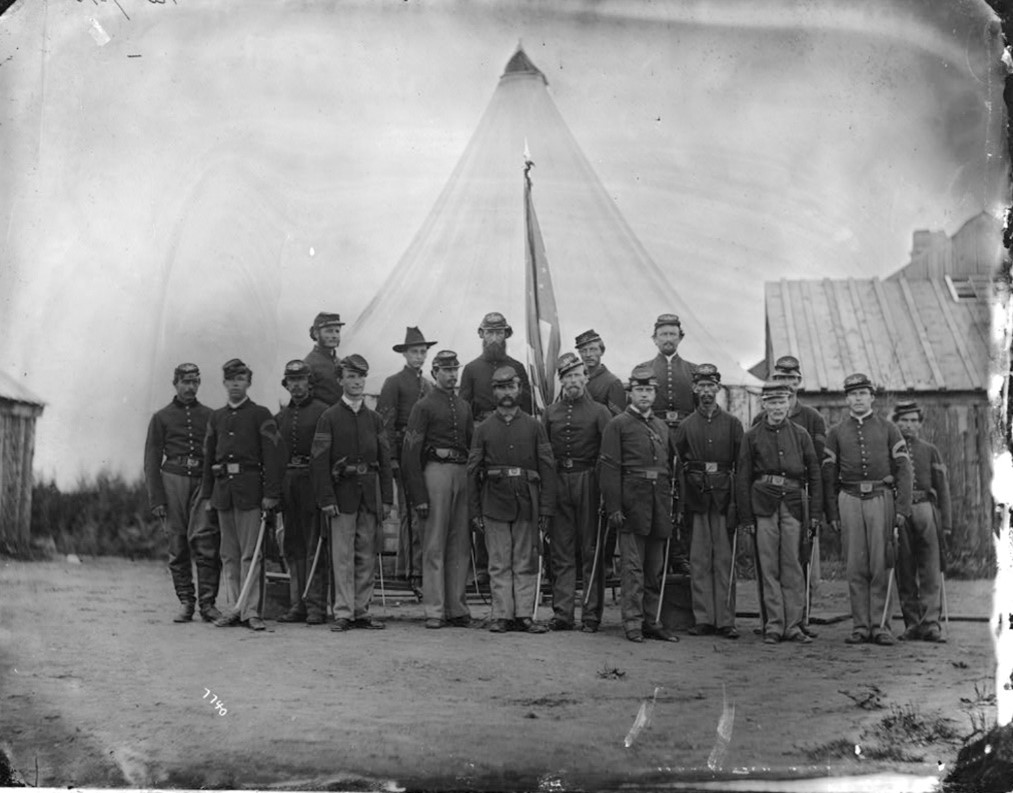
Stafford was born in Wakefield in 1839, and married Eliza Bruce on 2nd May 1859. As they don’t seem to appear in the 1861 Census they may have already emigrated to America by then. He enlisted at Malone, New York, in April 1861, as a Private in the 16th New York Volunteer Infantry, and was designated as a Musician in the regimental band. The regiment saw action at Antietam, site of the single bloodiest day of the war, and in the defeat at Chancellorsville. Later he re-enlisted with the 13th New York Volunteer Cavalry, which was assigned to suppress the New York anti-draft riots of 1863. After the war he returned to Leeds, eventually becoming a Turkish baths manager.
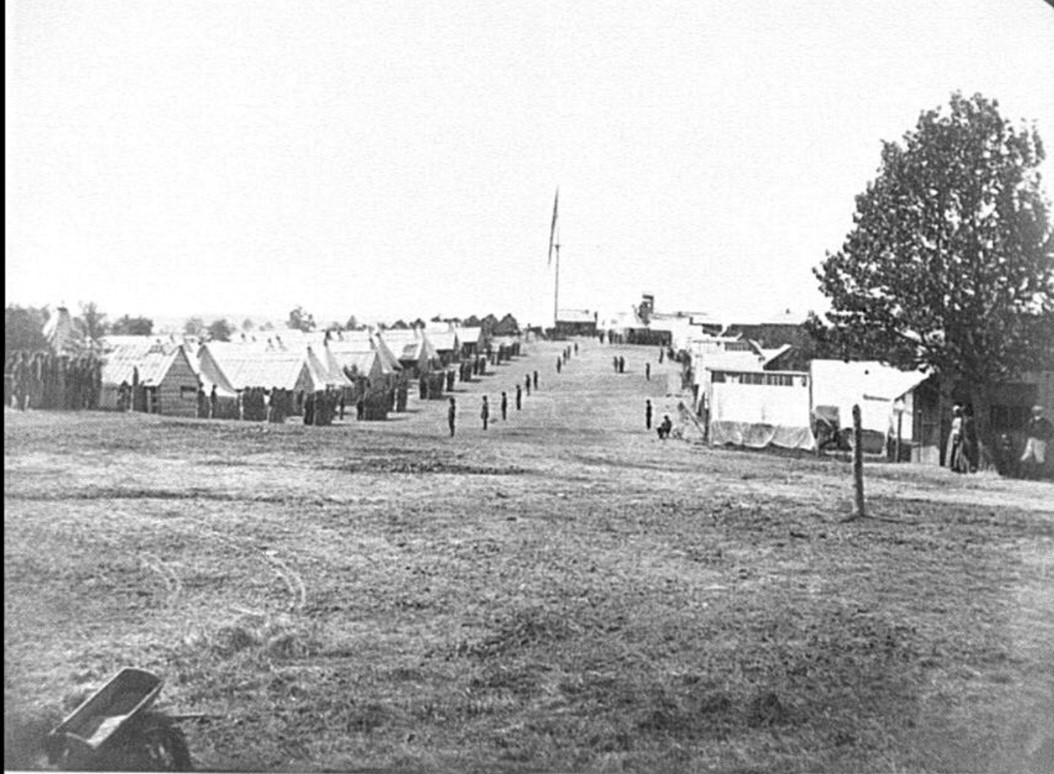
While I investigated Glover and Stafford’s backgrounds, Hopkinson sent me information about more American Civil War veterans buried in Leeds. By this point it became clear there were so many good stories here that we simply had to make them a focus of the Armed Forces Day exhibition. So we created a display, which is available to view in Local and Family History and will remain here until the end of June. The stories of some of the other Leeds veterans will be told in a future blog post.
 The Secret Library | Leeds Libraries Heritage Blog
Good afternoon I’m particularly interested in this week’s story (though they are all great) because my great grandmother’s brother mysteriously disappeared to the USA In 1862. He subsequently ended up In Australia where he jumped ship in Melbourne, It’s a long and complicated story and we still don’t know the end of it (he returned to Leeds, then having abandoned his wife and children came back to Australia and then disappeared again).
I wonder if there is any possibility at all that adventurous young men from Leeds went to the USA specifically to fight, as they would subsequently do in the Spanish Civil War??
Name WHITAKER BRADLEY, son of Leeds attorney James Bradley 1807-1865.Born 1840, died some time after 1888. He was a grocer by trade but a bit of a ‘rover’. Regarded as a black sheep by my branch of the family (and his own descendants). . Kind regards Margaret Ker Fremantle Western Australia This would certainly be an interesting twist to the story🙂
On Tue, 25 Jun 2024 at 16:31, The Secret Library | Leeds Libraries Heritage
Hi Margaret, I’m the Andrew Hopkinson mentioned in the blog. I asked my Sons of Union Veterans Grave Registration Officer, Michael Hammerson to look into Whittaker. Michael has been researching veterans for decades. Unfortunately, he’s been unable to find any record of him serving in the Civil War. Many veterans from the UK enlisted under aliases. But without knowing the alias we can’t find him. Presumably he’s the Whitaker Bradley born in Wetherby in 1840, married in Australia in 1868. There’s also a Whitaker Bradley who was a miner in California in 1871.
Hi Margaret,
Thanks so much for your interest in the article. Researching the history of American Civil War veterans, it can be difficult to know the reasons why people chose to enlist, especially if they were not already living in the United States, but some of them do seem to be adventurous young men who went abroad to fight.
It’s fascinating to hear about your great grandmother’s brother. I had a look on Ancestry for records relating to Whitaker Bradley, and I found a Crew record for him on a vessel named Mistress of the Seas, registered in St. John, New Brunswick, Canada, registration number J861035. He joined the ship on 21st March 1862, at Liverpool, England, in the capacity of Ship’s Boy with crew number 93. The voyage was due to finish back in Liverpool on 2nd July 1863, but Whitaker Bradley deserted the ship in Melbourne, Australia, on 2nd September 1862. From this record at least, it appears that he didn’t fight in the American Civil War. I hope this is useful for you!
Best wishes,
Joey
What an amazing investigation – somehow very satisfying that they returned to Leeds and settled as librarian and Turkish bath manager. Look forward to more stories!
Thanks so much for that Joey.Had the basic reference but not the detail as I don’t have a paid subscription so I especially appreciate your following up.
I guess we will never know what prompted Whitaker to leave home but I thought it an interesting coincidence in dates.
In the end whatever his intention, Melbourne proved too tempting because his uncle (James Bradley’s brother Charles) was there keeping a hotel on the road to the Goldfields. Said hotel was called…the Yorkshire Hotel.
Not simply nostalgia for the name, as the scenery in the area is uncannily like that around Mirfield where the Bradleys originated.