This week we welcome Leeds Beckett University student Emma Hays, who reports on a recent local history project based on resources in our Local and Family History department…The launch of the accompanying resource is at 1.30pm on October 31 at the Mill Hill Chapel (next to City Square).
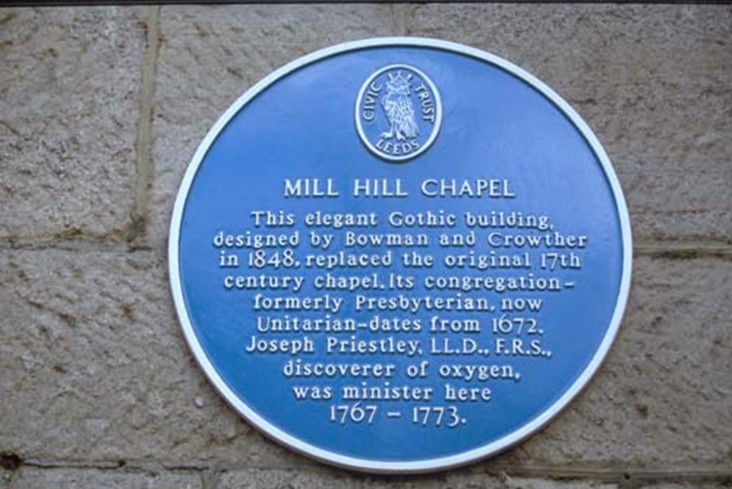
Mill Hill Chapel was founded in 1674 and for the past 350 years has been influential in the cultural development of Leeds. It’s ministers and congregation members have left their mark upon the upon the world, notably with the work of the celebrated Reverend Joseph Priestley, but also through their work in the city itself. From raising funds to create the Leeds General Infirmary and the development of the first subscription Library, Mill Hill’s influence and cultural reach has been vast. To celebrate 350 years of their work and activism, a timeline has been developed with Leeds Beckett University History students on the Public History Project module. Elements of research for this project was developed through the use of Leeds Library’s Local and Family History Library, whose collection helped us to understand and identify key figures within Mill Hill’s congregation and their influence upon the city. The project can be viewed here.
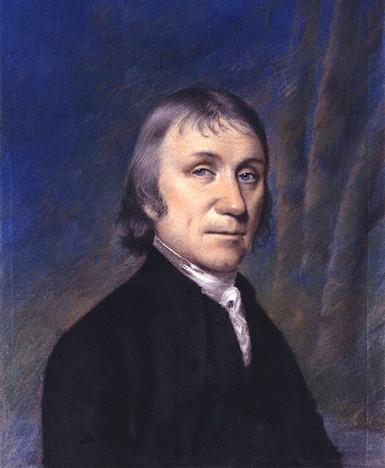
As mentioned above, the most easily recognised member of Mill Hill Chapel has been Reverend Joseph Priestly (1767-1773), whose work in field of chemistry led to the discovery of carbon dioxide and oxygen, and other gases. His life was one of the focuses of the project and led to the development of an interactive map that can be found here. His work with Mill Hill steered the chapel from Presbyterianism to Unitarianism, and while he only worked for the Chapel for six years, he earned the continued respect and support of his congregation. However, he was not the first minister to earn the continued respect of Mill Hill. The first, Richard Stretton (1672-1677), served a prison sentence for his ministership under the Five-Mile Act, which made it illegal for any non-conformist minister to serve within five miles of an Anglican parish they had previously served or preached at. During his time in prison he continued to search for new pastors, distributed literature around the UK about his faith, and became a well-respected non-conformist figure.
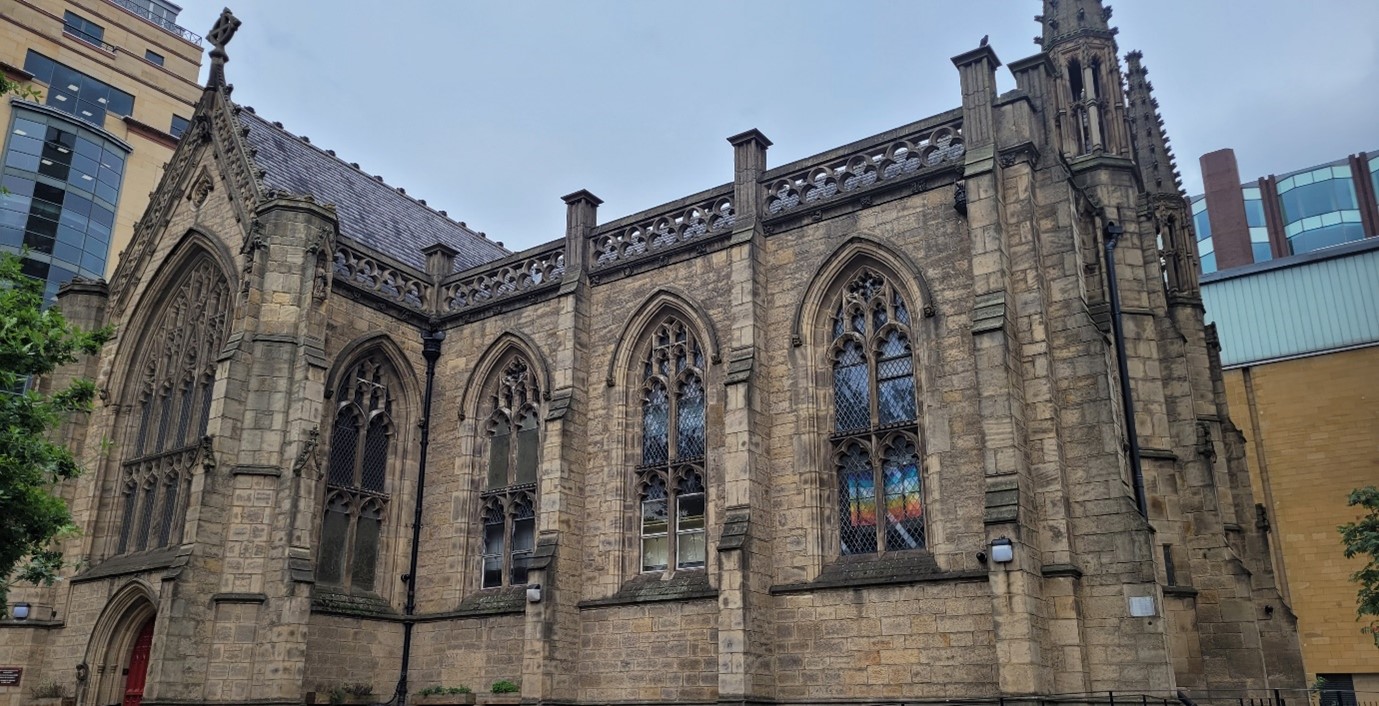
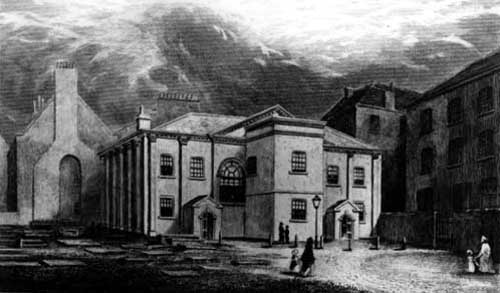
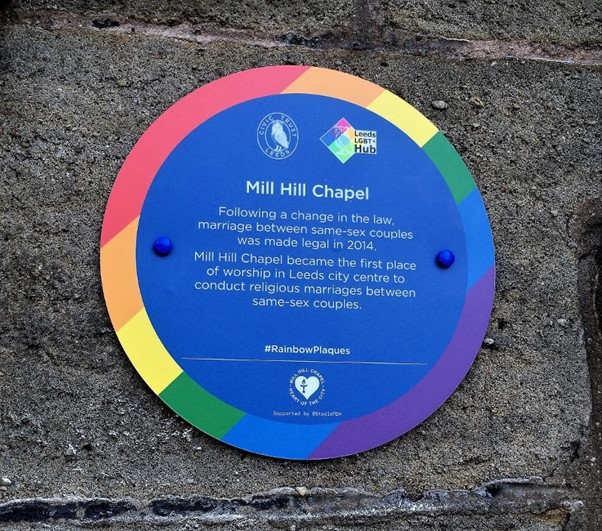
The theme of illegality, rebellion and protest is something that threads throughout this whole project. Non-conformist churches were initially illegal and were seen as immoral and against the Church of England, and yet the members of Mill Hill Chapel would continue to grow in influence and numbers regardless of this. Unitarianism (which denies the divinity of Jesus) would continue to be illegal until 1813 with the extension of the Toleration Act, but its followers would not really be viewed as equal in the eyes of law and politics until 1829, when the Test and Corporation Acts were repealed. This rebellious spirit is something that the members of Mill Hill Chapel have displayed over the past 350 years, with their determination to act in a way that reflects their beliefs in justice and equality for all people, ensuring that they were at the forefront of various social movements. Notable member of the congregation, Harriet Lupton, helped to form the Anti-Slavery Association in Leeds in 1853. Frances Lupton and Alice Cliff Scatcherd were involved in promoting the rights of women and Scatcherd was a prominent speaker for this movement. Most recently, Mill Chapel became the first religious building in Leeds to perform a same sex wedding, and actively participated in the Black Lives Matter movement.
Alongside being on the forefront of these movements, and initially a mostly middle-class congregation, the members had a direct impact on the landscape of Leeds. The Bischoff Family were one of the families that were able to help cement Leeds as an industrial town, with their investments in new and more expedient machinery to refine wool, they helped establish Leeds as the centre of the wool trade in Britain. Joseph Priestley was one of the founders of the Leeds Subscription Library, and helped to generate funds for the first Leeds General Infirmary, built near Park Square in Leeds, which made medical treatment more accessible for the urban working class. James Garth Marshall established a school with a library for working class children, and also gave land to the poor to create allotments.
During this project we visited Leeds Central Library, we managed to find some excellent primary sources which otherwise would not have been available to us. In particular, a first edition of Priestley’s work An Appeal to the Public on the Subject of the Riots in Birmingham, which showed the detrimental effect supporting the French Revolution had on Priestley’s life, can be found at Leeds Central Library.
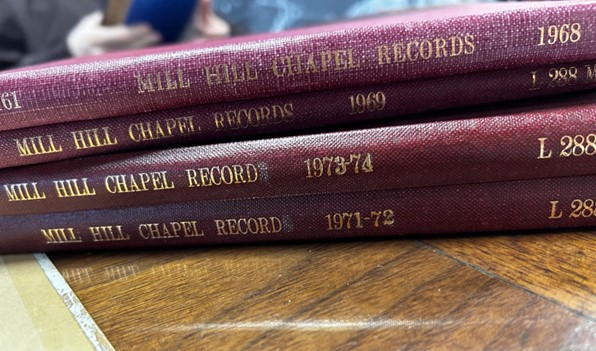
The letter written to him from the Mill Hill congregants can also be seen here. Another brilliant source were the Mill Hill Chapel Records which showed what a day looked like for Chapel congregants, logging who they visited, what they saw and how many hours they spent doing the work they did. Not only was this essential information, giving us a feeling for the amount of work the Chapel did, but it also provided great insight into how important they viewed the work they did. Visiting an archive is such a unique experience and each group used sources from different places and in different ways, but without the work of archives such as Leeds Libraries, projects like this would not be possible.
 The Secret Library | Leeds Libraries Heritage Blog

Really interested in this as I have family connections to Joseph Estlin Carpenter and to the Lupton family. The link is through George Buckton’s two daughers. Alice Mary married J E Carpenter and Emma married Alan Lupton.
Their mother Elizabeth was the sister of well known Wakefield Unitarian W T Marriott.
Very good research. Some members of this church were involved in the slave trade and owned enslaved people, this should be acknowledged.