
Leeds Libraries and the British Library are delighted to welcome the opening today (Friday May 9) of their co-production Voice of The Fans – a free exhibition exploring the past, present, and future of football fanzine culture.
Voice of the Fans features over 50 fanzines and fair few more objects and items. But, as you can imagine, two years of work have left much material on the cutting room floor. So, this week on the blog, librarian Antony Ramm brings you 10 short-but-hopefully-interesting snippets of information that didn’t make their way into the exhibition proper…Join us at Leeds Central Library from 9 May to 10 August to see the full exhibition proper. You can also browse our programme of accompanying events.
1.
Nobody really knows just how many football fanzines have existed in the UK since their emergence in the late 1970s and early 1980s. Until now, there’s been nothing approaching anything like a definitive list. Pete, one of our wonderful team of volunteers, took on this gargantuan research task for us and has, at the time of writing, produced a list totalling almost 1,700 distinct titles. Get in touch with us for more information!
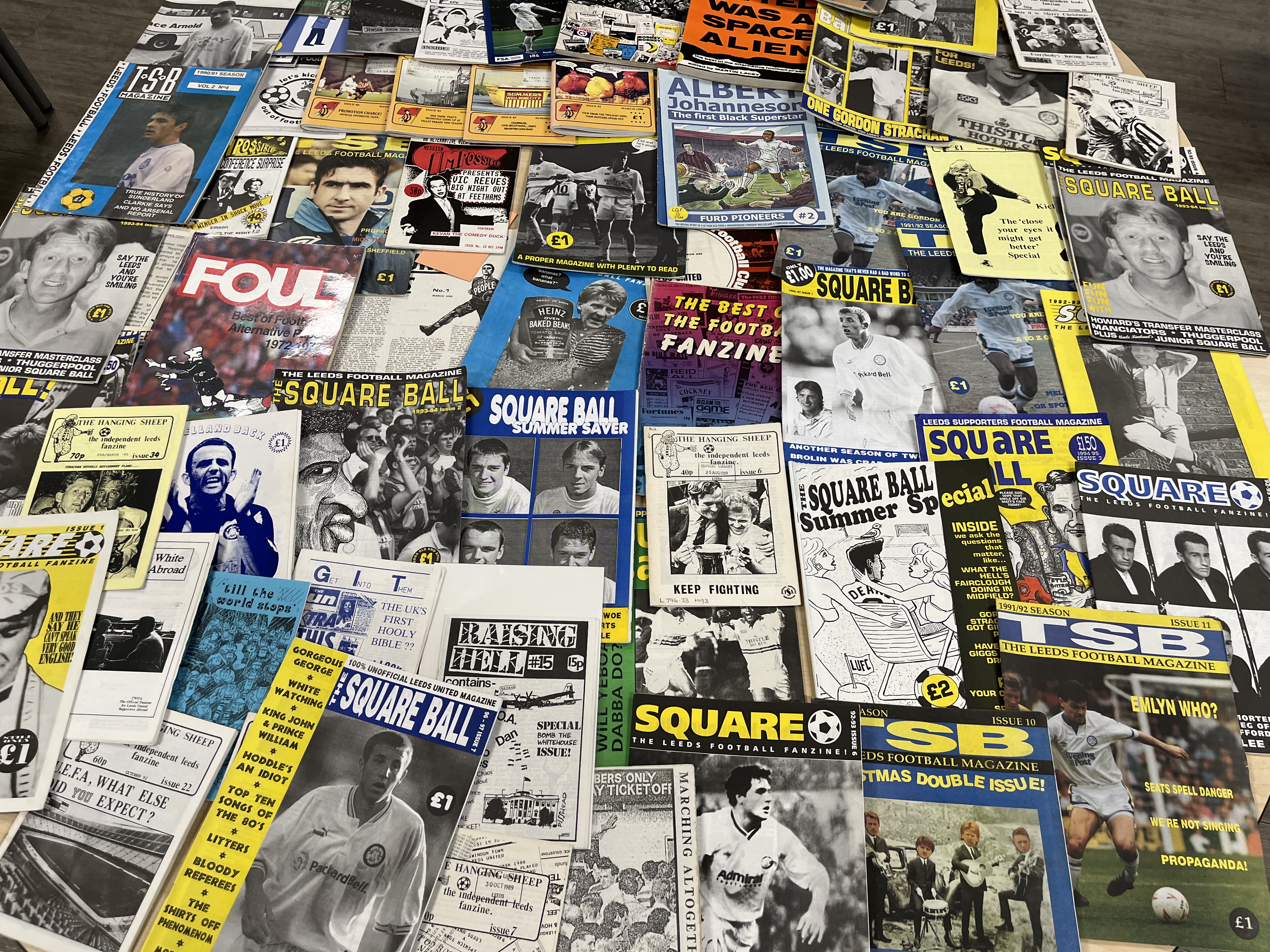
Pete has been featured on the Secret Library Leeds a few times already over the last few months, with articles that grew out of his research into Leeds United fan culture in the pre-zine era, particularly letters and articles in the local press. You can see all Pete’s articles elsewhere on this website, but look out for many more over the coming weeks and months. You can also follow his own blog site, dedicated specifically to stories and statistics that have emerged from his wider fanzine research.
Want to hear from Pete himself? He’ll be speaking about his research at our Football Heritage and Fandom: A Research Showcase event on June 26.
2.
Part of Pete’s ever-growing research was looking at the very quirky titles of fanzines, and trying to track down their origins. (Visit Voice of the Fans to see just a few of those amazing titles listed…and see if you can guess which clubs each relate to). Pete found that many of those names were lifted from song lyrics – no surprise really, given the close connections between football’s DIY culture and the parallel punk/post-punk/indie scenes. You can hear more about these connections in another of our upcoming events: Music, Football and Fanzines (July 8)
So, if you want something to listen to while exploring the exhibition, or while reading the latest edition of your preferred club’s fanzine, check out Pete’s curated playlist of all the songs he’s identified.
3.
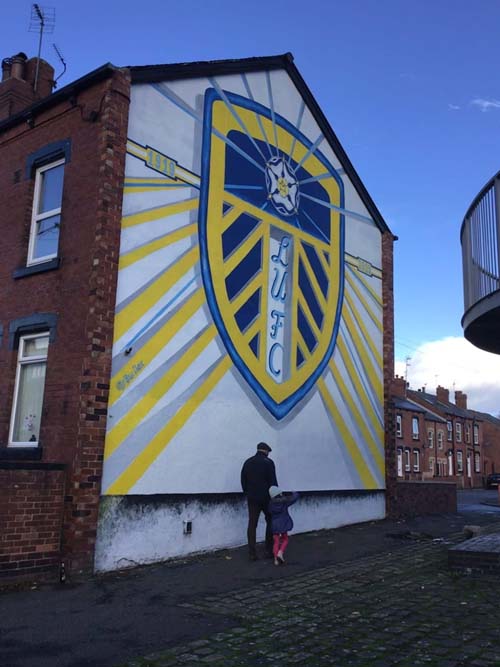
Voice of the Fans doesn’t only cover football fanzine culture – as the name suggests, the remit was a little wider than that. So, we’ve included within the exhibition examples of other types of expression made by and for football fans. As many residents of Leeds will know, the city has seen an explosion over the last few years of murals dedicated to Leeds United. Two more of our volunteer team, Chris and Rob, travelled across the metropolitan boundaries to take photographs of that street art, all for our Leodis archive of historic Leeds images. There’s more to come, but you can see a selection of over thirty as part of our Curated Galleries collection.
4.
Chris (and friends) are also responsible for a new website dedicated to digitally archiving pieces of rare Leeds United ephemera. You can see the full collection at their Flickr page, Leeds United Nostalgia.
5.
We spoke to lots of current-day fanzine makers during the research stage of the project. Quotes from many of them can be seen in the exhibition itself. But, of course, not all. You can read some of the full submissions in the attached document, from three fanzine makers in particular: Sean O’Toole from Smile Awile; Nial Coulter from Happy Days; and Andy Slater from Barmy Article. Our thanks to all three for their contributions and time. Other quotes from fanzine makers can be found in 100 Years of Supporter’s Activism, a booklet produced by the Football Supporter’s Association (The FSA) in 2021.
6.
There were also plenty of names we wanted to talk to but weren’t able to trace – hidden heroes of the fanzine movement. One was printer and writer Martin Lacey, a pioneer with his fingers in many pies across the DIY cultures of music and football. You can read a brilliant interview with Martin on the 10midnight blog.
7.
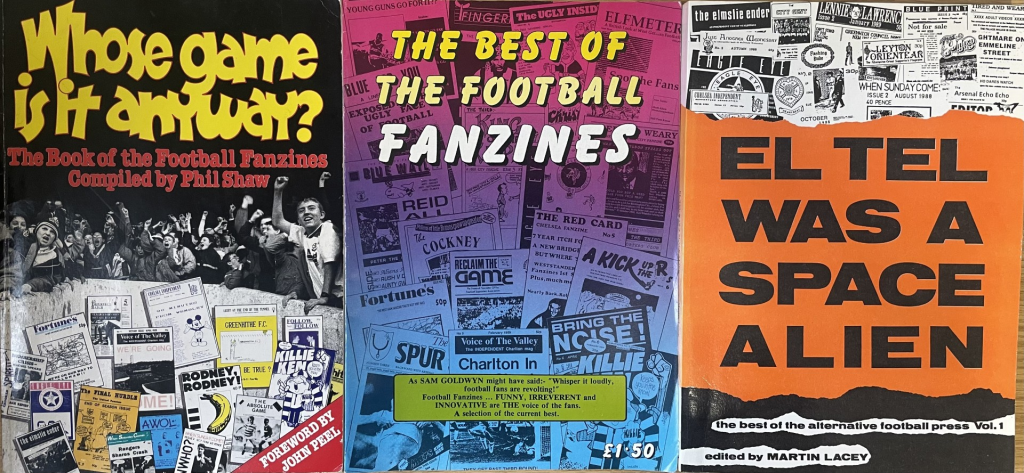
Strangely, perhaps, for a subculture that had really only emerged half a decade before, football fanzines had already reached self-awareness by the late 1980s, with a developed sense of their own lineage and mythology. Several compilations of now-obscure titles preserved in print the richness of this world. You can find copies of them in our library collections – including El Tel Was a Space Alien: The Best of the Alternative Football Press, Vol. 1, edited in fact by the aforementioned Martin Lacey; Whose Game Is It Anyway? The Book of the Football Fanzines; and The Best of the Football Fanzines.
8.
The phrase ‘football fanzines’ has two parts – football AND fanzine. So, as much as they should be contextualised in the history of football and football fandom, they should also be seen within the broader development of fanzine culture in and of itself. There’s several ways to come at this – the origins of fanzines among science-fiction communities in the 1930s (including some very hyperlocal Leeds stories) and, of course, as we have already said, the punk explosion in the mid and late 1970s. The wonderful anthology We Peaked At Paper: An Oral History of British Zines, brings together interviews with many of the pioneers of fanzine and DIY culture across the decades.
9.
‘Hyperlocal’ is a good way of thinking about some of the content you’ll find in a book like Animal House, James Brown’s autobiography, the early chapters of which tell one Leeds man’s story of immersion in the post-punk fanzine world. Brown, of course, later took the fanzine mentality to Leeds United itself, producing in the heady late 1990s the club’s official magazine, Leeds Leeds Leeds.
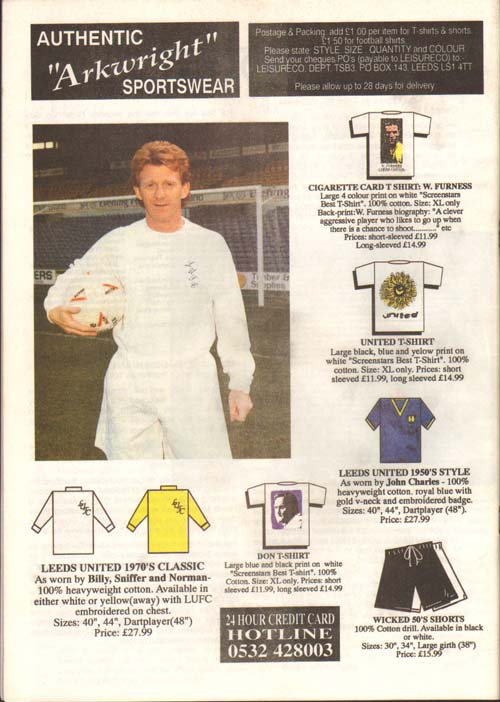
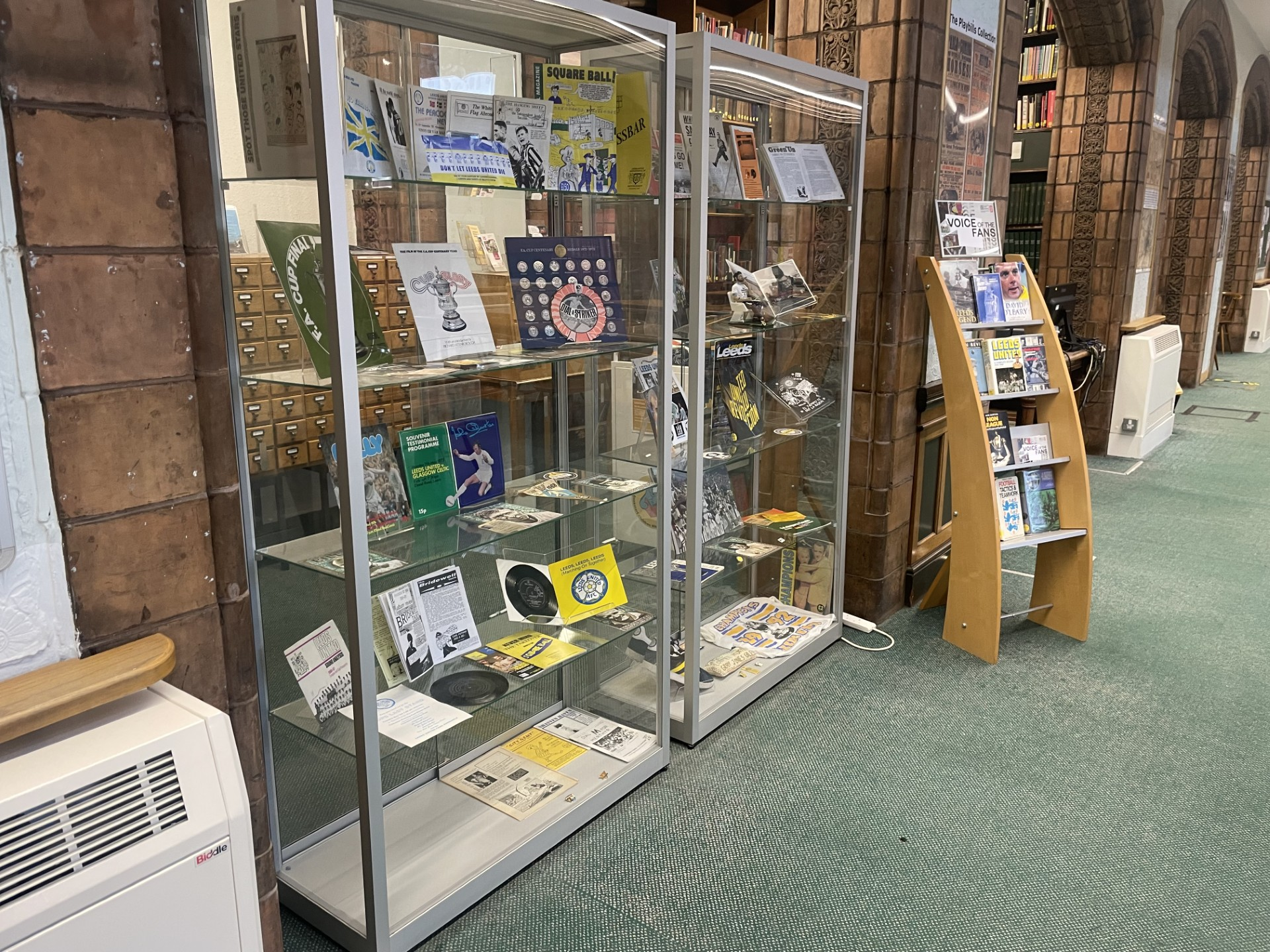
You could use that same word ‘hyperlocal’ to describe some of the content you’ll be able to see in our volunteer team’s display in the Local and Family History department from May 9. There you’ll find fan culture curated by Chris, Rob, Pete, Steve, Martyn, and Paul.
10.
Perhaps the weirdest place football fanzines have been seen is the Marvel Cinematic Universe.*
There’s no need to go into the full details but, in short, the LITERAL fate of the ENTIRE WORLD rests on one character (Fitz) communicating with another (Hunter) via the medium of the football fanzine in Rewind (2017), the fifth episode of the fifth season of Marvel’s Agents of Shield TV series. Admittedly, the fanzine in question carries an invented and even borderline offensive title – Ballbuster Hooligans(!) – but this pleasingly niche reference is, even so, testament to the continuing strength and importance of the fanzine movement.

*There’s a less than zero need to contact us about this if you land in the “Agents of Shield isn’t canon to the MCU” camp
 The Secret Library | Leeds Libraries Heritage Blog