Recently we were contacted by Garry Holden who had a photograph, taken by his father, that he thought we might like to include on Leodis, our photographic archive. After talking to Garry for a while we thought the story of his family would make a fascinating blog post and very apt for Armed Forces Day.
This is the story of an illicit photograph that haunted Garry’s dad, Thomas Holden, for years.
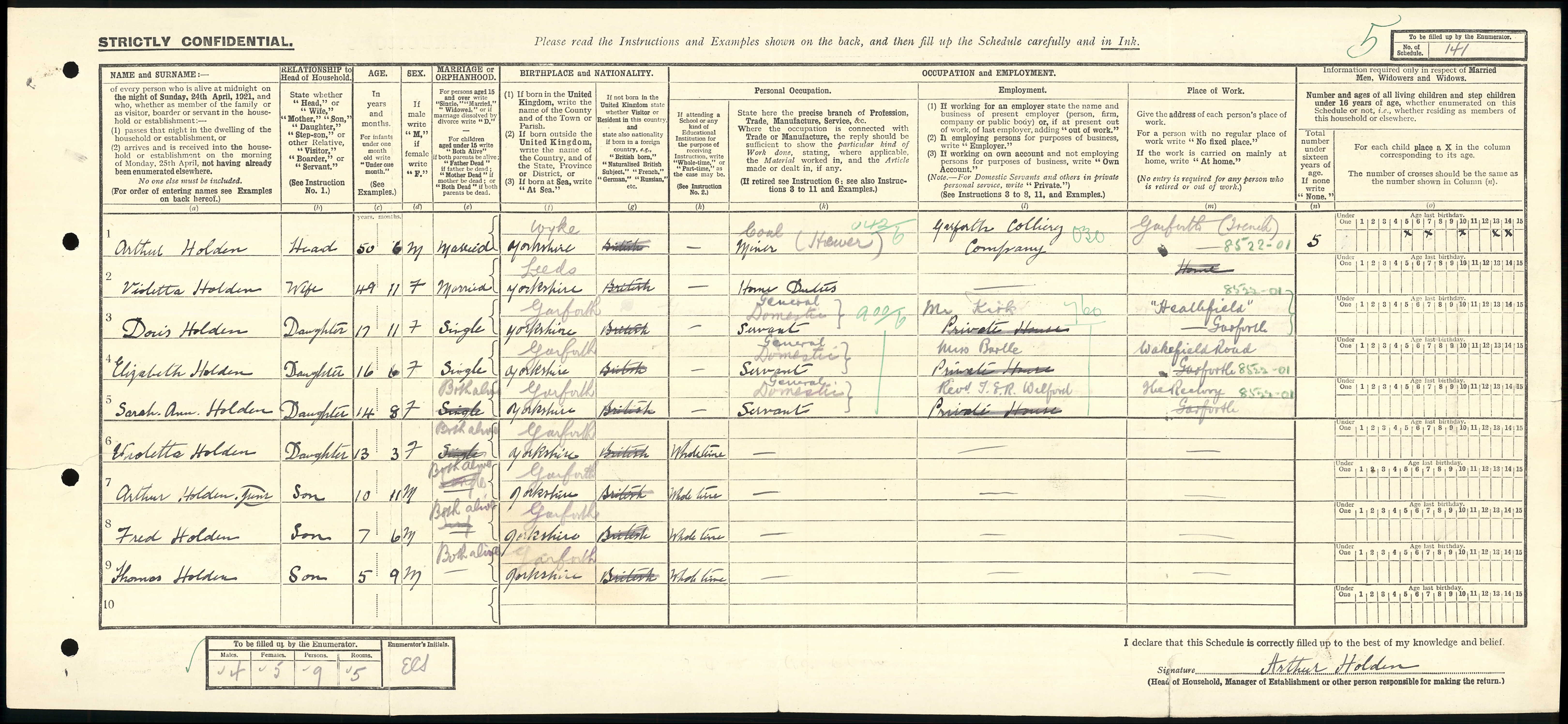
Thomas Holden, Garry’s father, was born in 2 October 1915 and was the youngest of 11 children born to Arthur and Violetta Holden. Arthur and his older sons worked in the local colliery in Garforth. Here are the family in the 1921 census.
Garry discovered his father’s (and his uncles – Leonard and Edwin) military history when rummaging in a drawer at his family home. There he uncovered a selection of items that would lead to him uncover some unique pieces of history.
The first item was a photograph of an aeroplane. Thomas was very reluctant to talk about what it was and when it had been taken but it had the date 6.6.1941 written on the back of it. After a bit of persuasion, Thomas admitted it was a photograph he shouldn’t have taken and was still worried he would get into trouble for it. Garry’s mum was sure he would be arrested for it if it was discovered. It was a photograph of the Leeds Spitfire, taken illicitly through a tent flap in Warmwell Airfield, Dorset.
Thomas worked as an aircraft engineer, originally stationed in Morecombe where he received his training and then RAF Warmwell in Dorset. His job was fixing the Spitfires that came back from missions with damage, to ensure they could return to aerial combat as soon as possible.
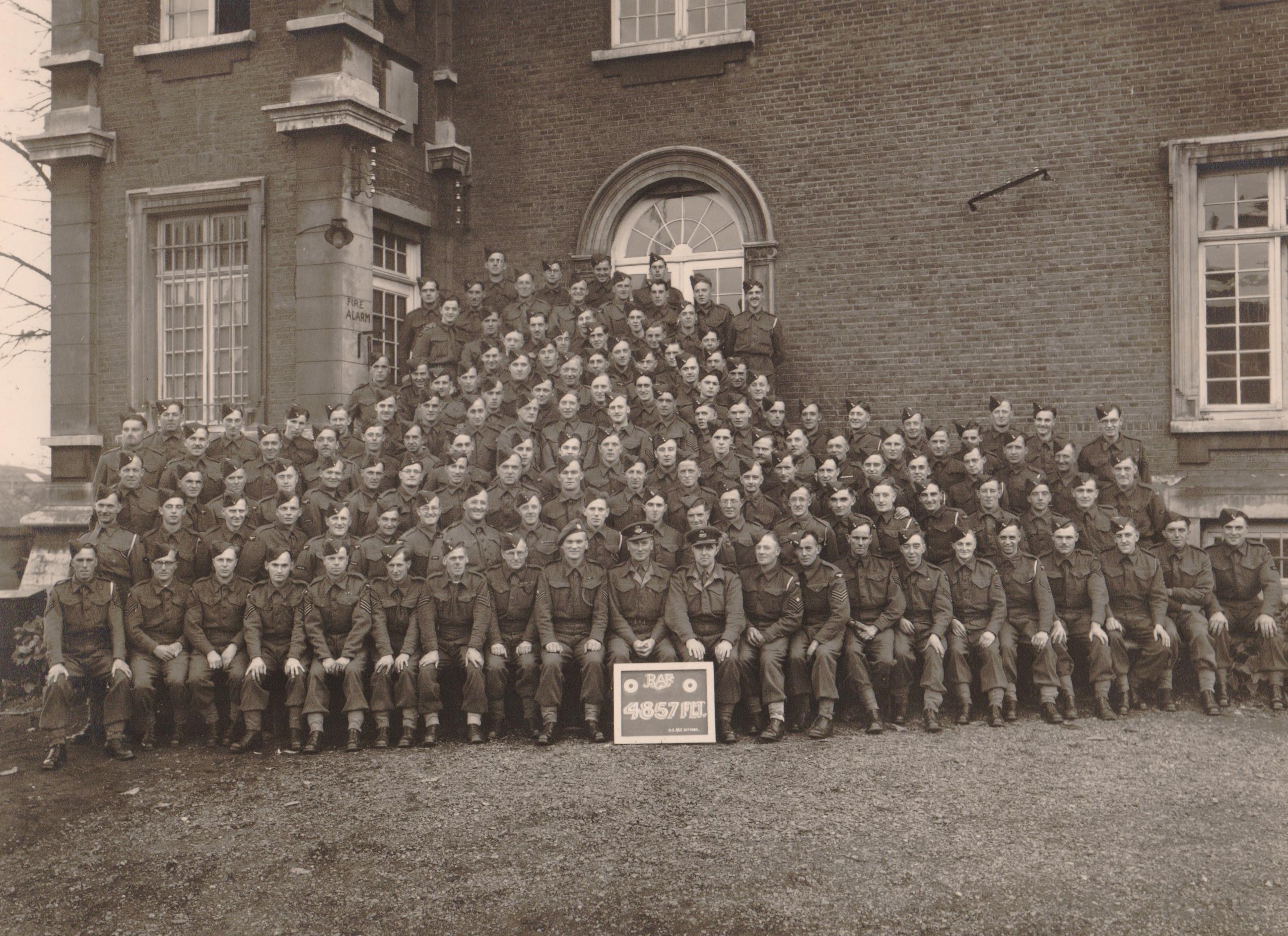
One morning an unmarked Spitfire arrived at Warmwell and was positioned directly outside Holden’s bell tent. After some deliberation he peeped through the tent flap and took a photograph with his box Brownie camera. It became known round the base that this was the Leeds Spitfire, funded from donations from the City of Leeds fund. Photographing the aircraft was forbidden and Holden kept the photograph a secret from everyone and kept it in a drawer in his home for decades before revealing it to his son, Garry.
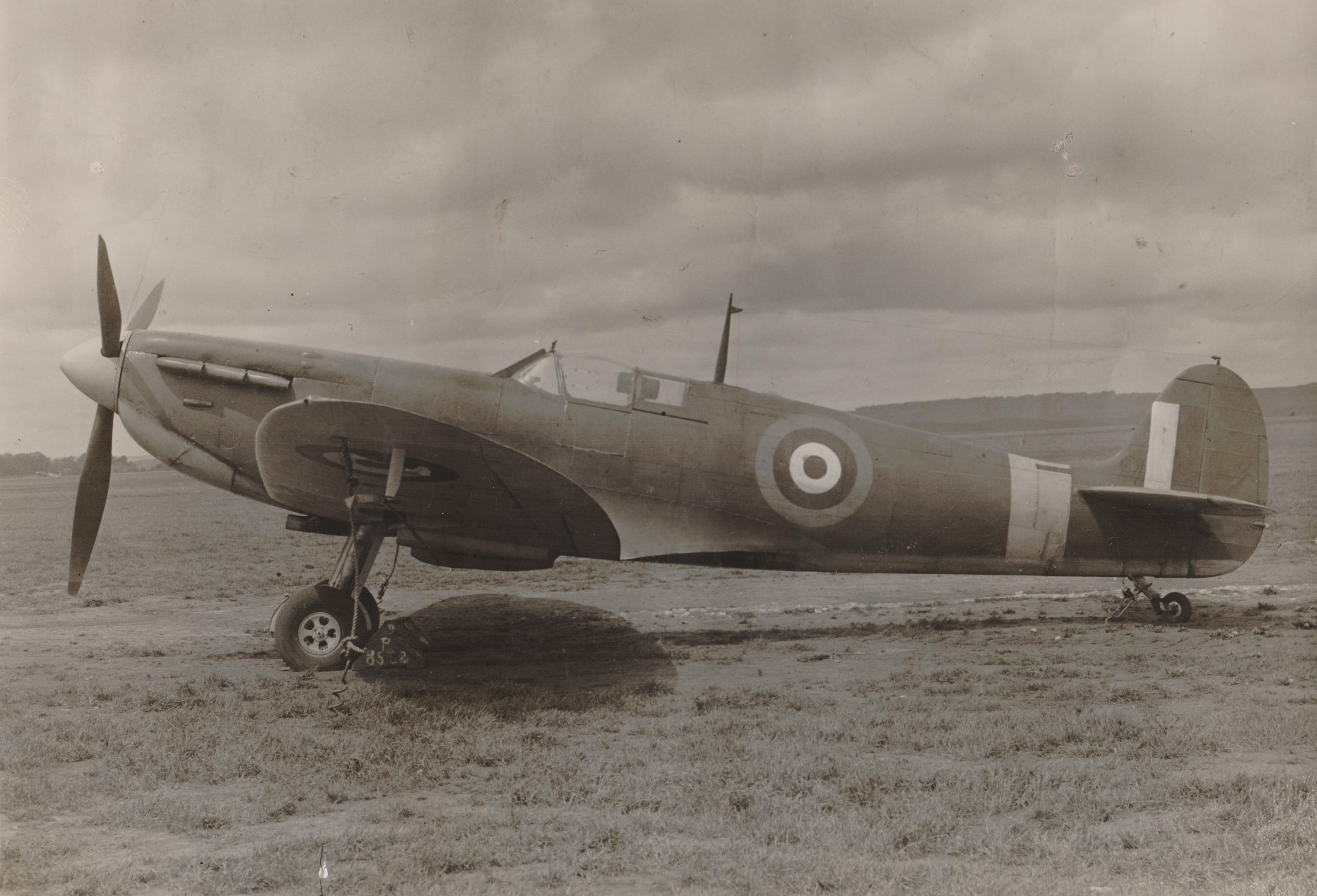
The Leeds Spitfire was unfortunately shot down early in its military career, before any press photographs could be taken of it. It is not known if there are any other photographs of it in existence. At a later date a mocked up photograph was taken with a ‘fake’ Leeds Spitfire, pictured with the 609 West Riding Squadron.
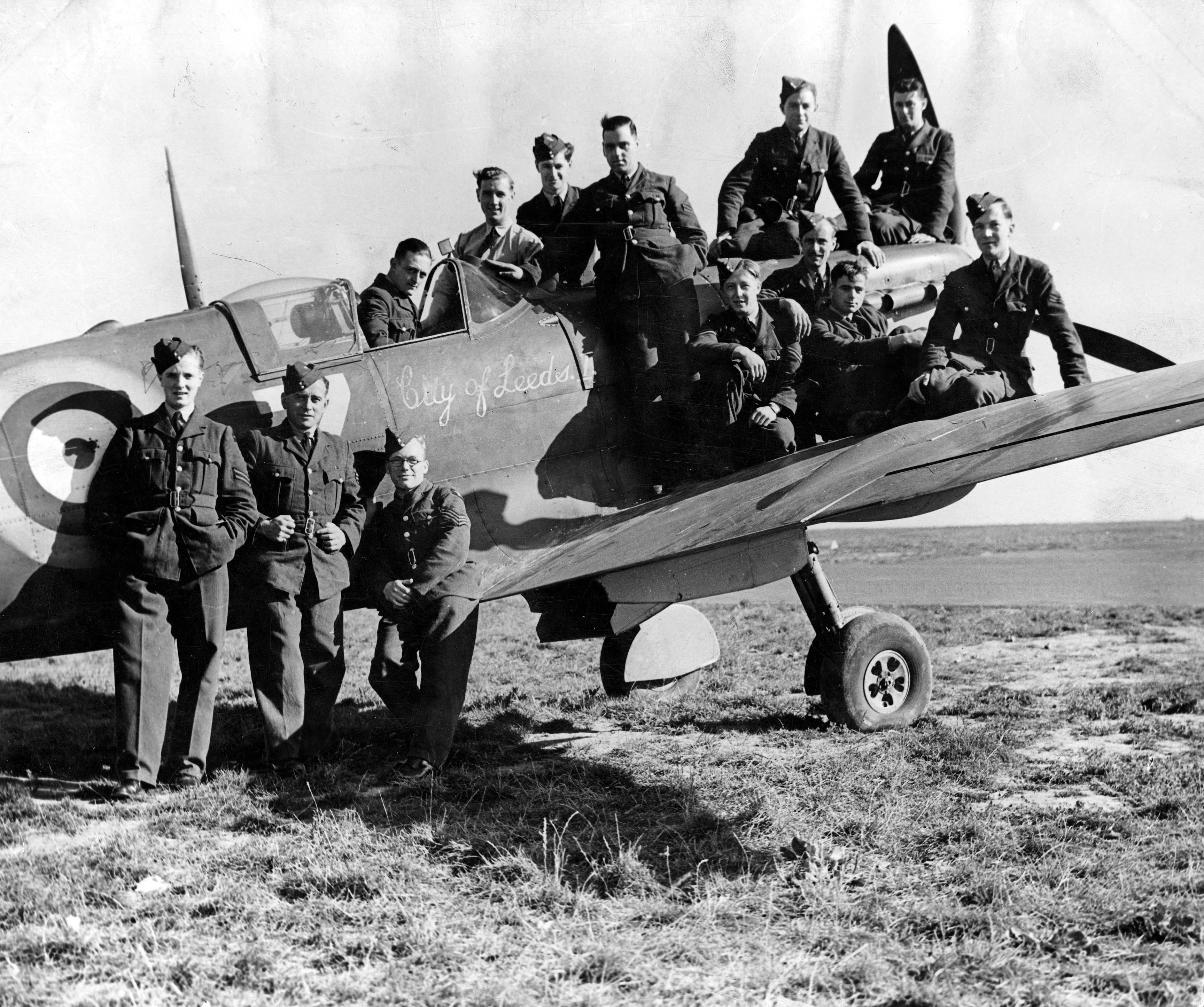
Before the outbreak of war, Thomas worked at Monk Bridge Iron and Steel Co., Ltd. He was in a protected occupation but chose to sign up anyway. After his discharge he attempted to return to Monk Bridge but there were no vacancies for him. Holden had returned to Garforth after the war but had difficulty finding a home for his family. He married in 1943 and had his first child in 1946 but had to stay with relatives for several years – in Allerton Bywater and Sherburn in Elmet, Because he hadn’t lived in Garforth for a few years the council refused to add him to the council house list for that area and it wasn’t until close to 1950 that he was finally given a council house. Garry was born there in 1951.
Thomas eventually worked in the mines at Micklefield Pit. There he was involved in an accident and was badly injured. He was taken the Leeds General Infirmary with huge damage to his face and his cheek torn apart. He was repaired by a surgeon, Mr Mills, as best as he could but he was left with a large scar and lost the hearing in one ear. A couple of years later Thomas met with Mr Mills to see if there had been any advances that might help improve his face. Mills was friends with a plastic surgeon, Archibald McIndoe, who had worked exclusively on RAF personnel with burns and facial disfigurements during the Second World War. He agreed to see Thomas and despite no longer being attached to the RAF, he operated on him and greatly improved his appearance.
Thomas died in 1993, living the rest of his life in Garforth.
But that is not all Garry found in the drawer. There was a strange looking item that Garry used to play with. His father eventually told him it had come from a German bomber and was a bomb release which must have been shot down near his father’s base. Other items in the drawer hinted at the Holdens war service, including some spurs owned by his Uncle Leonard.
Garry’s father served in the Second World War but two of his uncles served in the First World War. Garry’s uncle Leonard (1893-1917) served as a gunner in the Royal Field Artillery and his uncle Edwin (1895-1964) served in the West Yorkshire Regiment. Both signed up to fight despite working in mining in reserved occupations.
With both brothers based in northern France, by chance, their regiments passed each other on the road. Leonard was heading to Ypres in Belgium and Edwin to the Somme. Edwin had heard stories about the Somme and knew few soldiers returned from there so he gave all his possessions to Leonard to look after, should he not return. Amazingly Edwin did survive but Leonard was not so lucky. He was killed on 1 October 1917 at The Battle of Passchendaele and buried in Ypres Cemetery. When his personal effects were returned home – including his spurs – all of Edwin’s possessions were returned as well. Naturally his family thought both brothers had been lost so were very grateful to hear that Edwin was only wounded. Edwin was actually wounded on three separate occasions – the final time being a head wound where shrapnel had embedded into his skull. This was never removed and stayed a part of him til the day he died.
It’s amazing how with just a few objects and photographs in a drawer, Garry has been able to piece together his family’s war history, while also adding a bit more information on the history of the Leeds Spitfire. You never know what might be hiding in plain sight at your family home but it’s certainly worth always asking questions, just as Garry did.
 The Secret Library | Leeds Libraries Heritage Blog
The memories from one family. I always think that it was through the duty and service of ordinary people that both world wars were won. My own family saw extensive service in both conflicts. Apart from a few bad wounds all returned alive and continued working in hard physical jobs.
In this family’s case their men left reserved occupations in mining in order to serve their country.
We will remember them.