This week we welcome back guest author Pete Slater. Pete is one of a small team of volunteers working with us for the joint Leeds Libraries/British Libraries Voice of the Fans exhibition celebrating football fanzines and football fan culture. One of Pete’s roles has been research using our microfilmed local newspaper collection – this article has developed from that research.
You can read more of Pete’s articles on football fanzine culture on his own blog site. Subscribe for notifications of new articles: https://footballfanzineculture.blog
Let’s look at another kit related mystery that has revealed itself during our research for the upcoming exhibition on football fanzine culture in the fantastic newspaper archives at Leeds central library.
There are of course direct links from Leeds United to Leeds City who blue and gold colours taken from the city crest. For decades United also wore various blue and/ or gold kits with the colours taken from the city crest in honour of City so surely Leeds United’s first strip was blue and gold? Well, no, Leeds didn’t start wearing blue and gold until 1934.
The first Leeds United Strip
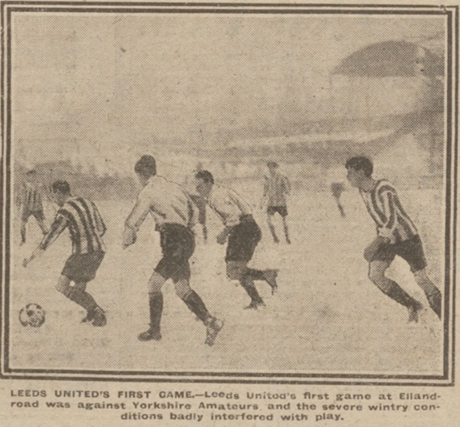
The Leeds Mercury provides a record of United’s first game in what looks like suspiciously like a strip made up of black and white stripes with black ‘knickers’ and socks. The game is against Yorkshire Amateurs, United’s first ever game at a snow-covered Elland Road on 17th November 1919. Amateurs had leased the ground until the end of the season but graciously agreed to step away from the lease to allow United to play there, a friendly was arranged and United won 5-2. One for the stattos out there.
We also have this photo from the first Midland league game, a draw with Barnsley and the following team photo which appeared in the Sheffield Star Green ‘Un on the 20th December 1919 as United won for the first time in the Midland league with a 2-0 win over Lincoln reserves at Elland Road.

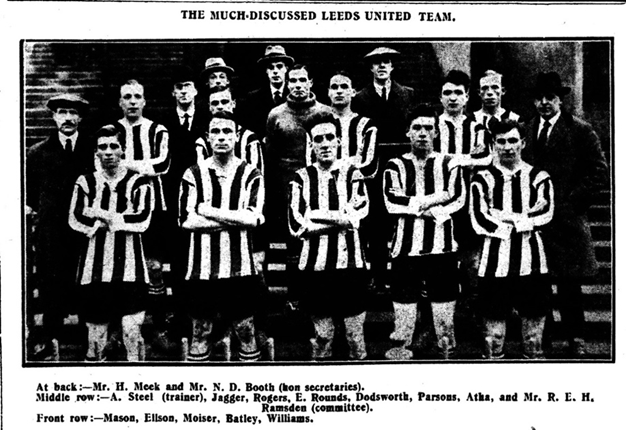
Although the photos here were obviously taken in black and white it looks clear that the team is in a black and white strip. We know that blues and reds appeared much lighter in photos at this time because of film plate technology[1]
So why were Leeds playing in black and white stripes? Well, despite copious time spend looking at articles from the time I’m afraid we’re not entirely sure but we do have some ideas.
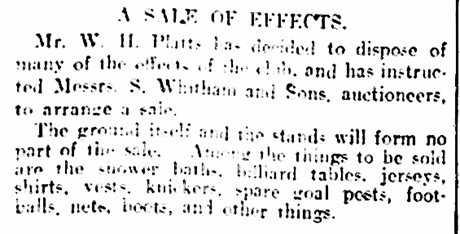
One of many problems for the fledgling United was that all of the disbanded Leeds City’s assets were sold in an auction at the Metropole Hotel on the 17th October 1919. The Yorkshire Evening Post (YEP) reports on “a humiliating experience for the players as they were sold off along with the club’s nets, goal-posts, boots, kit and physiotherapy equipment.” Further mention of a sale of effects comes from another YEP article later in October 1919. Rather wonderfully the sale included billiard tables and yes, that does say knickers, shortened from knickerbockers, the FA approved name for shorts for many decades to come.
So, our best guess is that this was a kit left over from Leeds City, maybe the reserves kit and had been forgotten or not bought in the auction.Football clubs restarting after the war faced very tough financial conditions and there were of course severe shortages, so teams often used kits that had been in storage since before the war so maybe this was a relic of an old kit.
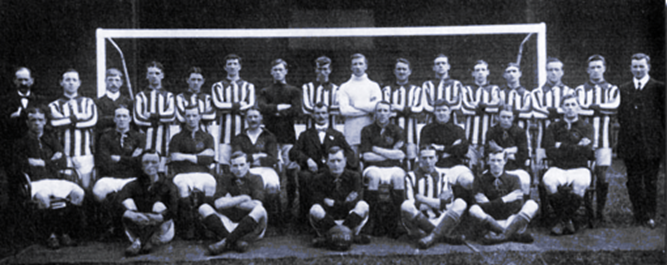
We also know that Leeds City had played in a wide variety of colours over time and a team photo from 1912-13 shows them in dark stripes[2] (Though this does appear to be slightly lighter than the 1919 photos, the stripes are very solid, compare this to the team photo from 1920-21[3] in which we know the shirts are blue and white stripes and the socks black. Note the contrast in this photo between the light blue in the shirts and the black of the socks).
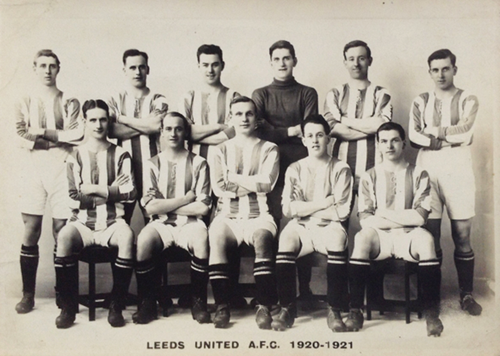
The rules regarding change strips and kit clashes at the time might also have been a factor. Before 1921 the change strip rules stated that the “senior” team were allowed to wear their kit in case of clashes, not the home side and the newly formed united were obviously the junior side in all cases[4]. United were late entering the Midland league and might not have had the choice they wanted available due to this rule. Gainsborough Trinity (The Holy Blues) played on a predominantly blue kit at the time for example as did Halifax and Grimsby Reserves who were also in the same league. However, Notts County were in the league wearing black and white stripes
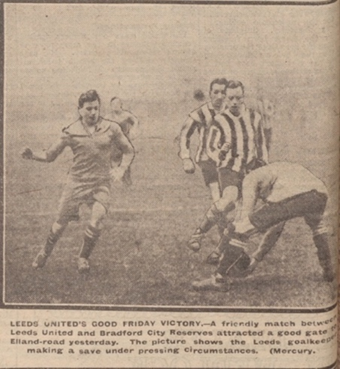
A further catch is that when formed United took Leeds City reserves place in the Midland league and it wasn’t unknown for reserve sides to play in totally different strips from the 1st XI at the time as this picture from the April 3rd edition of the Leeds Mercury shows. It is an action shot from a Leeds United vs Bradford City reserves game, Bradford City’s official strip at the time was a classic amber and claret striped shirt. By now clubs had to register their club kit at the start of the season and it might simply be that Leeds City reserves were down to play in black and white stripes (by 1917 Leeds City wore a blue shirt with a gold Chevron and as stated, a kit that seems to have been sold).
So how the black and white strip appeared for one season remains a mystery, it may be a trick of the light but that seems unlikely. We do know however that for the 1920-21 season the kit changed to blue and white stripes with black socks, bizarrely copying local rivals Huddersfield Town. The reason why? Money and a certain J Hilton Crowther.
Moving on
In its early days obviously Leeds United struggled in much the same way as Leeds City had in the preceding years. The club desperately needed investment and the former investor in Huddersfield FC stepped up to buy United in a controversial move.
Crowther was said to have been impressed at the speed of the reaction and the enthusiasm that greeted the formation of Leeds United. He had long since been providing Huddersfield with a large credit facility, said to have been £27,000[5] but was tired of the lack of response to support the Huddersfield club.
Ironically what happened next would change that quickly and set the stage for the glory years that Huddersfield enjoyed in the 20s. The long and short of it was that the dastardly Crowther, without discussing this with anyone at Huddersfield, proposed ‘merging’ Leeds and Huddersfield with the new club playing at Elland Road. What he was really proposing was not a merger but basically moving Huddersfield FC to Leeds and remarkably this was supported by the man in charge of United, Alf Masser and the football league.
There followed a surprisingly vigorous reaction from the previously missing people of Huddersfield who held demonstrations and hatched a fund-raising plan to pay off Crowther. Despite it’s good intentions £27,000 was a huge amount of money at the time and this looked doomed to fail until the Crowther brothers issued a writ designed to force a winding up of Huddersfield. This provoked a furious and frenzied fund-raising drive the ferocity of which eventually caused the Crowther brothers to settle, and they were bought out of Huddersfield FC in December 1919.
Now freed from his obligations, J H Crowther loaned Leeds £35,000, repayable when they were promoted to the 1st division and he became chairman. The next steps were to install the former Huddersfield boss, Arthur Fairclough as manager and as chairmen were wont to do, he got his way with at least part of the “merger” and so Leeds United were to play in blue and white stripes from 1920 to 1934.
A Further Mystery
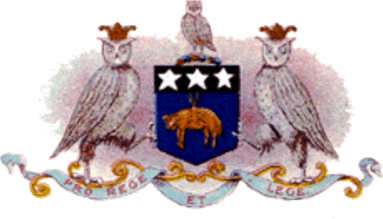
From the 1934 season on Leeds United changed again to play in a blue and gold kit in honour of their predecessor, Leeds City and once again matching the colours of the city arms. No mystery there and blue and gold would remain the foundation for all kits until 1961 when a certain Don Revie was appointed manager and put Leeds in the famous all white kit to mimic the mighty Real Madrid. Except that’s not totally true…
[1] https://www.historicalkits.co.uk/Articles/History/part-3.html
[2] https://www.ozwhitelufc.net.au/leeds_city_history/index.php
[3] https://www.footballandthefirstworldwar.org/english-team-photos-first-world-war/#bwg13/928
[4] https://www.historicalkits.co.uk/Articles/History/part-4.html
 The Secret Library | Leeds Libraries Heritage Blog