This week on the Secret Library we are delighted to hear once more from Andy Armstrong, one of our heritage volunteers, on a significant piece of cataloguing work we’ve asked him to help us with. In this piece, Andy turns his attentions to the various utilities once managed by the Council on behalf of the people of Leeds…
Hi. My name’s Andy Armstrong and I have taken on the task of sifting through 200 years of Leeds City Council papers held by the Central Library to bring some structure to them and to produce a research guide. I have previously produced guides on Transport, Health, Housing, Leeds City Libraries and now I’ve completed a new guide about the Utilities that were once run by the Council – Water, Gas, Electricity and Sewerage.
This takes us back to a very different time. At the start of the 19th century, Leeds was booming but the Council (then known as Leeds Corporation) had little money and few powers with which to control and shape the public services required to meet the fast-growing needs of the people of Leeds. It wasn’t until 1835 that the Municipal Corporations Act gave those powers to the Corporation.
Leeds grew from a population of 50,000 in 1800 to 450,000 in 1900 and it was inevitable that infrastructure lagged behind development. A key event was the cholera outbreak in 1832 which promoted the need for a more strategic approach to supplying clean water. At first there was a reluctance for the Corporation to take on extra duties that would be a financial burden to its Ratepayers, and it was a joint stock company that was formed in 1837 to supply clean water to Leeds by building reservoirs.
However, the Corporation decided it could run services in the same way as a private company and this would be cost neutral to Ratepayers. It had the advantage of being able to shape development across the whole of Leeds and didn’t need to provide a return to shareholders, so costs to users could be lower and more affordable. It bought the Company in 1852.
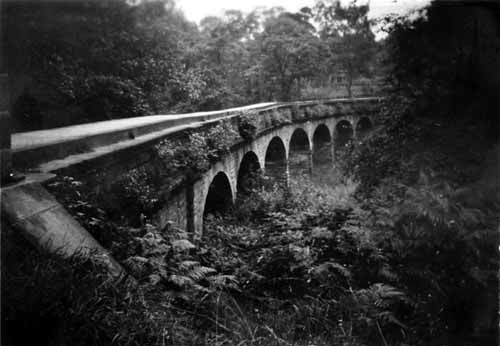
Gas and electricity followed a similar path. Gas was used to replace oil street lighting in 1819, and the industry was developed by two companies that were purchased by the Corporation for a sum of £763,225 in 1869 (£116m in today’s money). Electricity was a young industry, and the Yorkshire House to House Company was growing rapidly when it was purchased by the Corporation in 1898.
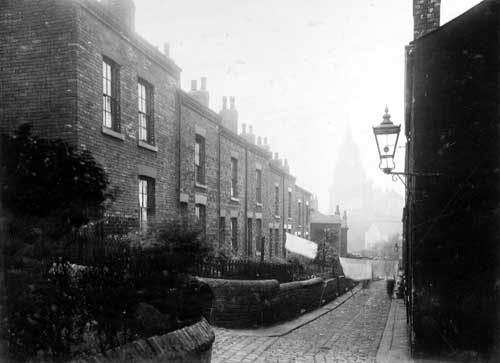
By contrast, Sewerage services were run by the Corporation having been given unlimited legal rights to build sewers by the 1842 Leeds Improvement Act. The first sewers were built in 1848, discharging raw sewage into the River Aire at Knostrop.
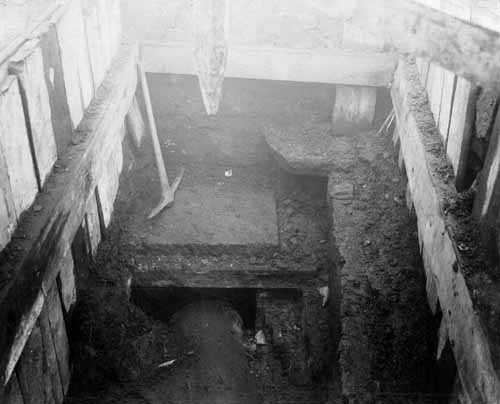
Once established, all these industries were then significantly developed by the Corporation so that there was sufficient capacity to meet the needs of the residents of Leeds. This often meant major capital outlay.
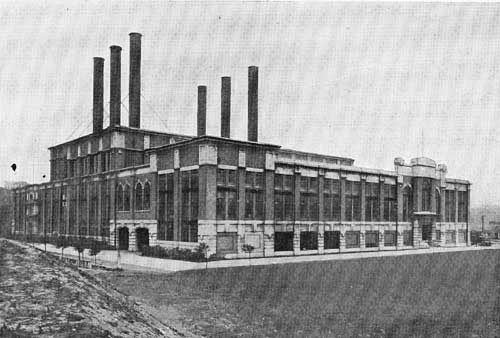
For fresh water, a number of reservoirs were built along Washburn Valley in the 19th century and these continue to supply most of the fresh water for Leeds today. In the gas industry, gas was produced from coal burning, and gas holders required for storage were littered around the town. The Armley Gyratory housed one of the main holders. For the supply of electricity coal-fired power stations were needed, including the Kirkstall Power Station which had its own wharf on the canal for receiving coal deliveries.
For sewerage, the big issue was purification, after the Corporation was taken to Court by landowners in 1870. Leeds, like other urban areas, had to find its own way of managing this, and many years were spent trying out different methods of purification. It wasn’t until 1908, when a portion of the Temple Newsam Estate was made available at Thorpe Stapleton, that adequate treatment and disposal was finally achieved for the major part of Leeds.
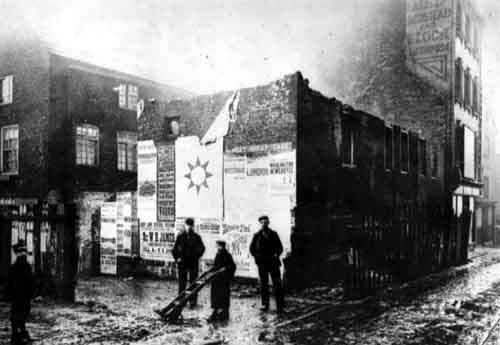
The City Council brought all these industries into the 20th century and continued to develop them for the first half of the century. But significant change was just around the corner. A national infrastructure needed to be developed to join the local services together. Nationalisation became a political issue as well as a practical one, and was a priority for the incoming Labour Government post WWII. All the services were gradually transferred out of Leeds City Council control to dedicated bodies operating regionally and linked together at national level.
The transfer of Electricity and Gas functions and staff were moved to Electricity Boards and Gas Boards in 1948 and 1949 respectively. Water and Sewerage functions were maintained by the Council until 1974, when these functions were transferred to Yorkshire Water in 1974. All these services have since been privatised.
You can see all Andy’s Council Papers research guides on our Research and Collections page. Click the image below to access the Utilities guide, or see Andy’s full list of all our collections covering this subject area.
 The Secret Library | Leeds Libraries Heritage Blog
We owe our former councillors and alderman a great deal !