Here at Leeds Central Library, we recently hosted a treasure handling workshop to show off a few more of our botanical items that we could not fit in our current exhibition – Unearthed: The Power of Gardening – at Leeds Central Library until 29 October 2025.
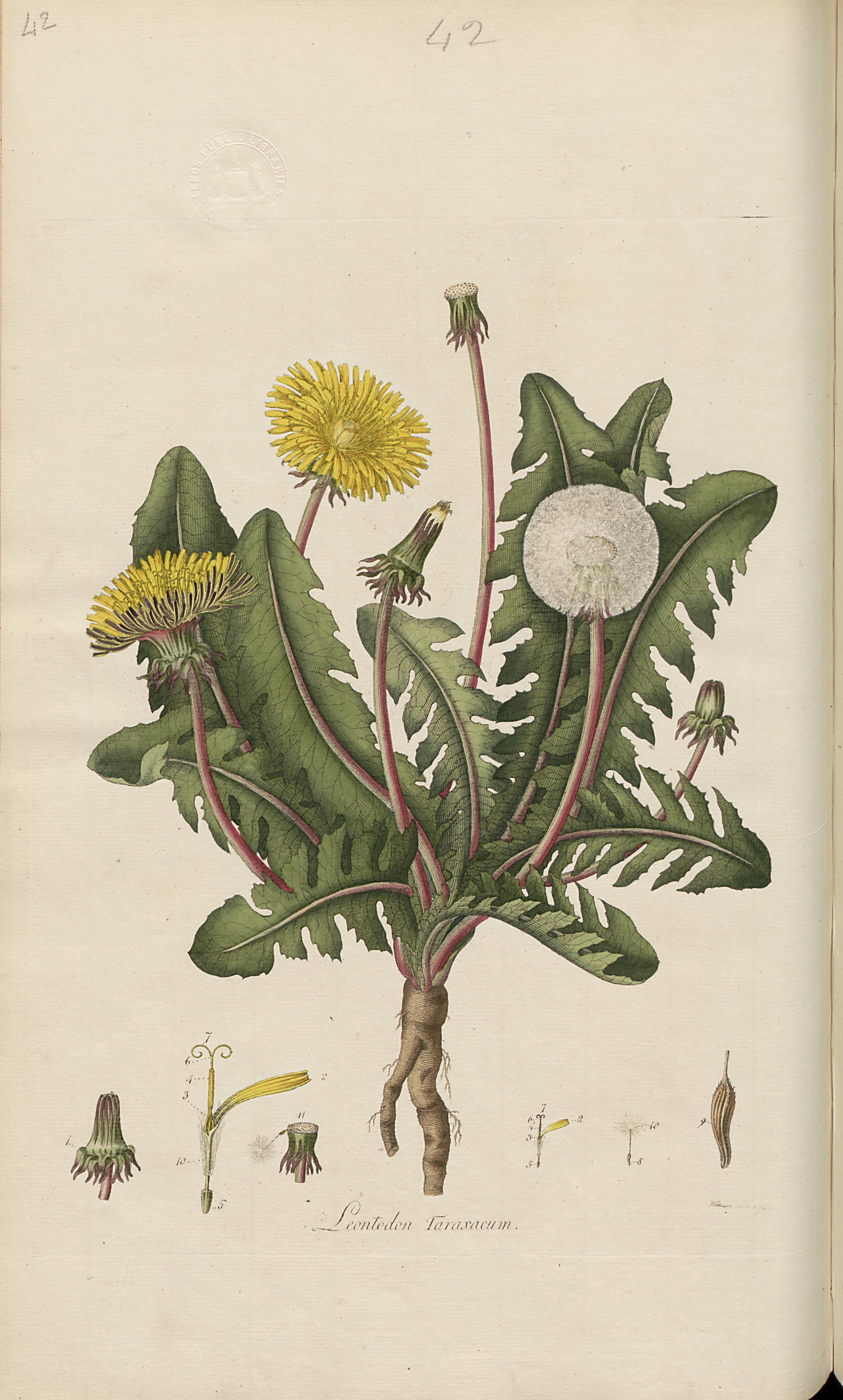
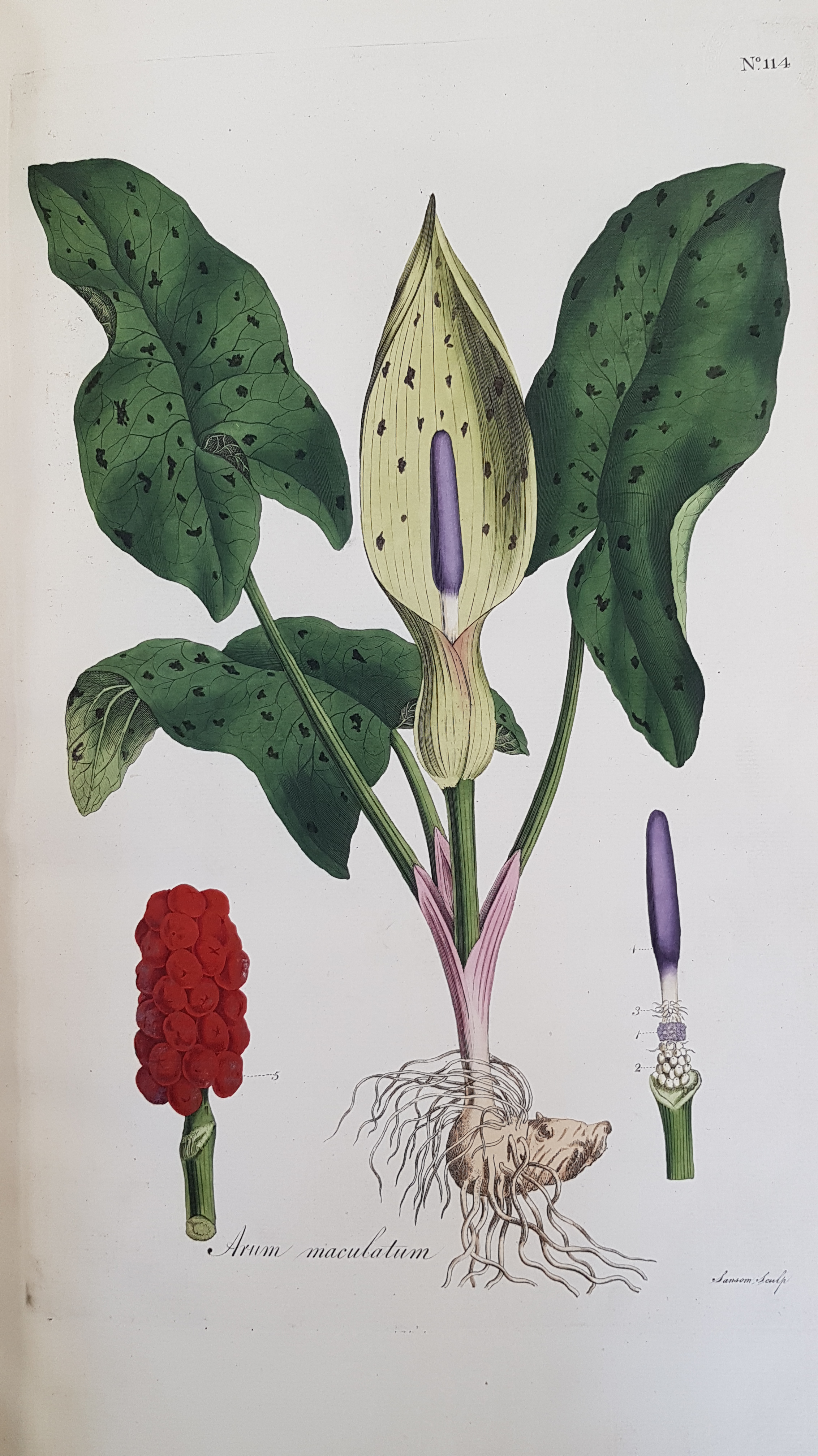
First up was Flora Londinensis by William Curtis. This is a 6 volume work that has the full title Flora Londinensis: or, plates and descriptions of such plants as grow wild in the environs of London: with their places of growth, and times of flowering, their several names according to Linnæus and other authors: with a particular description of each plant in Latin and English. To which are added, their several uses in medicine, agriculture, rural economy and other arts.
The first volume was produced in 1777 and the final one, containing a title and an index, was published in 1798. The descriptions of the plants included hand-coloured copperplate plates by botanical artists such as James Sowerby, Sydenham Edwards and William Kilburn. Curtis wrote the descriptions and managed the publishing and sales of the volumes. Only 300 were ever produced but it was not financially successful and nearly bankrupted him.

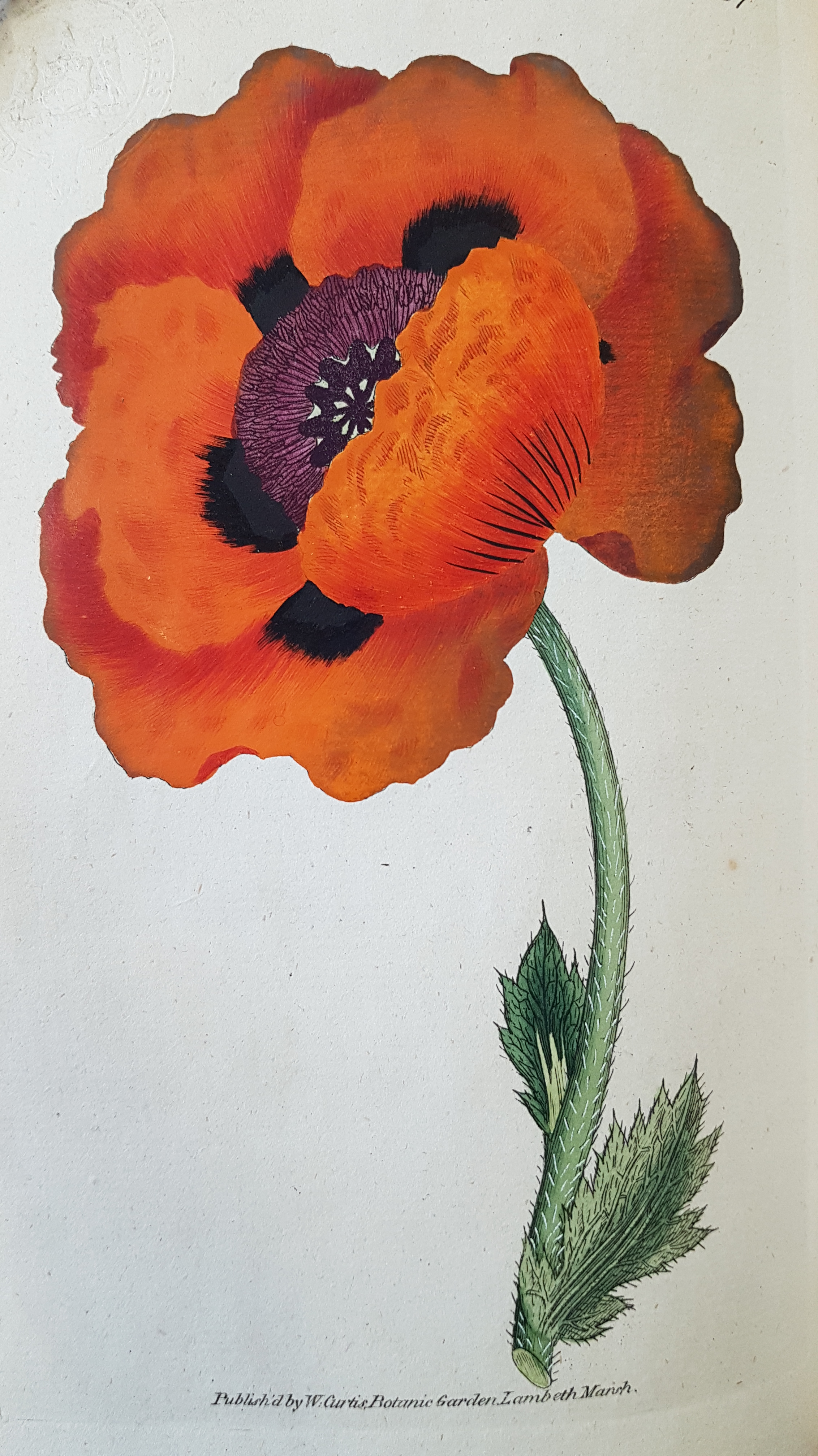
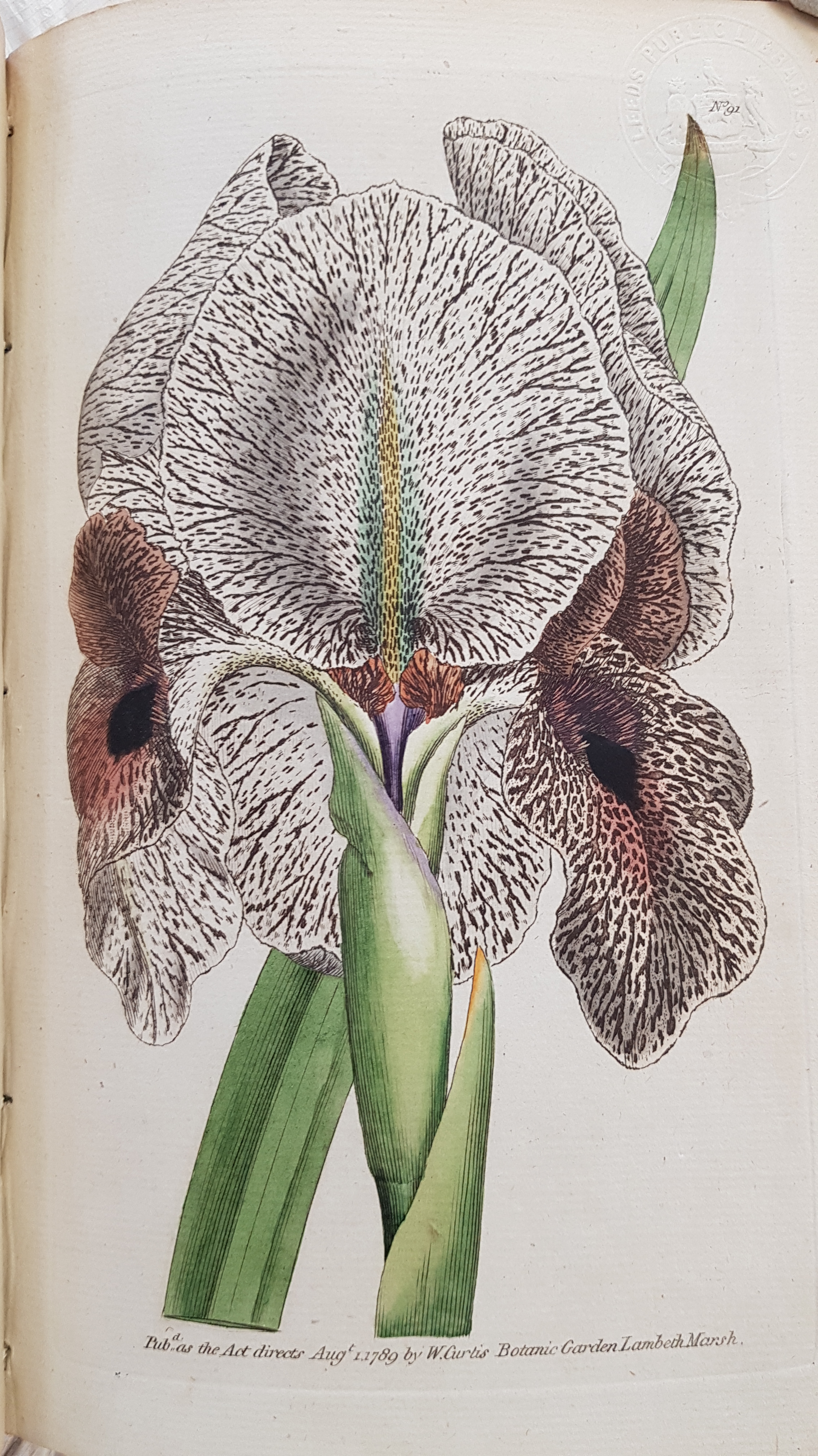
Continuing the Curtis theme, we next examined two volumes of Curtis’s Botanical Magazine – two of which are in the current exhibition in the Art Library.
After the financial failure of Flora Londinensis, Curtis saw an opportunity to recoup some of his losses and created his Botanical Magazine that focused on new plants from overseas that gardening enthusiasts were trying to grow at home. Initially employing the artists he used for Flora Londinensis, each volume featured original colour illustrations of plants as well as a description. Founded in 1787 and continuing til present day means it is the world’s longest running, continuously published botanical magazine. Leeds Central Library holds volumes from 1787 until 1982.
The next item was The Ladies’ Flower-garden of Ornamental Annuals by Jane Loudon, published in 1849. Loudon was an English writer and early pioneer of science fiction. She also created the first popular gardening manuals, as opposed to specialist horticultural works, reframing the art of gardening as fit for young women. She was married to the well-known Scottish horticulturalist John Loudon, and they wrote some books together, but she is best known for her own very successful series.
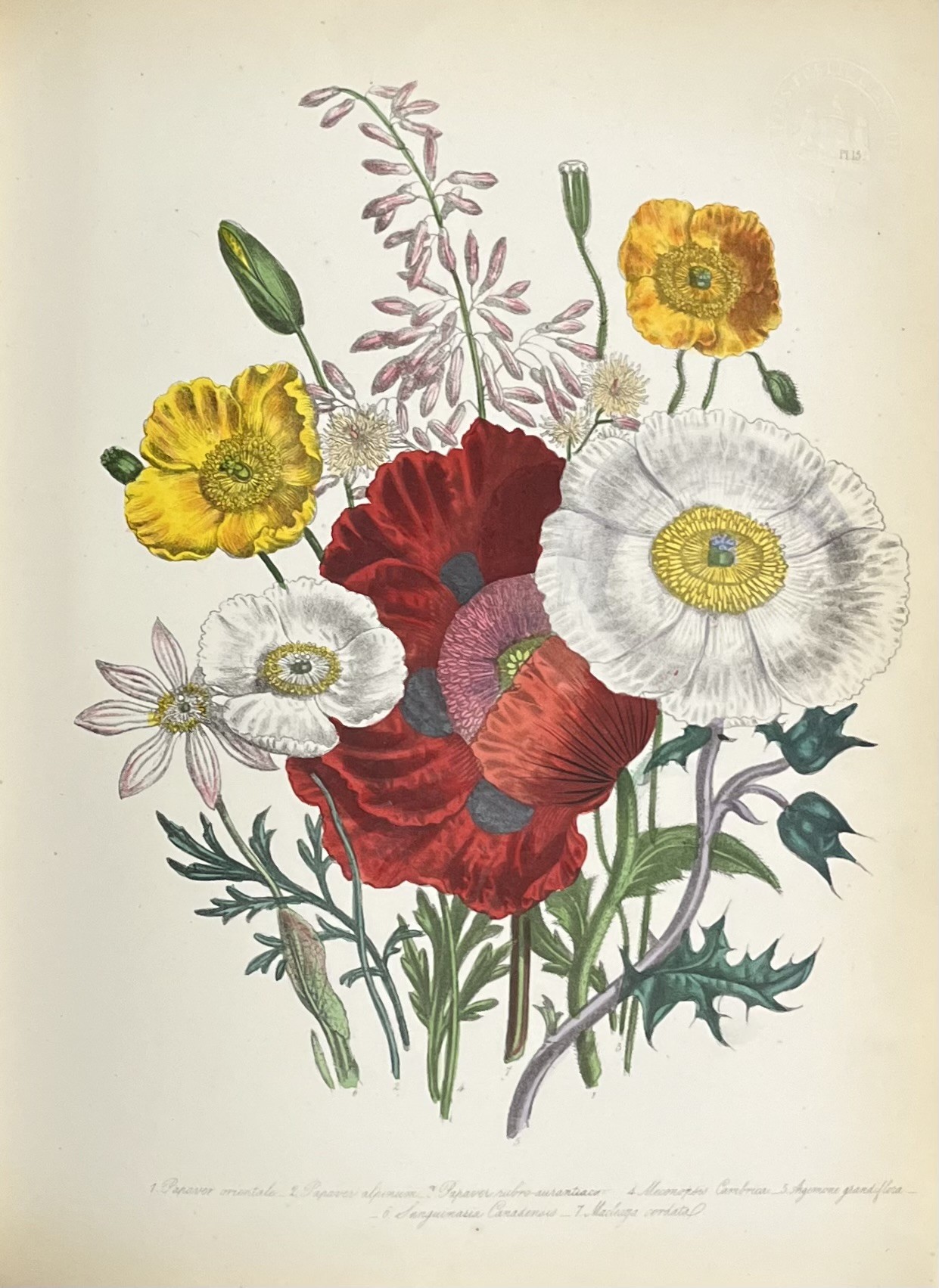
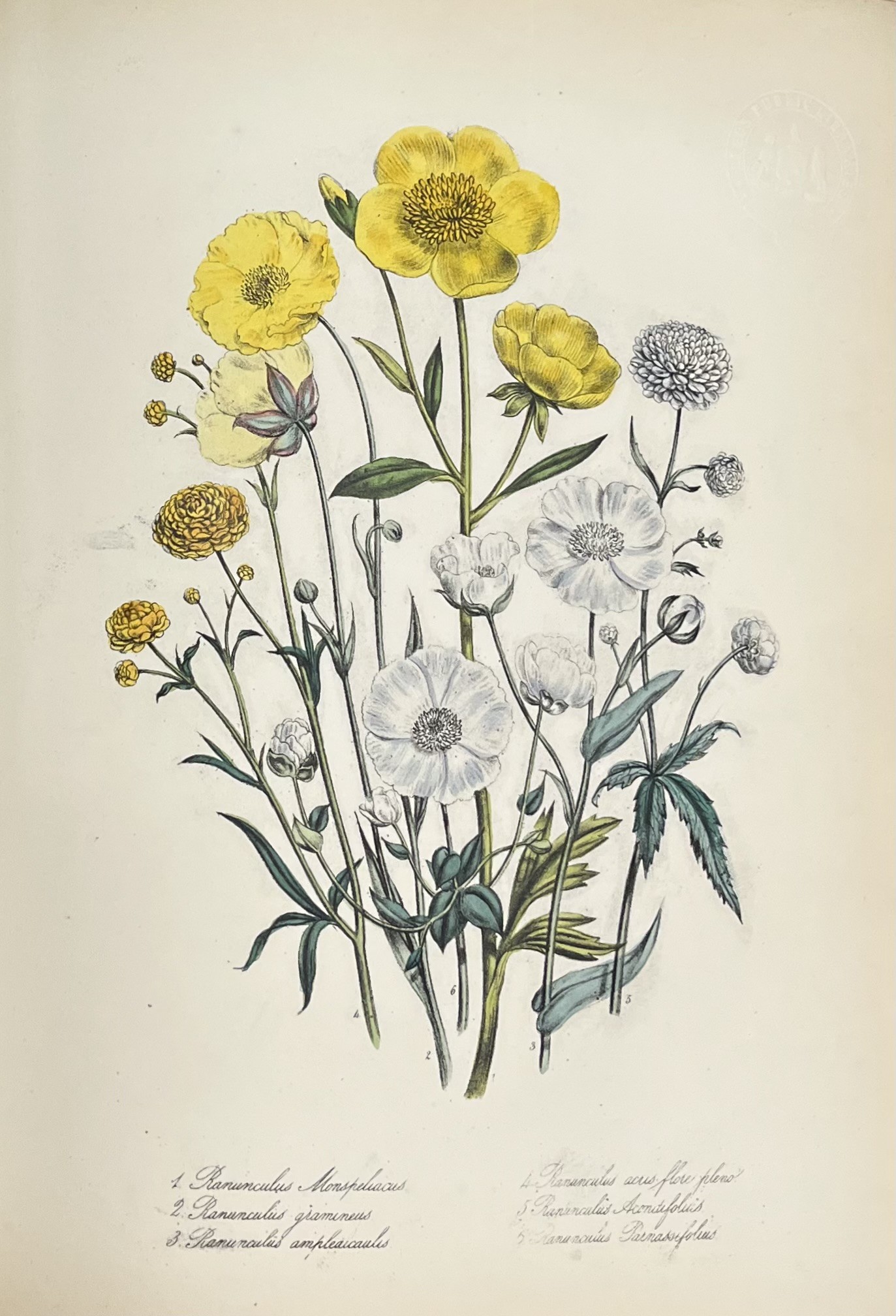
Loudon realised that illustrations were important to convey plant and gardening information and her books are full of her own hand-coloured illustrations. The style of her illustrations included grouping flowers into bouquets. Her book British Wild Flowers is currently in the exhibition in the Art Library.
Next we looked at one of the largest, and heaviest, books in our collection – A Selection of Hexandrian Plants by Priscilla Susan Bury. There was absolutely no possibility of using this book in the exhibition due to its size so it was very nice to have it on view for a short period.
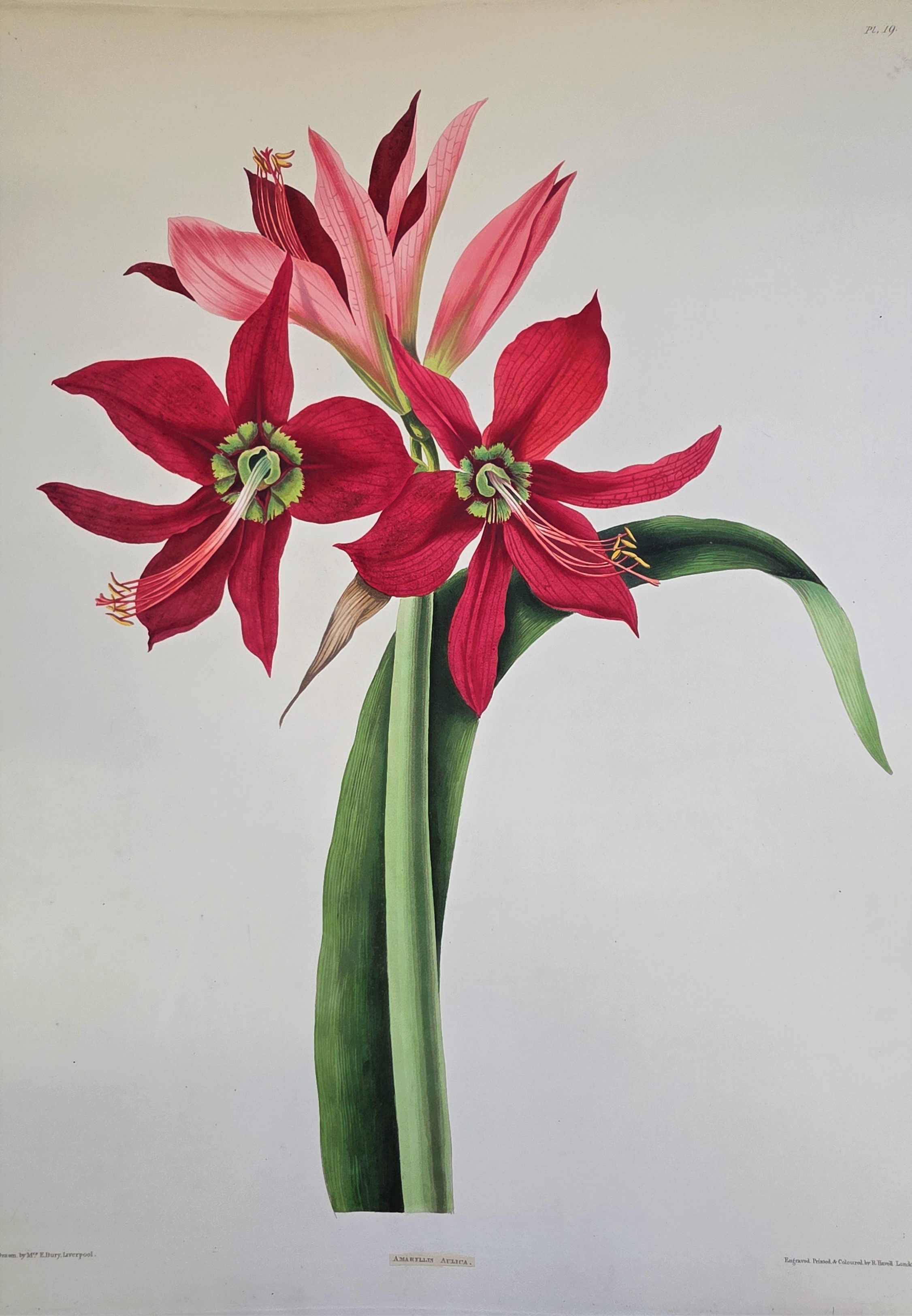
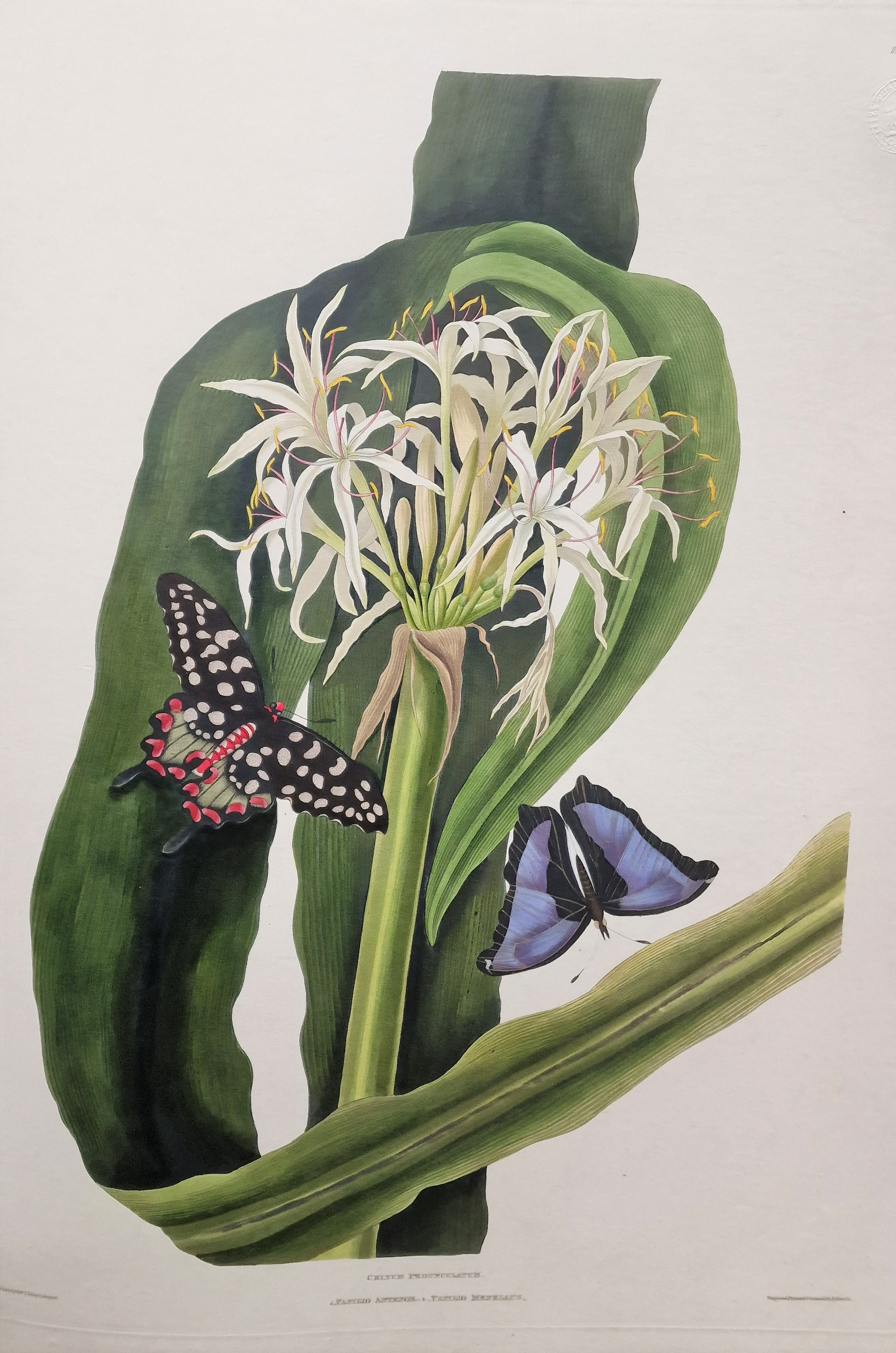
The book comprises of aquatint engravings with original hand-colouring and was published in London 1831-34. ‘Hexandrian’ is a botanical term referring to a plant that has six stamens, found in the Amaryllis family. The plates were engraved by Robert Havell and total fifty one. The work only has seventy-nine subscribers, including James Audubon, and it is unlikely that the number produced was much beyond that, accounting for its scarcity.
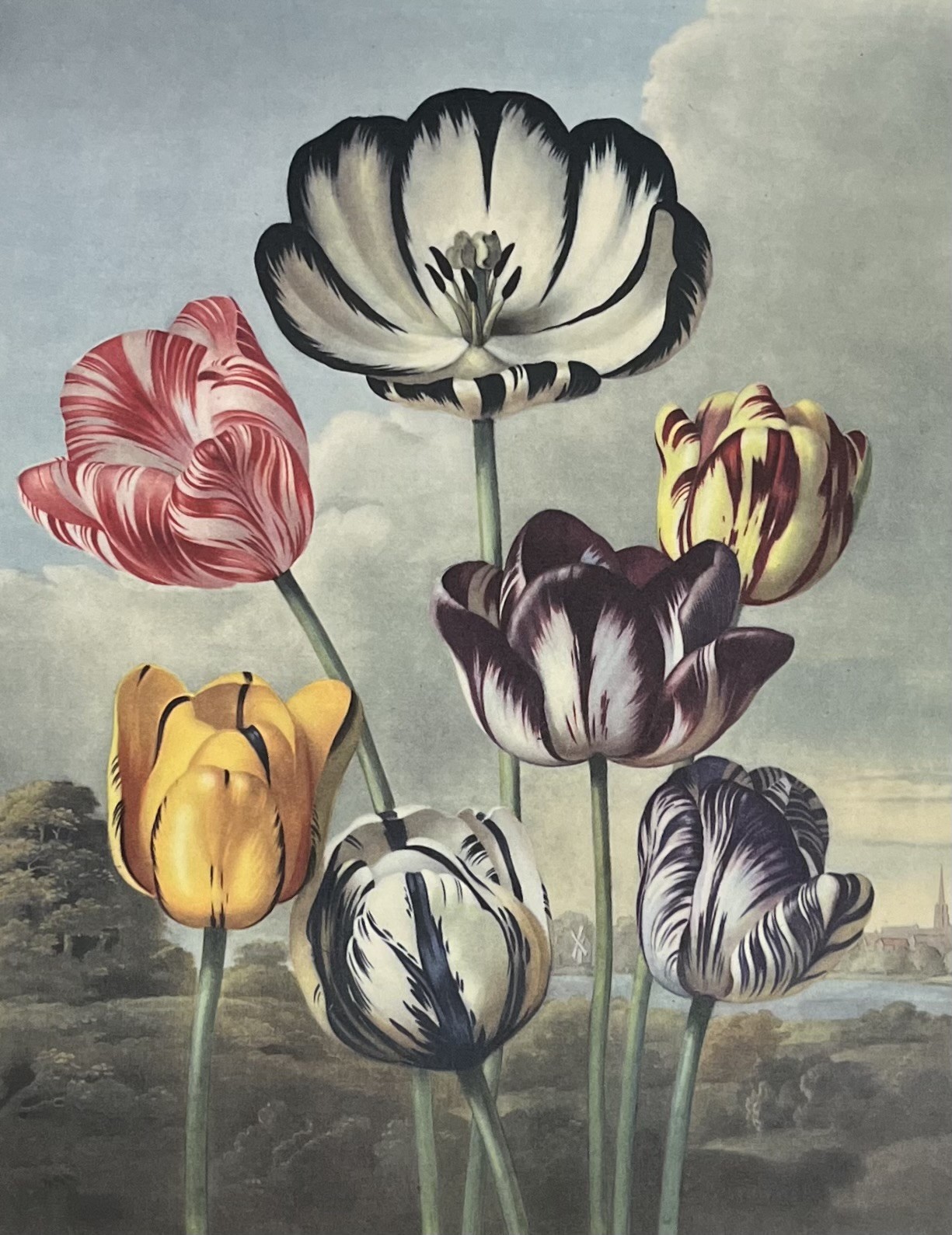
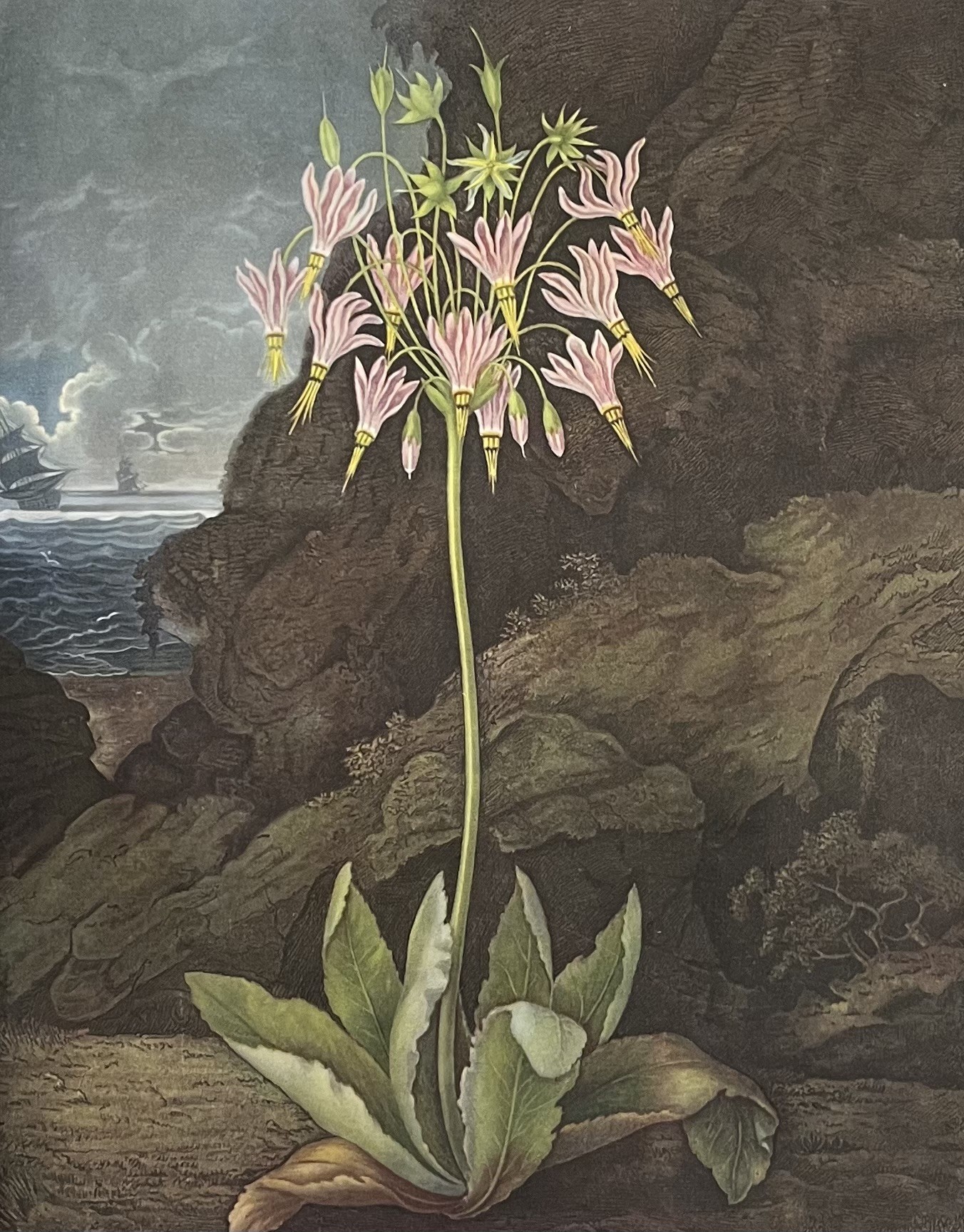
Finally we discovered the beautiful illustrations in Robert Thornton’s The Temple of Flora. This was a famous and lavish botanical book, published between 1799 and 1807. The Leeds Central Library copy is a much later edition, published in 1951 as a limited edition of only 250 copies. It’s full title is Thornton’s temple of flora : with plates faithfully reproduced from the original engravings and the work described by Geoffrey Grigson, with bibliographical notes by Handasyde Buchanan (and botanical notes by William T. Stearn). It has 36 plates faithfully reproduced from the original engravings. Again the size of this item prevented it from being part of the Unearthed exhibition.

These items all form part of our Special Collections and can be viewed by appointment only. Contact us for more information – localandfamilyhistory@leeds.gov.uk or 0113 378 6982.
 The Secret Library | Leeds Libraries Heritage Blog