This week on the Secret Library Leeds, librarian Antony Ramm brings you some festive joy with a sequel to an article originally published in 2017…
We sometimes like to say that one of the values of the Secret Library Leeds website is that the articles and the content remain permanently out there on the information superhighway, just waiting to be be discovered by readers investigating some specific aspect of (usually) Leeds history. Often, those researchers stumbling across our posts then get in touch with us to find out more or to access whichever book or collection we were writing about.
Eight years ago, this librarian wrote and published an article bringing together some scattered historical anecdotes about the history of pantomimes in Leeds. I was fairly pleased but little expected to receive an email almost a decade later from someone who’d read the article and been prompted to get in touch with our Local and Family History department.
This particular customer was researching the life and career of a family relative who’d been, according to family legend, a “scenery painter and/or silent film organ player.” Named R.C. Oldham, it was also said that he’d written pantomimes for the Grand Theatre (pantomimes at the Grand being one of the topics covered by the Tales from Leeds Pantomimes article back in 2017).
Our researcher asked us if the library had any “secret knowledge” about Oldham and his achievements. Secret knowledge! Why, that’s exactly what we specialise in. We immediately jumped onto our local newspaper index/archive and found four articles about R.C. Oldham, his life and his career.
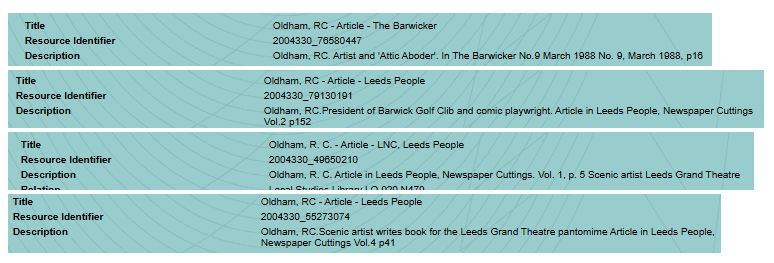
What did these articles tell us? Well, they tell us that Oldham was, first, a scenic artist at the Grand Theatre in Leeds, but also the President of the Barwick Golf Club. The club’s annual dinner took place in Leeds and was usually followed by a play performed by its members and written by Oldham. One play so impressed the Director of the Grand Theatre that Oldham was hired to write and produce pantomimes at the Grand for the next 18 years. Such was his prowess in this field that he was even nicknamed “King of the Pantomime Writers”. He married Lillie Howard, an actor, and , together, they lived at Scholes Hall for many years.
Even before that recognition for his pantomime writing, Oldham was the subject of a 1906 article in the Yorkshire Evening News, where his abilities as a scenic artist were praised for both his “interiors” and his “exteriors” (the article says scenery artists were usually good at the former but not the latter).
His village scene is delightfully fresh and bright, while his banqueting hall and the fairy seminary are conclusive evidence that he is a diversified and successful painter. His other scenes in the pantomime are also excellent.
It’s hard to make out, but you can see in this photograph below from our Leodis archive of historical Leeds images a playbill advertising The Babes in the Wood.
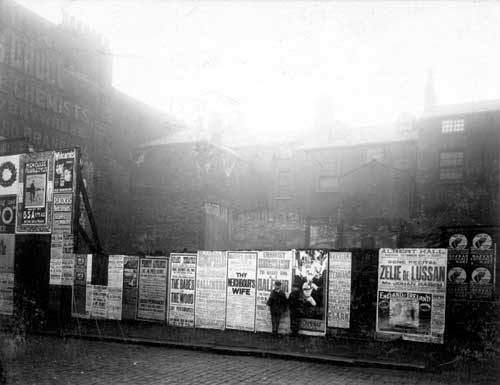
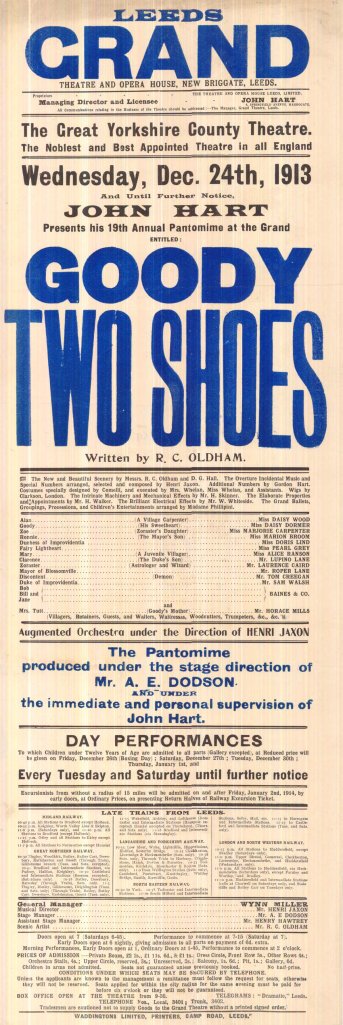
The Grand’s theatrical manager, John Hart, is “congratulated” for having Oldham on his staff. Clearly, Hart held Oldham in high regard as the two were collaborating again in 1913 on a production of Goody Two Shoes. We know this because Leodis also includes a copy of the playbill for the Grand’s show on December 24 1913, which Oldham is named as being responsible (with D. G. Hall) for the “New and Beautiful Scenery.”
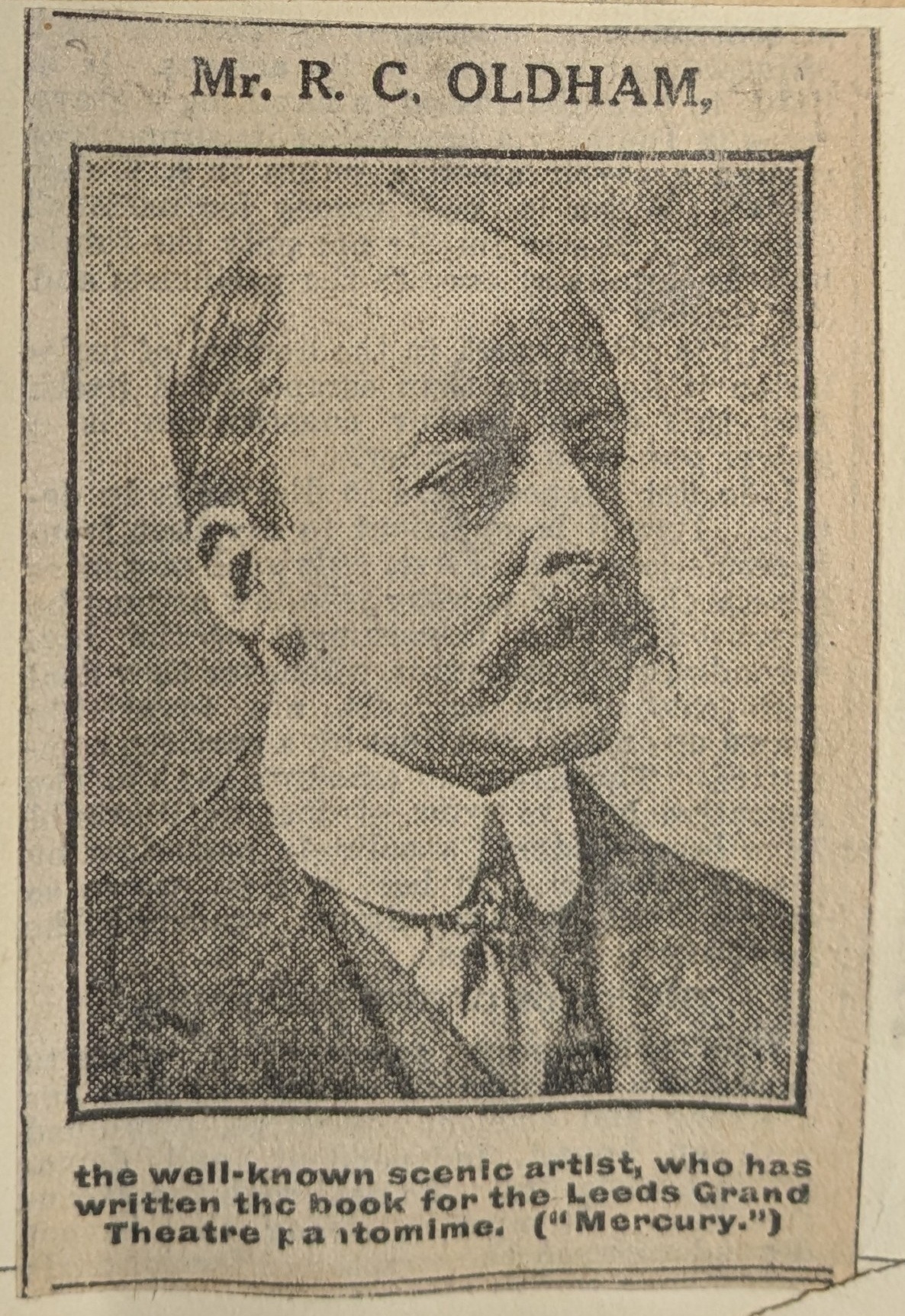
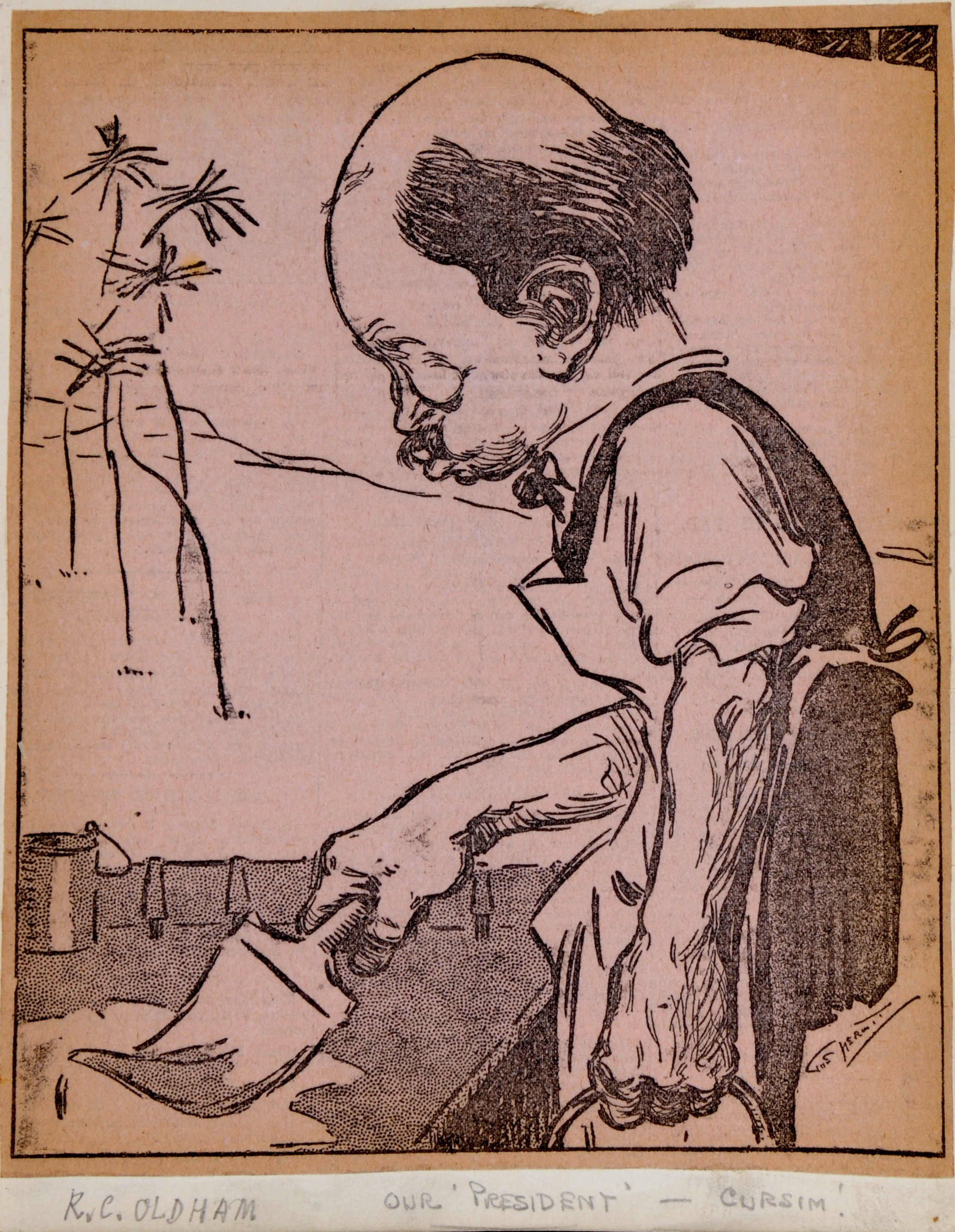
Finally, and perhaps most pleasingly, one of the articles included a photographic image of Oldham – usually a rarity for researchers looking into figures from the past.
And that’s about all the secret knowledge we’ve been able to uncover about R. C. Oldham – he seems like someone who it would be really useful to know more about, so that his contributions to culture in Leeds can be more fully recognised. Please get in touch with us if you can tell us anything else: localandfamilyhistory@leeds.gov.uk | 0113 37 86982
Update December 2025: David Teal from the Barwick-in-Elmet Historical Society got in touch with us after reading the article above, to offer some more details about R. C. Oldham – with his permission these are reproduced here, along with some more images:
I was interested in your blog on R(ichard) C(harles) Oldham, the Grand Theatre scenery painting and pantomime writer at the Grand Theatre.
At the Barwick-in-Elmet Historical Society we have come across him many times. He lived from a time in the now demolished Scholes Old Hall and was a member of the Barwick Attic Abode Club as well as the Barwick Golf Club. The attic club was a ragtag collection of bohemians, artists, painters, writers and the like who met and stayed in a ram-shackled old thatched cottage on Main Street in Barwick around the 1890s until about 1910. Edmund Bogg was amongst their number and I think it must have been along the lines of the Leeds Savage Club. We have a copy of their “scrapbook” and other ephemeral items. R. C. Oldham and his wife Lillie feature a number of times (see a couple of examples below).
As well as his theatrical work he also embraced the then new emerging medium of cinema. He was a promoter and one of the initial Directors of the Crossgates (Cross Gates) Picture house which was located adjacent to Cross Gates Railway station and opened in 1920.
One of the Historical Societies articles states “Richard C. Oldham was born in what is now Malaysia in 1872 to British parents, he had a talent for art and writing and became a scene painter for the Grand Theatre in Leeds. He was a member of Barwick Attic Abode Society, a group of bohemian artists, painters and writers who regularly stayed in a thatched cottage near the New Inn in Barwick-in-Elmet during the period 1900-1910. In 1913 his talent for writing was recognised by John Hart, the then Managing Director of the Grand and his pantomime “Goody Two Shoes” was the 1st of a series, written by him, put on by the theatre every year until 1930. He was called in his time “Yorkshire’s uncrowned pantomime-writing king.””

 The Secret Library | Leeds Libraries Heritage Blog