This is part three of a four part article by Becky, looking at the Peaches Cottage in Middleton. Read part one and part two before we continue the search.
Continuing our journey into the history of Peaches Cottage in Middleton I am going to start looking at another family whose name has been strongly linked to the address.

Bygone Middleton (L MID 942) mentioned the Meriavale family twice as colliery owners and also as employers of a previous inhabitant who was claimed to be a miner.
Rather than heading straight for Ancestry on this one, I decided to take a look through some more of the material located in the Leeds by Place section. I found several references that seemed promising:
‘Middleton Hall . . . occupied by a succession of people . . . including, more recently, the Merrivale family’ (Middleton Park History Trail, LP MID 914)
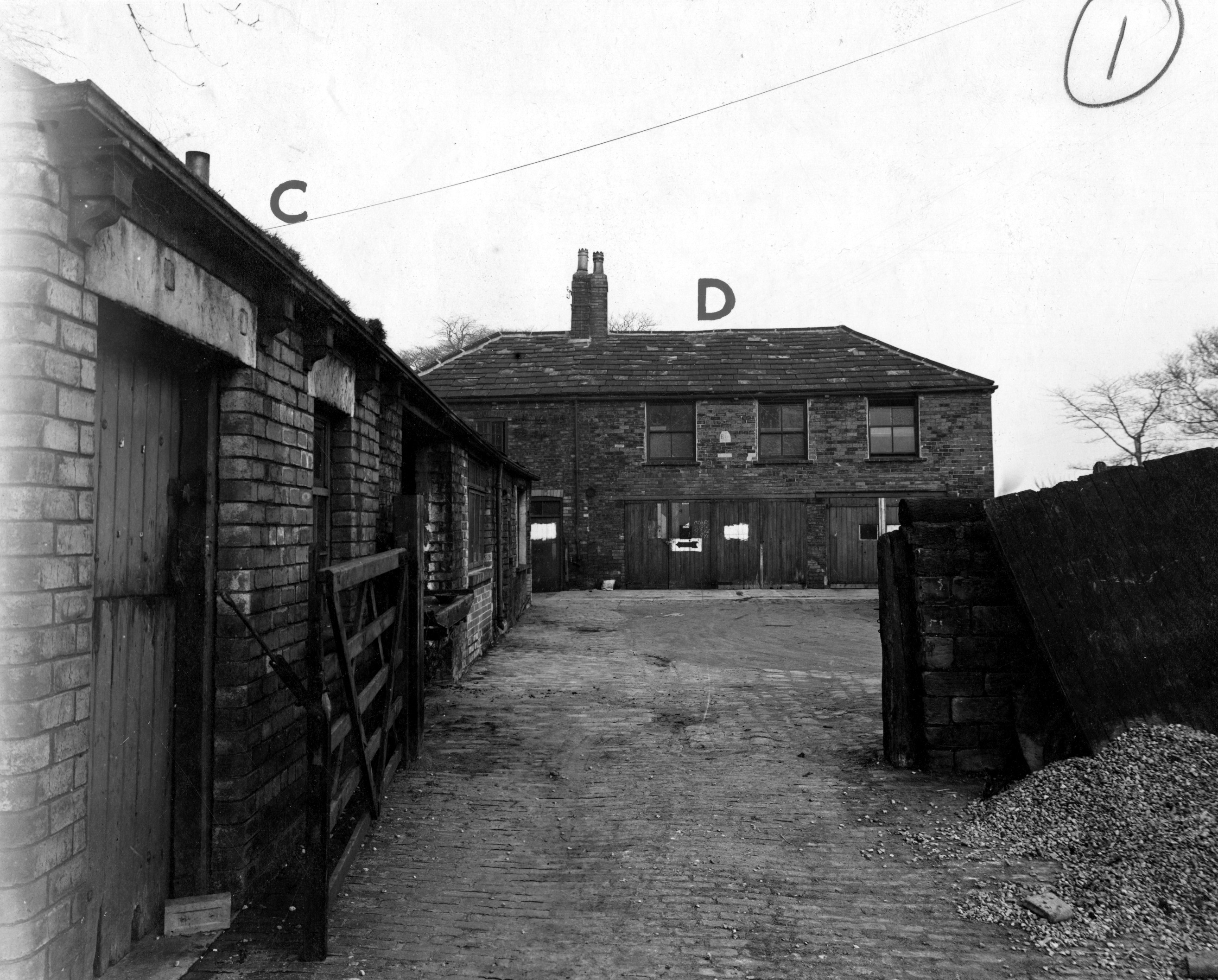
‘The passing of the estate from the Brandling family brough the Maudes into residence at Middleton Lodge, the Nicholsons, and later the Merivales to Middleton Hall’ (A History of the Parish of Middleton and of its Parish Church, compiled by the Revd. E. J. Illing, LP MID 283).
“Mr Merryvale was the manager of Middleton Pit . . . then took a step up in society to live at the hall in Middleton” (p. 4, History of Middleton LP MID 942).
“Photograph of managers and deputies of Middleton Estate, Colliery and Fireclay companies 1913 – Mr Merivale, the owner”(Backward Glances, LQ MID 942).
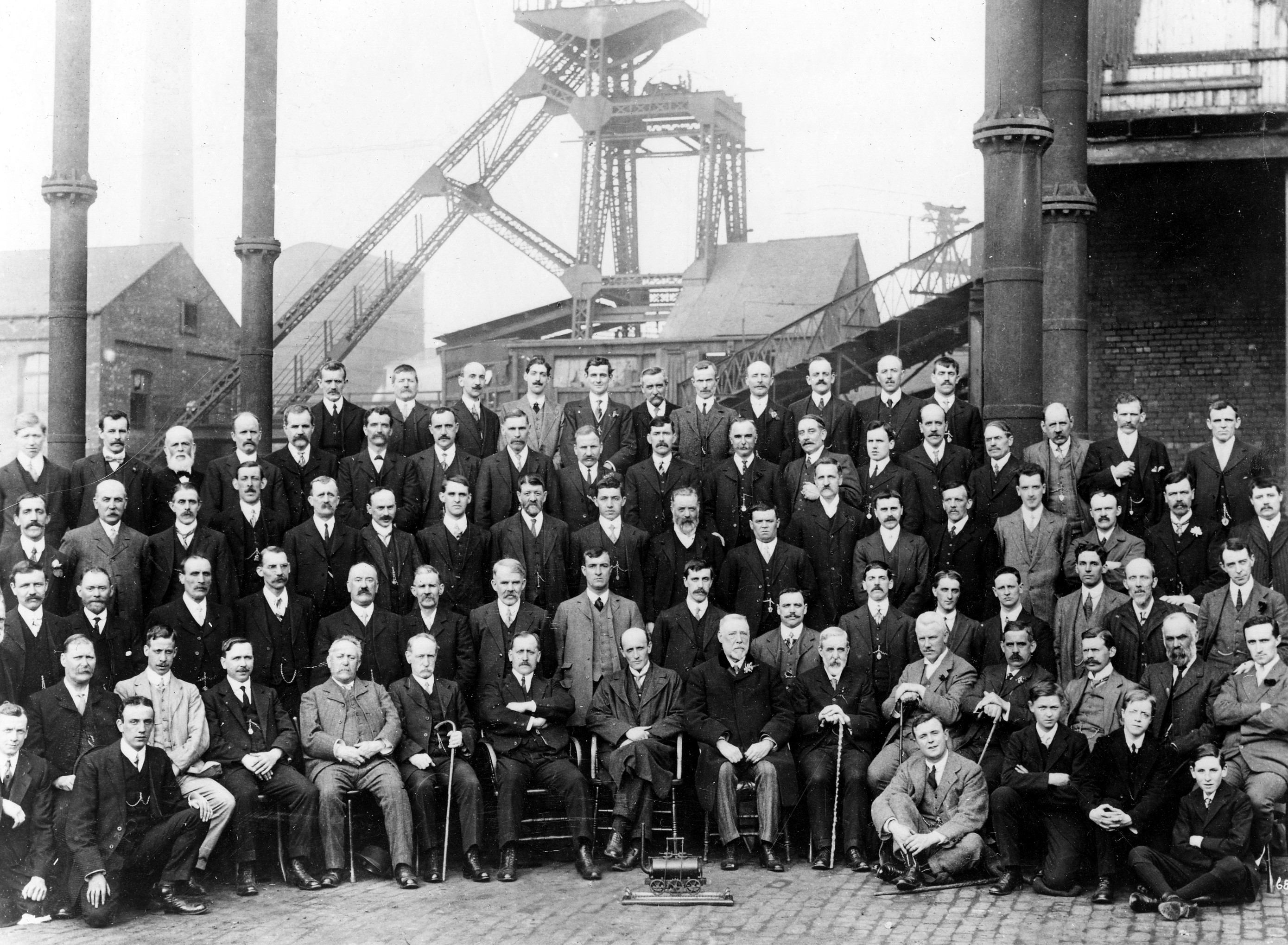
Variations in spelling aside, it does very much seem that a Merivale family were associated with Middleton colliery and Middleton Hall. However, the original assertion that George Spink was employed by them seems likely to be wrong. The account of a servant to the family in the History of Middleton book has them arriving in the area in 1911; far too late to be employing a man at the mine in 1841.
From here, a simple google search took me to this page providing a history of Middleton Colliery and with it the snippet that in 1923, Charles H. Merivale of Middleton Hall was not just a director but also the general manager. The writeup here also clarifies some details of who was in control of the colliery and when – if George Spink did work for ‘the family’ between 1841 and 1856, it would have had to have been the Brandlings, not the Merivales.
At this stage I could dive headfirst into the Merivale family and it is very tempting. However, I think we have enough here to deal with the two facts associated with them. Instead, let’s go back to George Spink.
George Spink
Having made great progress with first batch of facts to check, it was time to move onto a new name – George Spink, purportedly a miner who had lived at the cottage 1841-1856. I have already established that he cannot have been an employee of the Merivale family. But did he live at the cottage?
With a date range of 1841-1856 when he might have been living at the cottage, I decided to search for him in the 1851 census. I got no results across Leeds or Yorkshire that matched the location, possible age and name. I thought it might be easier to try and find Middleton and comb through the whole census, but then I hit a problem on Ancestry. Middleton is not part of Leeds in 1851, but searching for Middleton in Yorkshire produces censuses from Middletons near Ilkley and Driffield. If I add ‘miner’ as a keyword, it starts finding people whose name is Miner. However, I can use the resources in the department to help me find my way to the right census. My first thought was that I could try using a street index. We have these for the Leeds census up to 1901, with some other Yorkshire ones too. However Middleton isn’t Leeds, and I don’t know what it might it be under; plus the cottage isn’t on a named street. This means the street indexes are of no help to me right now.
What will help, is a place index, and thankfully, one was compiled many years ago by the staff of the department. The index shows us 3 Middletons, one near Pickering, one at Ilkley and one at Rothwell. In modern Leeds, Rothwell is a neighbouring suburb to Middleton so this must be the one I want. This index also gives me bundle, reel and folio numbers to pinpoint the documents I need. That’s a lot of new words. What do they all mean?
The word ‘bundle’ is often used interchangeably with ‘piece’ when referring to the census. ‘Reel’ is really for our internal use to help us realise that the area is a large one and on more than one reel of microfilm. ‘Folio’ is another important word when using census documents. On the top right of every other page a number is stamped. This is the folio number. The reason to use folio numbers rather than page numbers is that from 1851 onwards folio numbers are unique to the piece, whereas page numbers restart with the enumeration district. Enumeration districts are numbered within a piece, and this is how Ancestry breaks up the census if you are using them to access it. Confused? Yes, me too. Basically, if you have a year, a piece number and a folio number, in theory you have everything you need to find your way to a particular census record – or at least narrow it down to two.
In reality, this doesn’t work on Ancestry, even though it seems like you can search by both piece and folio. You can search by piece, but they are too big to browse for a specific person in a specific area. However, it does work if you use the microfilmed version of the 1851 census we hold at the Local and Family History Library. You can load the reel up and browse through the folios to find the one you want. I find it easier to use Ancestry than our microfilms, so I just loaded up the film and copied down the details of the first person on the folio that I thought I stood a chance of finding. An alternative would have been to find someone in a trade directory, but checking this way meant I had an age, a spouse, a place of birth and some children to help me pinpoint them.
This tactic succeeded, and I dropped straight into the census covering Middleton. And this is probably the only way I could have found my way to this batch, given the way that Ancestry have categorised it. It isn’t listed as part of Rothwell at all, but rather as a district of it’s own that contains censuses from 4 different areas of Yorkshire. It’s also been given a sub-registration district of Chapeltown which as any Loiner knows is nowhere near Middleton! Thankfully, there are only a total of 64 pages covering the two enumeration districts of the area so it would be a relatively easy job to start at the beginning and page through all the entries to look at the names.
Before I did that though, I learned that there is an old school analogue way to search for people in the census. Going back to the place index, there is a small red x next to some of the entries. This indicates the existence of a name index. A NAME INDEX?!?!?!?!
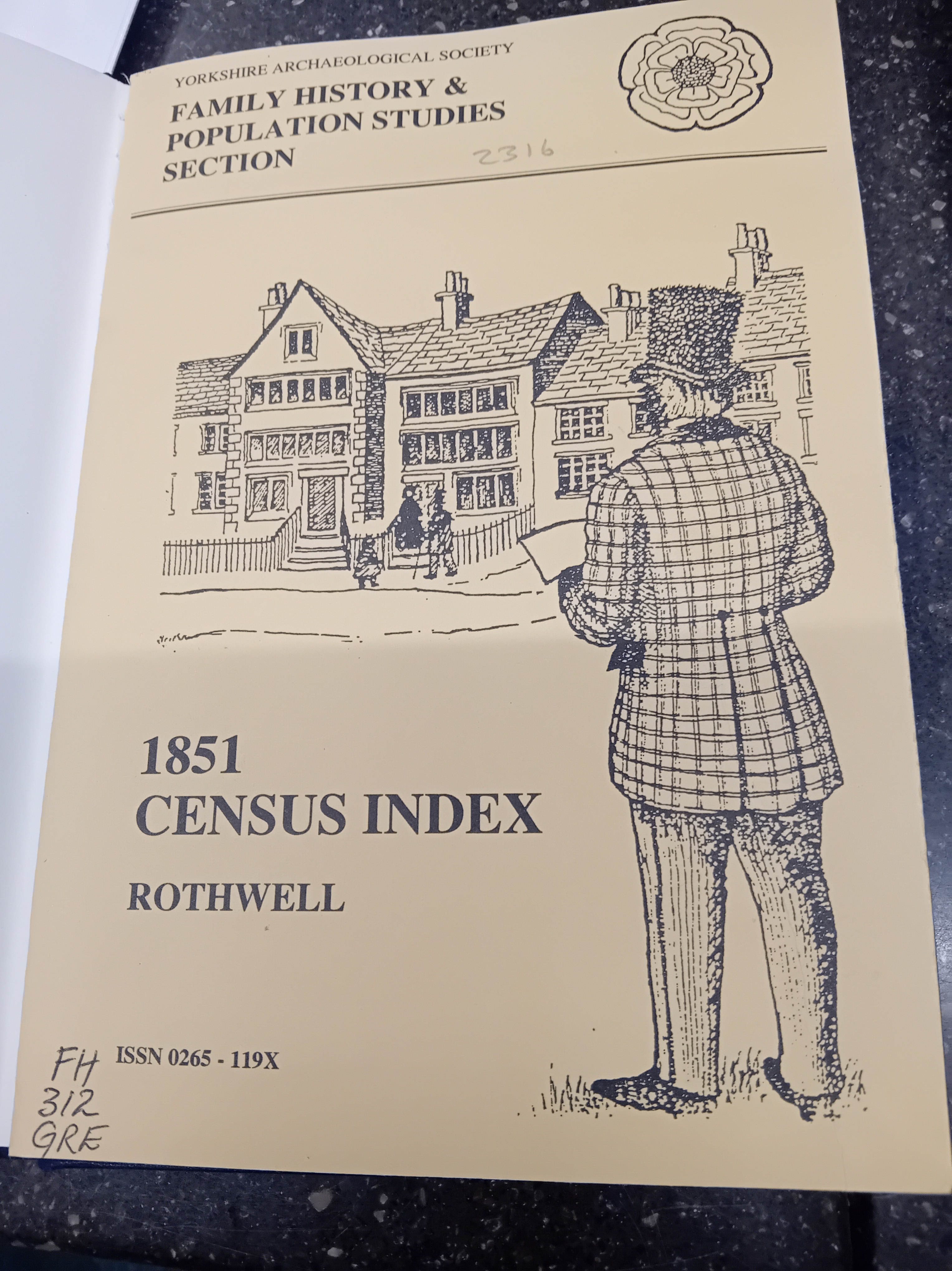
Right up on the very top shelf of the census indexes are sets of name indexes. Since the advent of digital access, these have rather fallen out of favour, but in days of old (sorry Karen) these were extremely important and entire historical societies used to work together to produce these. I pulled the Rothwell volume and under Spink there was a strong candidate:
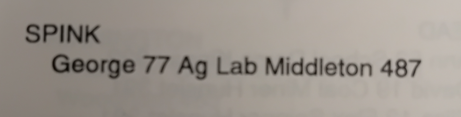
He isn’t a miner though, but an agricultural labourer. I decided it would be worthwhile going through all the entries for Middleton and see if there was anything else that jumped out at me. Sure enough, there was a Thomas Binks, a 60 year old coachman.
Like the 1841 census, the 1851 doesn’t necessarily give a street address which means that I have no chance of solving this absolutely. The address associated with George Spink is what looks like Oak Hill, which appears on the census after Windy Hill. Thomas Binks however, appears on the same folio as Middleton Hall, leading me to believe that he is a much stronger candidate. What does the 1841 census tell me?
In 1841, the only Thomas Binks in Middleton was a 45 year old male servant living at the Porter’s Lodge, Middleton. Nearby addresses are Old Row and Waterloo Row. His daughter Ruth was a servant at Middleton Lodge. There was no George Spink. Strictly speaking, I ought to dig harder into this, looking more closely at the available information for both men. However, based on what I’ve found, I think that the assertions about George Spink miner, living there between 1841-1856 are incorrect; and that the building became known as a ‘coachman’s cottage’ in 1851 because Thomas Binks lived there.

The final part of this four part article is available soon.
 The Secret Library | Leeds Libraries Heritage Blog
2 Comments Add yours