Welcome back to Heritage Volunteer Andy Armstrong this week on the Secret Library Leeds blog. This is part seven of Andy’s curation of the Leeds City Council papers held in our Local and Family History department; this time, Andy has been looking at education in Leeds. As always, Andy’s research is accompanied by a research guide and a comprehensive spreadsheet of all our stock holdings on the subject of this blog…
Hi. My name’s Andy Armstrong and I have taken on the task of sifting through 200 years of Leeds City Council papers held by the library to bring some structure to them and to produce research guides on subjects such as transport and housing.
Leeds Corporation, the precursor to the City Council, was reformed in 1835, Corporation had few powers to affect the development of Leeds, and little money with which to deal with the booming metropolis. Planning was not the specialist area that we know today, and building was undertaken by private developers, aiming to meet immediate needs. With Leeds’ population increasing from around 40,000 in 1800 to 430,000 in 1900, this led to many issues that could only be dealt with by being able to impose a more strategic framework for development.
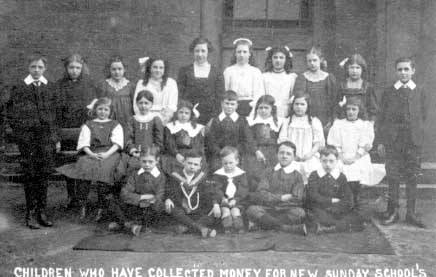
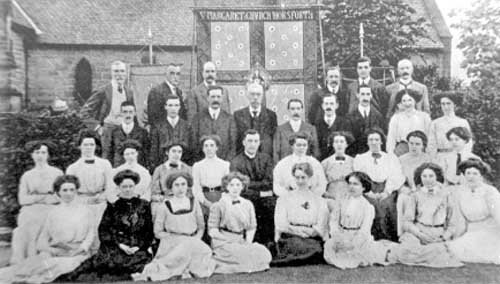
Education was very different 200 years ago. The children of the wealthy went to private school for a classical education, while some went to voluntary schools, like Sunday School. As well as bringing many people into Leeds, the Industrial Revolution led to the need for better educated workers. This led to attempts to open more schools through voluntary assistance or church funding, but by the second half of the century, most children were not in school. The Education Act of 1870 gave the power to local School Boards to make sure schools were available to all and this started a school building programme across Leeds. Soon attendance became compulsory.
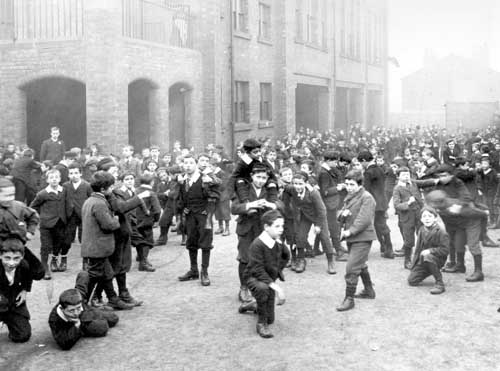
It wasn’t until 1902 that a new Education Act passed the control of Education to local authorities, and Leeds City Council took over. It brought together School Board schools and church schools and enabled all children from 5 to 10 to attend school.
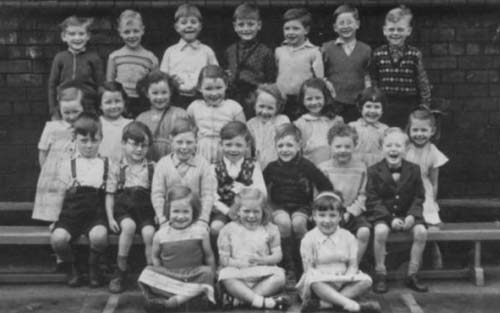
In the early years, health was as important as education. Medical and dental inspections showed that many children were ill or malnourished. In 1909, for example, of the 16,600 inspections undertaken by the Council, 31,739 diseases or defects were found, ranging from TB (304) and tooth decay (9,261) to dirty & verminous children (2,923) and subnormal nutrition (1,548).
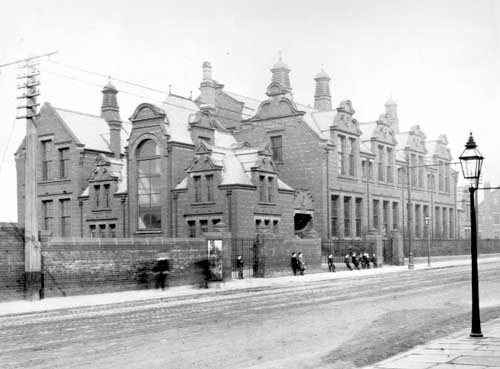
School dinners were introduced by an Act of Parliament in 1906. Of course funding was a major issue and in 1914 there were questions about whether central government should fund these meals (as a state benefit) rather than the local Rates. Elementary education was 49% funded by Rates and 47% by Exchequer grants. The limited Higher Education provision was funded 31% by Rates and 39% by Exchequer grant.
Gradually, education was extended beyond the age of 10; to 14 in 1918 and 16 in 1972. Free secondary education was enshrined in law in 1944.
 The Secret Library | Leeds Libraries Heritage Blog
Interesting article Mr Armstrong. The city was also at the front of the curve on comprehensive education. Sunday schools were purely for religious education. I was drummed out of St Richards Sunday school before I even started. The young lady in charge thought that I looked like an impudent boy. She was probably a good judge of character…..!
Cheers
Bob Ex Leeds pupil and later ( by some miracle) a Leeds Primary school teacher.
On Thu, 2 Apr 2026, 11:31 The Secret Library | Leeds Libraries Heritage