On this day in 1948 the troopship Empire Windrush arrived at the port of Tilbury, England, after a journey that began at that same place before visiting Southampton (to collect troops) and then taking in stops at Trinidad, Jamaica, Mexico, Cuba and Bermuda. On board were at least 1,027 people (according to the passenger list), plus an unknown number of stowaways and servicemen.
Of the 1,027 passengers around 802 gave somewhere in the Caribbean as their last address. While not an exact way of tracking how many Black Caribbeans arrived in the UK on the Windrush*, the passenger numbers give some indication of possible numbers.
An article in The Times on June 23 1948 reported 492 Jamaicans arriving in Tilbury. Tickets for travel on the ship had been advertised in The Jamaica Gleaner in early April 1948 before the Windrush had left England. C class tickets cost £28 and 10 shillings, the equivalent of over £800 nowadays for a one-way ticket on an uncomfortable troopship.


The relevance of the British Nationality Act 1948 to these events is often overstated. It had not become law at the time the West Indians arrived (it received Royal Assent on 30th July 1948 and commenced on 1st January 1949) but they were already British subjects as each of them held a British passport. They had every right to live and work in the UK. This migration continued throughout the 1940s and 1950s, into the early 1960s, when the enacting of the Commonwealth Immigrants Act (1962) restricted the arrival of Caribbean people.
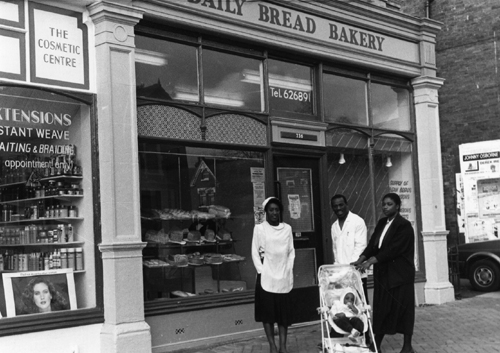
Even so, by that date, a generation of African-Caribbeans had made Britain their home, including Leeds. You can read more about the struggles and achievements of those Leeds pioneers in a previous article on this blog – which also provides a short reading list of books available in the Central Library collections on the same subject. The same reading list can be found in our African-Caribbean Family History guide, which offers a starting point for anyone investigating their Caribbean and African roots.
Online workshops for beginners to African-Caribbean genealogy are in the pipeline from our Librarian team – please check our Twitter, Facebook and Ticketsource pages for updates. You can also sign up to our mailing list and be the first to find out about upcoming Local and Family History events.

Further resources that can help you discover more about the history of African-Caribbean people in Leeds are:
- The Windrush Learning Resource Pack – created by the Geraldine Connor Foundation
- The Eulogy Book – a book by Susan Pitter, exploring the lives of first-generation African-Caribbean settlers in Leeds (which was based on a 2019 exhibition at Leeds Central Library)
- Rebellion to Romance : we are Black, British, West Indian and Leeds: a 1970s and 80s story – another book by Susan Pitter, a continuation of the story told in Eulogy
Finally, please check our new and permanent tab that lists all our articles relating to Black History in Leeds and the Central Library collections.
*Many of the people giving a Caribbean last address were white – or sometimes Black – but only coming to England for a holiday or to carry out a particular piece of business. In addition, 168 people boarded the Windrush in Bermuda (which strictly speaking is not in the Caribbean); all but one or two were white but, as they had been working in the Dockyard in Bermuda, many gave their last address as Bermuda. In addition, 66 Polish people were collected at Tampico, Mexico.
 The Secret Library | Leeds Libraries Heritage Blog
One Comment Add yours