This week on the blog we hear from volunteer Andy Armstrong, who has travelled through literally thousands of items in our collections to bring you this article…
Hi – my name’s Andy Armstrong and I joined the library as a volunteer last autumn to help search through the vast collection of material produced by Leeds City Council over the last 200 years. Currently, there are nearly 2,000 index cards which reference the material held by the library. These cards range from one which references over 100 years of accounts, to one which references a single leaflet. My role is to review the catalogues and physical papers to bring some structure to them and to produce a research guide. You can now view that research guide elsewhere on the Secret Library website.
So far, I have reviewed all the papers related to transport, which fall, under the Council’s current structure, into the category of Parking, Roads and Travel. This is a lot more interesting than it sounds! (You can view a full list of all the papers I looked at through this link)
200 years ago, the Council, then known as Leeds Corporation, had little power to affect transport in the city. Acts of Parliament were required to build canals and railways and both were funded by private investment. Roads were generally poor, or funded through tolls. It was not until the Municipal Corporations Act of 1835, which established ratepayer funded town councils, and various Leeds Improvement Acts in the mid 19th century, that the powers and functions of the Corporation started to resemble those of today.
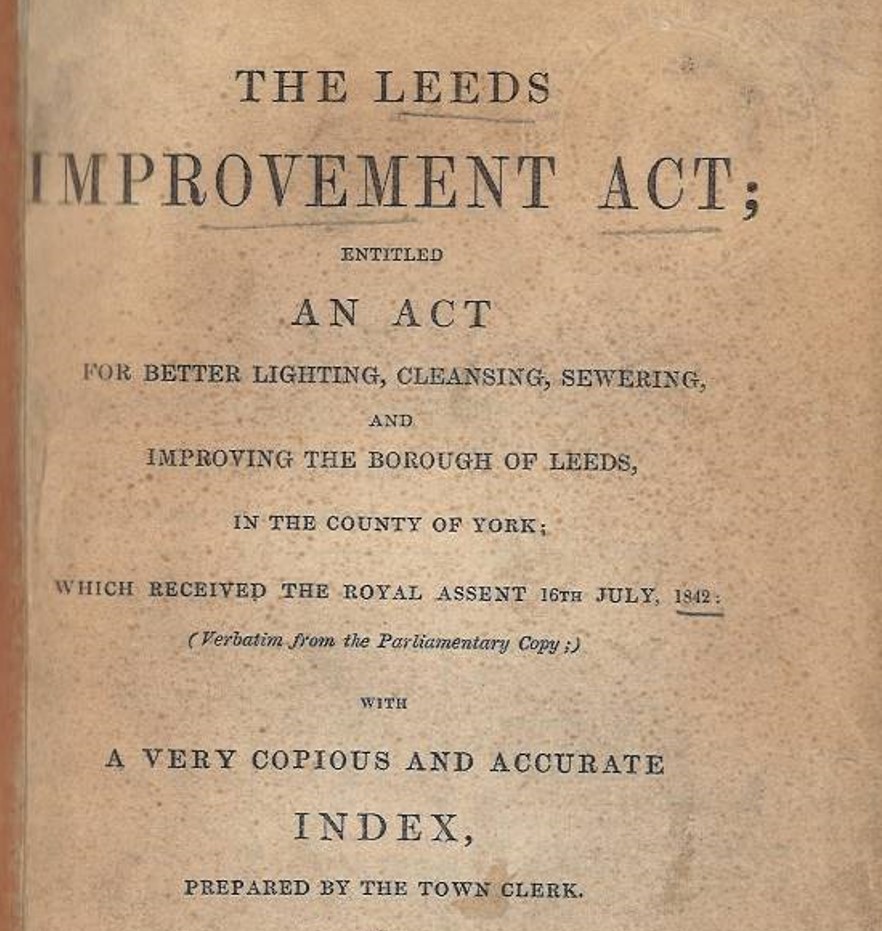
For much of the 19th century, the Corporation’s role was to oversee the transport system through licensing and to gradually remove road tolls. It wasn’t until the end of that century that it took a major role in delivering services, when it purchased the Leeds Tram Company, which had been failing due to lack of investment and poor service.
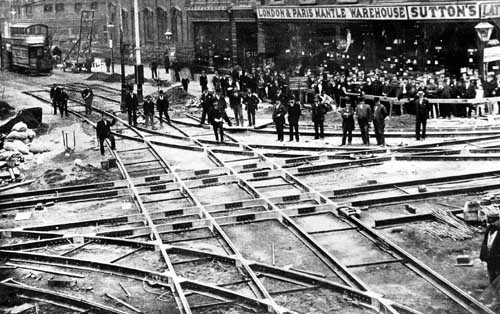
The Council continued to play a major role in transport throughout the 20th century, gradually overseeing the move from trams to buses, including bus nationalisation in 1948 and deregulation in 1986. It took a much more strategic role towards the end of the century with the eventual transfer of powers to the West Yorkshire Transport Authority.

The papers held by the library such as Annual financial accounts and various transport Committee reports show so much.
- For trams: Lots of statistics – for example in 1920, 136m passenger journeys were made; an average of 252 journeys per head. There were 2,600 employees.
- For buses: The move over time from horses, to trolley buses, to motor buses etc. In 1894, the Corporation had in force 334 horse drawn omnibuses and 65 tramway cars. By 1904, there were 245 electric tramways cars, but only one omnibus.
- For roads: the building of the Ring Road, using unemployed workers and funded by government grants. And also little snippets that bring it all to life – for example, when the ring road was being built a hundred years ago, the price of some land bought for the road near Pudsey was offset by the sale of rhubarb bulbs removed from that land. Only in West Yorkshire!
Alongside these regular publications, are many others including bye-laws and traffic management, covering everything from driving on the left (1908) to the pedestrianisation of Briggate (1972). There are many maps of the city showing current and proposed transport facilities throughout the period. There are also details of road closures during the Queen’s Coronation in 1953 and her visit with Prince Philip in 1958. And more recently, there are the plans from the early 1990s describing the Leeds Way, which proposed the Supertram, which sadly never came to fruition.

 The Secret Library | Leeds Libraries Heritage Blog
Would love to know if a record of those working on the Trams was ever kept?
Hi – thanks for getting in touch. Names of employees isn’t something that’s covered by the records we keep at Leeds Central Library, sadly – if such lists have survived, they’re likely to be at the West Yorkshire Archive Service: https://www.wyjs.org.uk/archive-service/contact-us-and-opening-times/leeds-archive-services-opening-times-and-information/
Thanks,
Antony
Leeds Libraries