Library and Digital Assistant Heather Edwards returns for the final part of her trilogy on LGBT+ pioneers in the medical field. You can see all three parts of this series elsewhere on the blog.
Dr James Barry
Now, Dr James Barry is a bit of a contentious figure to include here, as over the years there have been some pretty heated debates around the terminology of their gender. But I would feel remise to not feature their achievements in this post due to the limits of language and modern definitions that didn’t exist at the time, when the truth is really, we can’t actually know for certain (Identities can be fluid) So, in the hope of anti-gatekeeping, I will be referring to Dr Barry by he/him pronouns when discussing his work, as that is how he chose to live his professional adult life and how he contributed to the field of surgery.
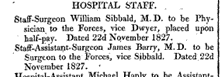
Dr James Barry (born Margaret Anne Bulkley, c 1789- 1865) was an Irish military surgeon in the British Army; most famous for having performed one of the first recorded caesarean sections in which both the mother and child survived the operation. He rose through the ranks to make Inspector General in charge of military hospitals (second-highest rank in the British Army) at the time of his (forced) retirement.

Having held various positions in the army across the British Empire from 1813, Barry was known to be something of a rebel when it came to advocating for improvements; his methods got him both demoted and arrested more than once. Using his rank he effected significant changes; sanitation and water systems, improved conditions for soldiers and their families, enslaved people, prisoners, the mentally ill, poor, and provision of a sanctuary for the leper population.
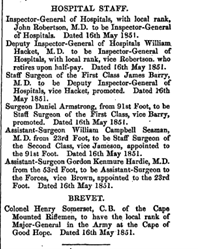
After his death Dr Barry’s sex was discovered by a charwoman upon his laying out. His army service record was thereby suppressed and sealed for over 100 years. You can trace the career promotions of Dr James Barry through our collection of The London Gazette, or learn more in the book below:

Dr Ewan Forbes
(Dr?) Sir Ewan Forbes, 11th Baronet was a Scottish Nobleman, GP and farmer. Registered female at birth, Forbes and his mother sought his first hormone therapy in Germany and continued to take the opportunity for more specialist treatments as he travelled for his studies. He began presenting as a man during the 30s, and became keen on entering the medical field. When his farther refused to fund his medical studies, Forbes decided to fund his own way, aiming to save £1000 to cover the costs. He graduated from the University of Aberdeen in 1944.
After quickly working his way up from Junior Casualty Officer (Aberdeen Royal Infirmary) to Senior Casualty Officer, he opened his own practice as a rural doctor in Alford. Here Dr Forbes put the German he’d learnt abroad to good use; as well as being the GP for one of the biggest areas in Britian and travelling regularly through ten-foot snowdrifts, he acted as medical officer for German prisoners of war- advocating for improvements in their living conditions. He sold the practice 1952.
Having successfully reregistered his birth as male, changing his name to Ewan and marrying a farmer’s daughter/his housekeeper, there was little interest in his gender until 1965. Upon his elder brother’s death, Forbes’ right as the next male heir to the baronetcy was challenged by cousin-come-stereotypical-villain John Forbes-Sempill, who argued against the validity of the reregistered birth (despite other family members expecting the title to pass to Ewan) This lead to a *super top secret* court case where a judge listened to 12 medical experts in a private solicitors office, NOT an open court, documents of which were only partially released in 1991, and not fully disclosed publicly until recently. Neither did Ewan’s winning of the Case in 1968 set a precedent for legalities around gender variations.
Written by professor of medical humanities and LGBT+ campaigner Zoe Playdon, read more about Dr Forbes remarkable life, and the wider LGBTQIA+ rights implications of the case here:

Professor Margaret Stacey
Medical advancements don’t just happen on their own, and don’t just come from doctors. Examining the conditions around treatment can prove just as revolutionary to the long term understanding health and wellbeing. Professor Margaret Stacey (1922-2004) who was famous for her multi-disciplinary approach to establishing medical sociology as a distinct academic field. Stacey felt that rather than simply focusing on biological causes and clinical interactions, the link between health and social factors and how healthcare organisations like hospitals function, were essential for reconceptualising medicine as a ‘healing system’ in a wider societal context.
During the 60’s she was funded by the Ministry of Health to lead the influential research project ‘Children in Hospital’. At the time, when a child was admitted to hospital, the sole objective was to treat the illness, which led some children to be separated from their families, friends and schools for many months and ignoring the wider wellbeing of the child (previous studies of children’s health in hospital didn’t consider wider factors that can also affect mental/physical health).
An active feminist, Stacey held positions in various universities across the UK and was the first woman to be appointed as professor at the University of Warwick in 1974. Serving as chair of the sociology department and the graduate school of Women’s Studies in the 70’s and 80’s, Stacey became known as a mentor-figure in her support of younger female colleagues and students. Her active efforts to improve gender balance in academia can be seen yet more clearly in her presidential address to the British Sociological Association (elected 1982) where criticised the male-dominated field and its influence on the primarily male subjects of study. What a woman! Other appointments include Secretary of the British Sociological Association (1968-70), Welsh Hospital Board (1970), and member-observer of the General Medical Council (1973-83).
Professor Stacey’s work in the sociology of health and healing has influenced policy and medical education that has improved the way we think of health and how people are treated. The pioneering mode of team research that made her first book Tradition and Change the first British social study to be granted a second, can be seen in the follow-up study here:


Dr Barbara Burford
Our final and most recent LGBT+ medical figure is a little bit different from others featured here in that we don’t actually have any books about/including her (that I could find) however her contributions and links to the local area mean I think she should definitely be featured on this blog! After many hours hunting through the card catalogue, bugging librarians and generally driving myself a bit nuts, I’ve turned to the library’s various online resource links.
Dr Barbara Burford (1944-2010) was a medical researcher, civil servant and writer. Born In Jamaica and moving with her family to the UK aged 10, she went on to study medicine at London University. She Joined the NHS in 1964, specialising in electron microscopy in postgraduate teaching hospitals, before leading a team at the Institute of Child Health, Great Ormond Street Hospital for Children, and ran the pulmonary vascular laboratory there during the 80’s. Here her team with Shelia Haworth helped several breakthroughs in heart and lung transplant surgery in children.


It’s clear that equality and furthering diversity in the healthcare field were key to Burford. From records accessed through newspaper databases and parliamentary records, we can see that she was Director of Diversity and Equality from 1999-2002… and an active one too! In Leeds she set up IT systems and Positively Diverse; a programme of guidelines designed to help achieve equality in the NHS. (Guidelines still in use today) as well as continuing to advocate for equality in her capacity as a consultant. While in Bradford Burford was instrumental in initiatives such as the Jobshop and with Bradford University, Bradford’s healthcare apprenticeship scheme. This scheme has been widely credited with transforming and diversifying the city’s healthcare workforce. She became the first deputy director of the university’s Centre for Inclusion and Diversity and in recognition for her hard work, was awarded an honorary doctorate in 2001 from Bradford University.


Alongside using her voice to champion diversity in the workforce, Burford was creative in spreading her message through publishing and performing as a political poet, playwright, and author. The above program is from Apples and Snakes, a collective of poets formed in the 80s in a room above a London pub that has gone onto become one of the country’s leading spoken word groups. Burford’s work was selected to be a part of the 1980 anthology A Dangerous Knowing: Four Black Women Poets, which was the first anthology to be published around Black Women’s writing. Her writing was also included in the Daughters of Africa anthology, edited by Margaret Busby (the first -and youngest- Black female publisher in Britain). While we don’t currently hold a copy featuring Barbara Burford, I have trawled internet archives for a sample of her included written work and/or reviews.


This review, published in the Australian Feminist academic journal Hecate: An Interdisciplinary Journal of Women’s Liberation (est. 1975) and penned by American author, poet and Black Lesbian activist Terri L. Jewell, highlights an understanding of the intersection of class, work, race and sexuality that was central to Burford’s advocacy across both her personal and professional lives. She was an inspirational woman who did inspirational things and was highly regarded by other inspirational people.

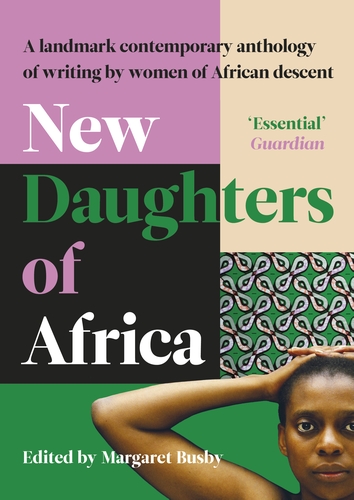
Though we don’t hold a copy of the anthology featuring Barbara Burford, we do have the second volume full of amazing Black female writers if you fancy getting inspired:
Please contact our Library Enquiries team to discuss access to the majority of books and other resources featured here: leeds.libraries@leeds.gov.uk or 0113 37 85005
 The Secret Library | Leeds Libraries Heritage Blog
2 Comments Add yours