Welcome to 2025! Our first article on the Secret Library Leeds this year Librarian Antony Ramm’s brief look at the breadth and depth of books in our Central Library stacks, using Gustave Flaubert as a case study…
For reasons that are not worth going into here, I have recently been reading a pile of London Review of Books from 2021. Most recently, in fact, ‘Flaubert at Two Hundred’ (LRB, 16 December 2021), written by Julian Barnes. The ins and outs of that piece are not relevant here, other than that Barnes refers at one point to what he calls “Flaubert’s best biography” – Francis Steegmuller’s 1972 Flaubert in Egypt. Barnes explains that it was this book that ignited his own passion for Flaubert, a passion that had otherwise failed to spark after a teenage reading of Madame Bovary:
It was here that I first became aware of Flaubert’s unmediated personality – Steegmuller called the book ‘a sensibility on tour’. Everything noisily overlapped: the exotic and the everyday, the comic and the grotesque, the dream and the dismaying reality; it displayed Flaubert’s preternatural powers of observation, his love of squalor and prostitutes, yet equally of the colours and smells of the desert, and the silencing sunsets. It was these omnivorous contradictions that struck me as so modern.
I must admit here that I really don’t know the first thing about Flaubert – other than, like Barnes, reading Madame Bovary in a bad translation aged 15 or 16; though, unlike Barnes, I’ve forgotten almost all of it in the years since. But I read the passage above and thought, yeah, that sounds like a book that might be worth looking at (a thought probably inspired by recently researching the life of Leeds antiquarian William Boyne, who was, I discovered, collecting archaeological remains in Egypt around the same time Flaubert must have been there).
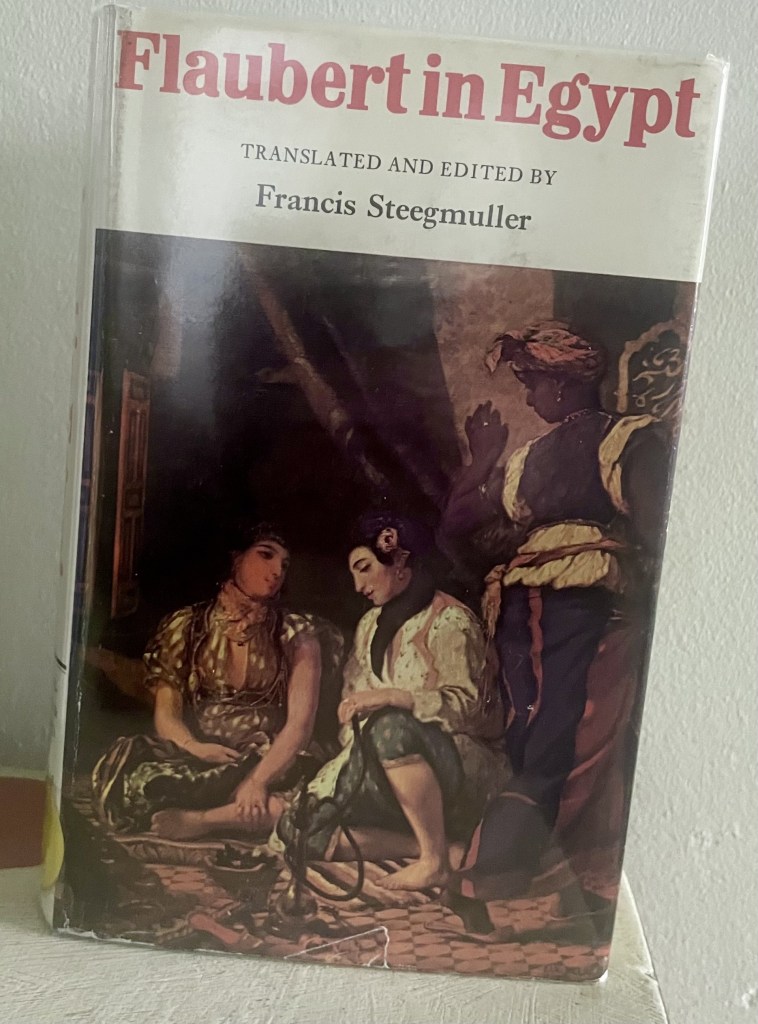
So, the first thing I did was check whether we held a copy in the Central Library. Wondefully, we did. That wasn’t really a surprise though: even excluding the books in our Lending Library, AND all those books managed by our Art Library department, AND the ones in our Music Library, AND our huge local history collection – we still have almost 250,000 books in our Central Library stacks! Many of those titles, managed by our Information and Research department*, are older, classic works in their fields…like Steegmuller’s Flaubert volume. Crucially, many those books are available for library members to loan and take home. (You can read more about the library stacks elsewhere on the blog).
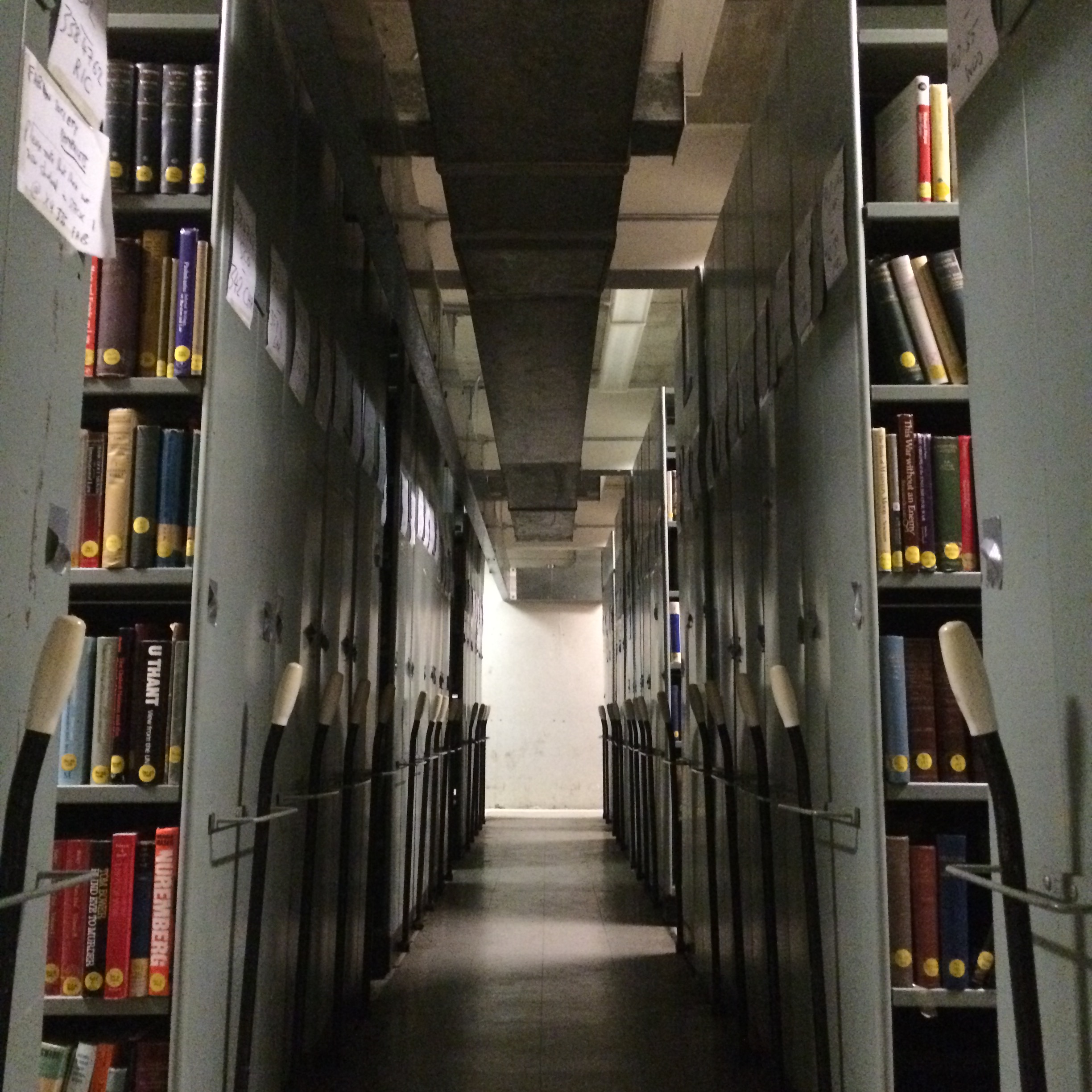
And why stop there? Let’s imagine you’ve borrowed and read Flaubert in Egypt and now, like Julian Barnes, you’re a confirmed Flaubert obsessive. What could you read next? Well, a simple catalogue search reveals we have in our library stacks over 100 other titles by or about Gustave Flaubert, including biographies, collected letters, literary criticism, and, of course, the author’s own works of fiction.
Where on earth to start with that list? Julian Barnes once again provides some helpful guidance: in the same section of his article about the Steegmuller book, Barnes also references Jean-Paul Satre’s The Family Idiot, his “theoretico-psychoanalytico-politico analysis-cum-attempted assassination” of Flaubert – if that sounds intriguing (and it really does!), we have a copy of that too…all three volumes, totalling well over 1,500 pages. And, afterwards, you could try a study of the Satre book by Hazel E. Barnes, the great American populariser of French existentialism.
But perhaps the best book to follow Flaubert in Egypt would take us back to our starting point, and a piece of modern fiction: Flaubert’s Parrot by, of course, the English novelist Julian Barnes, and celebrating in 2024 its 40th year since publication. But you’ll have to be quick…we’ve only got one copy and I’m seriously tempted to give it a go…
*Now based in the Local and Family History department on the 2nd floor of the Central Library
 The Secret Library | Leeds Libraries Heritage Blog
Fantastic Antony but please let us know more about William Boyne in Egypt (with or without parrot).
Hi Danny – good point! I found out a bit about Boyne’s time in Egypt while researching an article for the Thoresby Society, hopefully being published later this year. It wasn’t the central focus of the article so I don’t have too much to say – but, according to the sales catalogue when he sold his house in Headingley in 1858s he had acquired a selection of Egyptian antiquities “collected on the spot” (presumably by Boyne himself).
Thanks
Antony
Thanks. I think the museum own a mummified crocodile that once belonged to him. I wonder what else exists.