This week we hear from Library and Digital Assistant Kirsty Lodge, with a deep-dive into the traditions and heritage of festivities in our region...
By the pricking of my thumbs, something wicked this way comes…
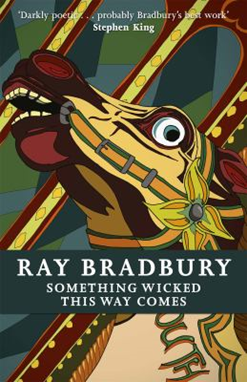
Ray Bradbury uses this quotation from Shakespeare’s Macbeth to describe the mix of excitement and fear evoked by the arrival of a carnival. (The novel is available to loan from the horror corner in the Central Lending library).
I remember reading his descriptive passage, of two boys seeing the arrival of a travelling fair, as part of a school comprehension test more than forty years ago. The words have come back to me many times as I watch the feast wagons set up on my local playing fields; the rides’ monstrous, other-worldly shapes, silhouetted against the late evening sunset. A moment of peace and pause which in the morning will become an assault on the senses.
*****
My local carnival is an annual event signalling the transition from late spring into early summer. I have often pondered the origins of this event and so I decided to delve into the photo archive LEODIS and also to consult the ‘Leeds by place’ books, pamphlets and periodicals in the Local and Family History Library at Leeds Central Library to find out more.
Spring is a traditional time for travelling fairs, carnival parades and local festivities which may (or may not) link to celebrations of fertility, new life and growth. Modern carnivals often recreate scenes of the rural past where Maypole dancing, the coronation of May Queens (sometimes with flower crowns) and feasting celebrated the return of the light after long winter nights; I wanted to investigate if this is authentic or the product of nostalgia for a bucolic past.
My research revealed that many of the carnivals of the 19th and early 20th century tended to have charitable, political, civic and trading motivations, raising funds and awareness of local charities and businesses.
Pudsey Carnival
Travelling fairs had visited the town long before the carnival was established and as noted in ‘Record of Events Pudsey and District to 1913’ Pudsey Fair was ‘revived’ in 1851 and in May 1889 Pudsey Spring Feast was started.
Pudsey Carnival is now held on the third Saturday in May and can trace its origins back to 1898, at the first (which was held on 1st July) Miss M Goodall was crowned Rose Queen. I was surprised to read that this first incarnation of the carnival only lasted 3 years ending in 1900. Historian Ruth Strong writes that ‘Perhaps after Pudsey won its Charter in 1899 the main motivation was gone.’
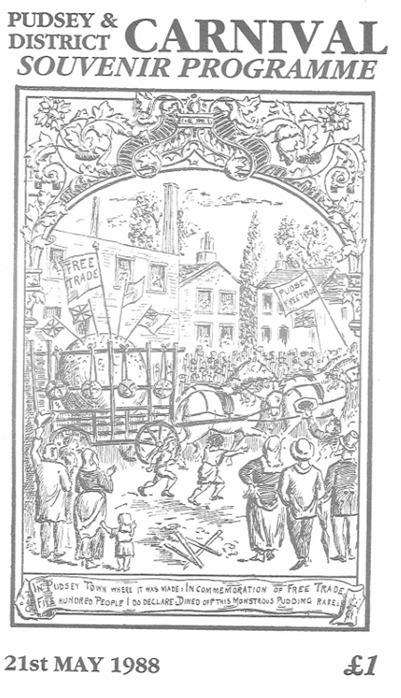
According to the Foreword in the 1988 souvenir programme the revival of the carnival in 1923 by Richard Ingham, then Mayor of the borough of Pudsey ‘was an outstanding success …attended by more than 50,000 people’. By 1929 the event was known as ‘Pudsey Glad Rag Day’, and locations had changed due to developments in the town. Funds raised by the event were divided between various medical charities in an era before the National Health Service. The programme also includes a message from the 1932 Carnival Queen to the 1988 Queen remembering her open-carriage ride in the procession and coronation on stage. In 1936 a ‘Miss Industry’ pageant was introduced with the winners over the next few years all being workers at local mills. The 1939 carnival was considered ‘the best ever, with the procession said to be 2 miles long and a record £650 being raised (over £36K in today’s money). Although continuing through the war years, the introduction of the NHS meant the carnival was no longer needed to fund-raise for the medical charities and it ceased to be. Interestingly the current Pudsey Carnival raises funds for a network of defibrillators and their maintenance in the Pudsey district.
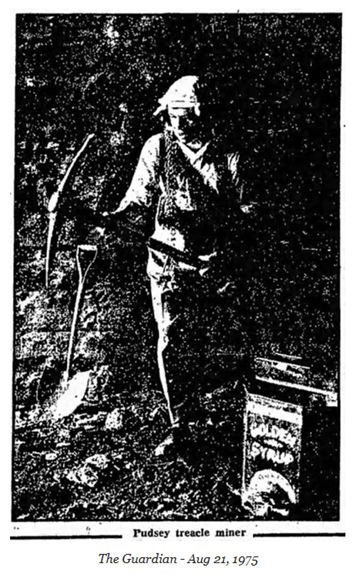
The revived Carnival 1988 parade had a nod to the past with a float from the ‘Independent Pudsey Pudding Makers’ in memory of the ‘Big Plum Pudding procession’ of 31 July 1846 which celebrated the repeal of the Corn Laws. There was also a float from the legendary ‘Treacle Miners’.
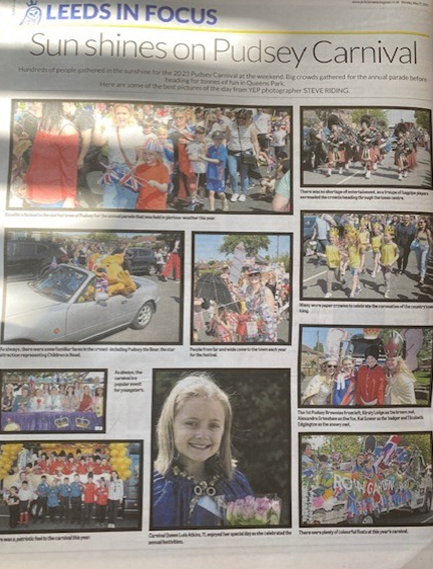
Back issues of the YEP and YP are available on Microfiche in the Local and Family History Library
In our ‘Leeds by Place’ section we have a collection of Pudsey Squeakers with photos and articles about past carnivals.
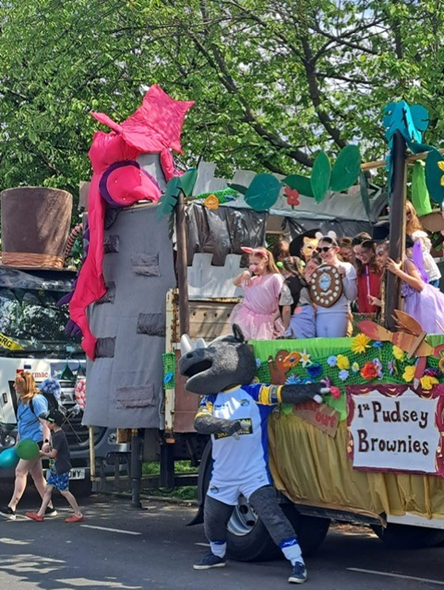
Photo: Alex Grimshaw
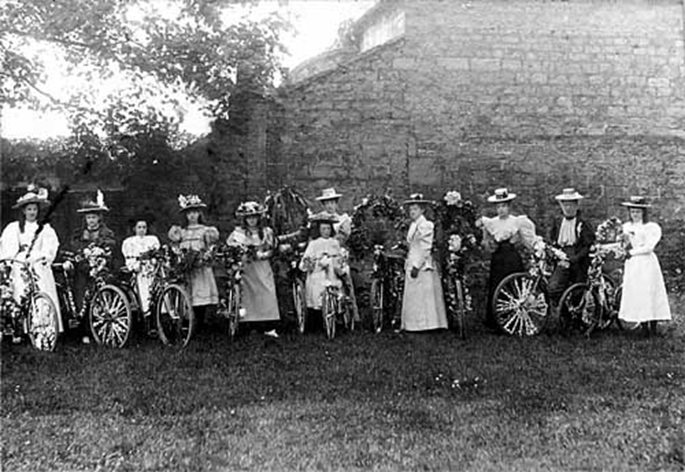
There is a large selection of photographs from our LEODIS archive of other carnivals and parades in the area. We are always grateful to receive more images for our collection and information about those that we have.
I have included a range of images below spanning many decades and geographical areas but there are more to see if you visit: https://www.leodis.net/ .
It would be fabulous to know more about the many carnivals and their parades – perhaps you have photographs or memories that you can share, were you a ‘Carnival Queen’, part of a majorette troupe or Maypole dancer. We would love to add to our collection.
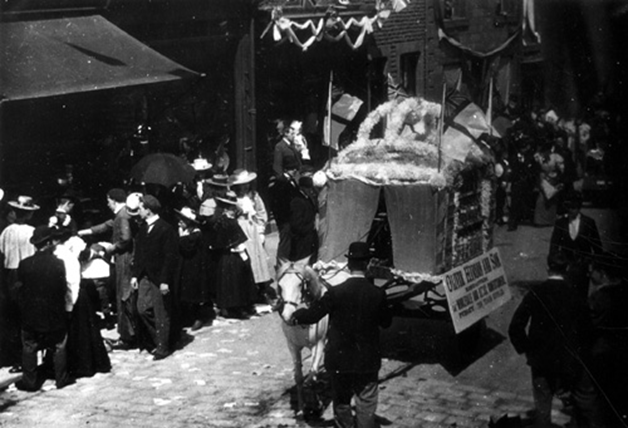
This Image taken at a Bramley Carnival around the late 19th or early 20th century shows a horse-drawn decorated float by Oliver Hudson and Son of Pudsey, manufacturers of wholesale and retail confectionery.
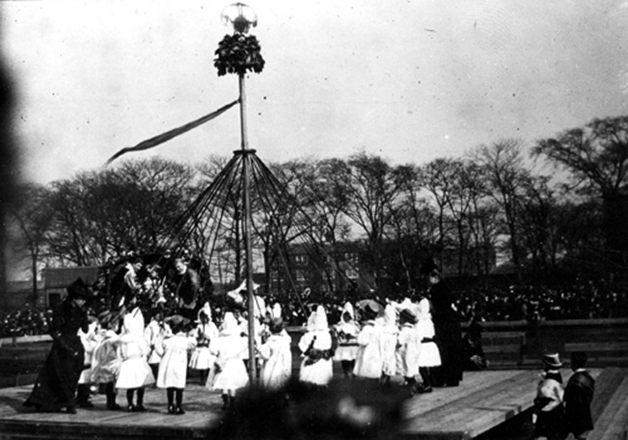
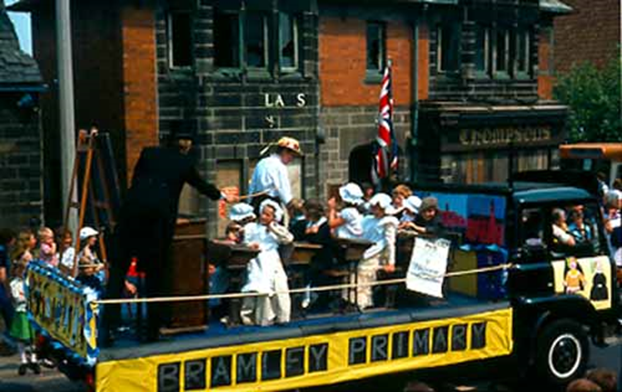
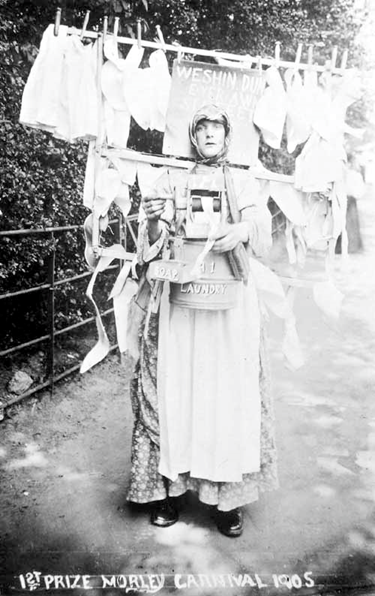
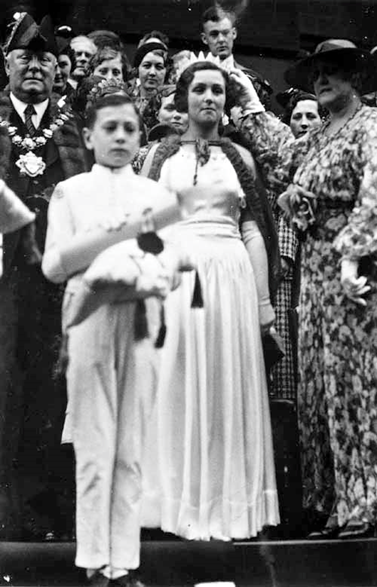
Photograph from the David Atkinson Archive
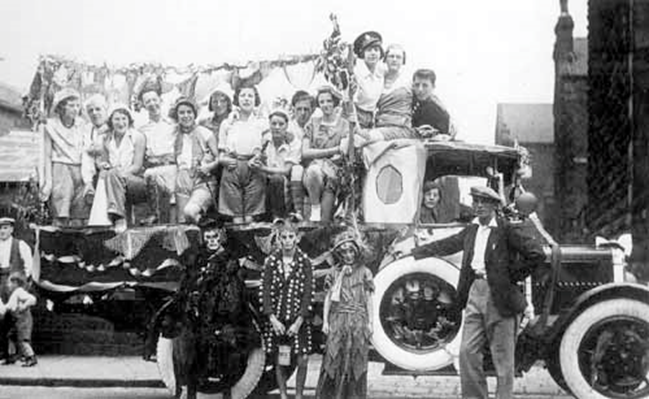
Copyright: David Atkinson Archive
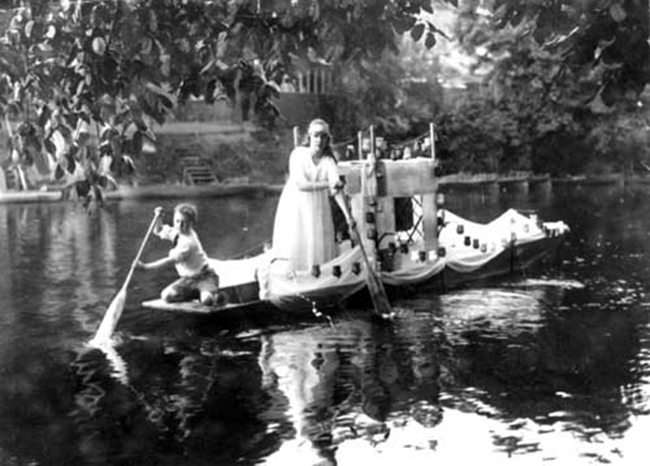
The Hargreave children on a decorated punt as part of a water carnival.
Copyright: Wetherby Historical Trust
Copyright: Wetherby Historical Trust
It would be fabulous to know more about the many carnivals and their parades – perhaps you have photographs or memories that you can share, were you a ‘Carnival Queen’, part of a majorette troupe or Maypole dancer. We would love to add to our collection. Please contact us if you have anything to share with us: localandfamilyhistory@leeds.gov.uk | 0113 37 86982
You can read more about our collections for the Pudsey region in our research guide
 The Secret Library | Leeds Libraries Heritage Blog
Thank you for brilliant photos and articles. There is a Gypsy fair that is held near Morley called Lee Gap Fair.
It is held twice, I know one of the fairs is called Latter Lee. The local church has a stained glass window dedicated to the Fair..
I’m sure you will have photos in your archives.
Hello
So glad you enjoyed the blog, I really enjoyed researching it – there are so many different directions I could have gone in, I think there may need to be a follow up in the future. Thank you for the information about the Gypsy Horse Fairs I’ve found some more information in one of the books we keep in our Yorkshire Room – Julia Smith’s Fairs, Feasts and Frolics after seeing her quoted on this blog: https://traditionalcustomsandceremonies.wordpress.com/2022/08/31/custom-survived-lee-gap-fair-yorkshire/
Best wishes
Kirsty