This week, to celebrate International Women’s Day, Library and Digital Assistant Alexandra Brummitt, looks at the works and life of the first British feminist, Mary Wollstonecraft. Looking at Wollstonecraft’s most famous work, she discusses how this work influenced the suffrage movement and generations of feminists.
When thinking of the suffrage movement at the turn of the twentieth century most people will think of names such as Emmeline Pankhurst, Emily Davison, and Millicent Fawcett. Not a lot of people will think of Mary Wollstonecraft, a lot of people may not even recognise that name. However, to the suffragists and suffragettes in Britain, she wrote their bible. A Vindication of the Rights of Woman.
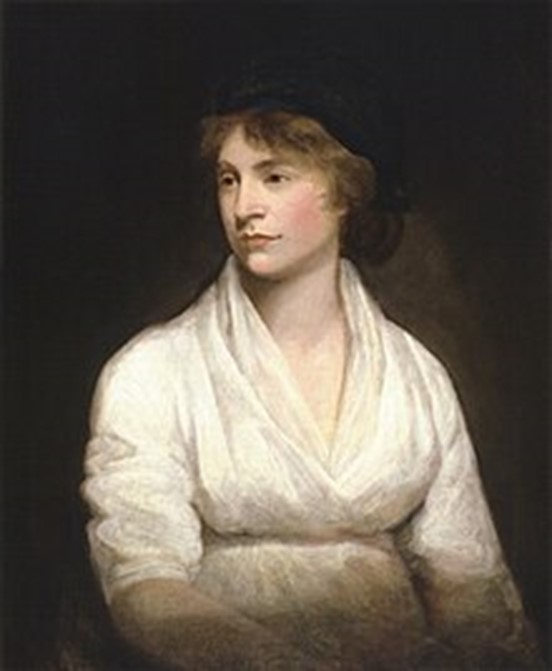
Mary Wollstonecraft was born in London on 27th April 1759. She was born into a middle-class family, however as she grew older her father squandered their wealth and became increasingly violent towards her mother. Wollstonecraft left to become a lady’s companion; in this time, she published her first work entitled Thoughts on the Education of Daughters. This work emphasised the importance of educating young women – girls did not start being educated to the same level as boys until the second half of the 19th century and was not law in the UK until 1975.
She moved back to London, after a brief period of being a governess, and began working for a liberal publisher, Joseph Johnson. This is where she would meet other ‘radical’ philosophers such as Thomas Paine and her future husband William Godwin. Johnson would regularly host dinners in which all these philosophers would debate current events, at this time the main topic of debate was the revolution going on in France. This was a common thing during the period of enlightenment, and some academics argue that it was groups like this that were the catalyst for the revolutions in France and America. In 1790 Wollstonecraft published a political pamphlet, A Vindication of the Rights of Man. This was a critique of Edmund Burke’s pamphlet Reflections on the Revolution in France, which in turn was a critique of the work of Wollstonecraft’s friend, Richard Price (imagine it is like the comment section of 18th century Facebook post).

The rest of the page reads; in a Letter to the Right Honourable Edmund Burke, occasioned by His Reflections on the Revolution in France.
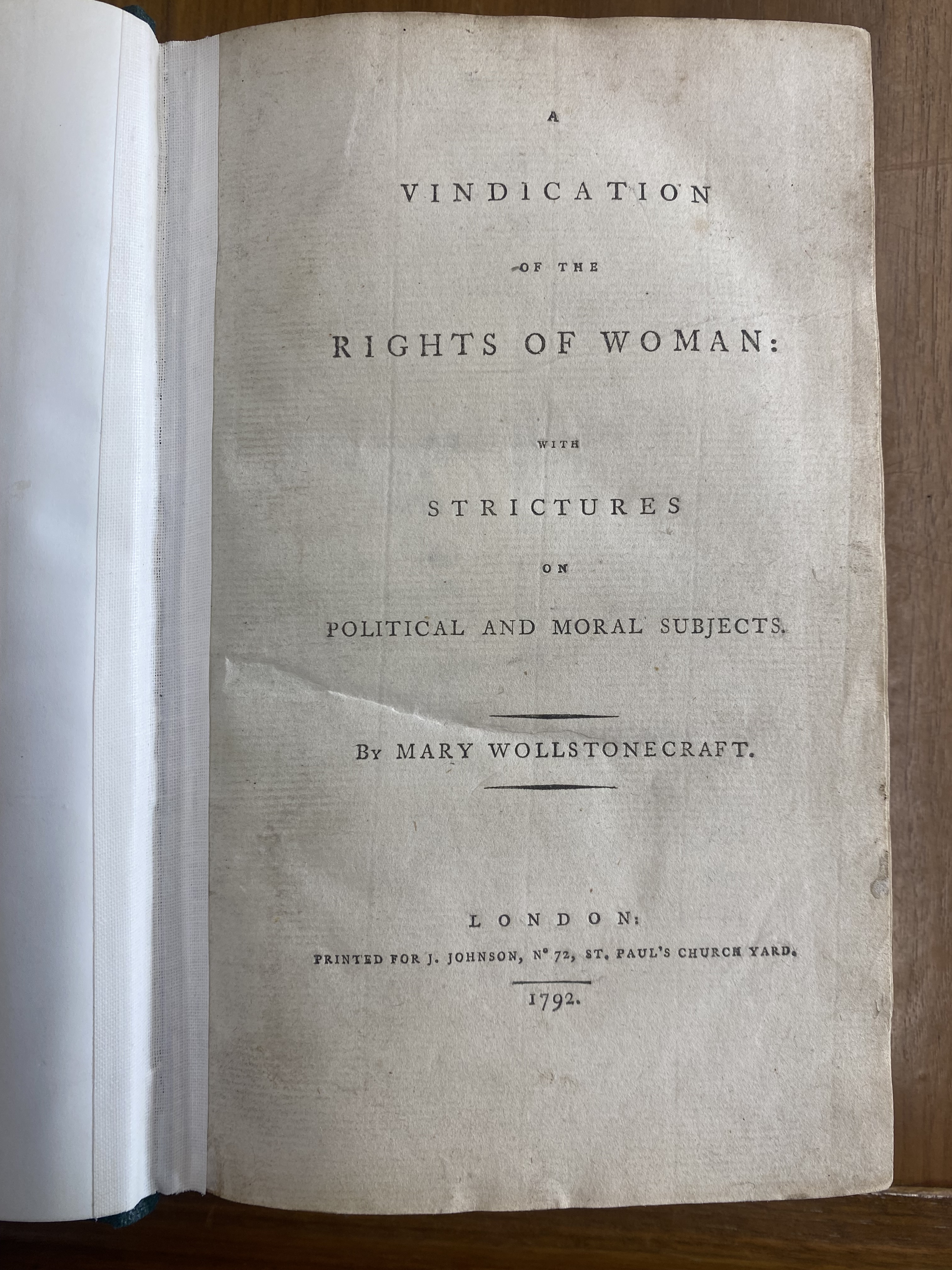
After a messy affair with artist, Henry Fuseli in 1791, Mary Wollstonecraft went to France to see the Revolution for herself. It was here where she began to write A Vindication of the Rights of Woman as an expansion of her ideas about equality in A Vindication of the Rights of Man. This work would go on to be her most famous and influential piece of work. In the Special Collections of Leeds Central Library there is a first edition of this text published in 1792, that has been rebound, possibly in the early 1950’s.
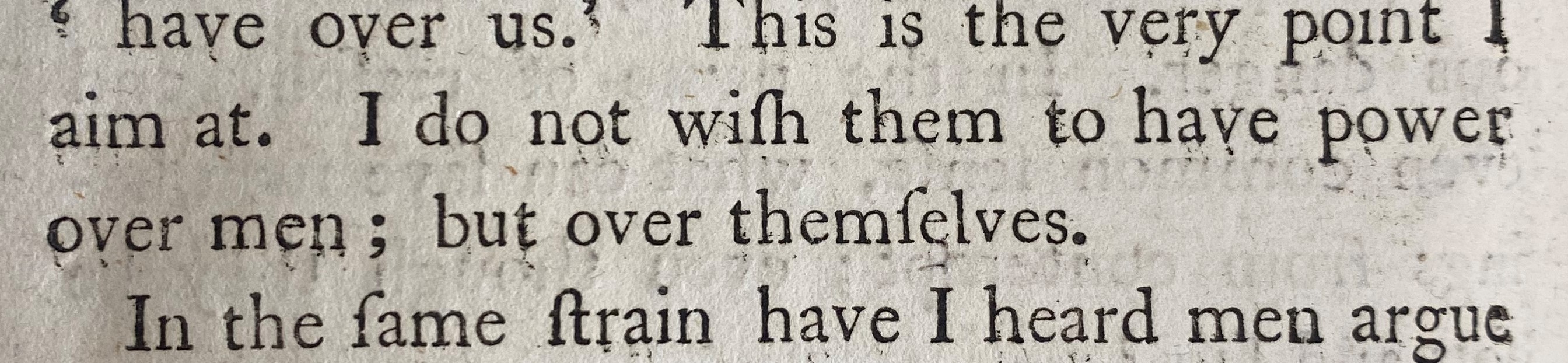
By modern standards the points that Wollstonecraft makes in this work are nowhere near revolutionary. She argues the point that women are equally capable of reason as men are, they are just not given the same education. While she argues that women should be equal, she never explicitly says in any of her works that women should be given the right to vote. She says on page 134, “I do not wish them [women] to have power over men, but over themselves.” Despite this, at the time of writing Wollstonecraft faced a harsh backlash from writers such as Edmund Burke, Thomas Taylor and Hannah More.
This backlash only grew after Wollstonecraft’s death in 1797. After dying due to complications giving birth to Mary Shelley, Wollstonecraft’s grieving husband, William Godwin, wrote Memoirs of the Author of a Vindication of the Rights of Woman. This biography revealed some of the lesser-known stories from Wollstonecraft’s life, which included many love affairs, an illegitimate child, and several suicide attempts. This scandalous life led even avid supporters of Wollstonecraft’s work to avoid association. As a result, her most popular and famous work was not published for almost 100 years.
During the rise of the suffrage movement in the late 19th century, the text began to regain popularity. Philosopher and Politician John Stuart Mill published The Subjugation of Women in 1869, the work was heavily influenced by his wife Harriet and his daughter Helen. All three were heavily inspired by this work of Mary Wollstonecraft. Mill was a major player in the suffrage movement, being one of the few MPs who would take petitions for women’s rights to vote to Parliament.
Leeds Central Library also has a special copy of A Vindication of the Rights of Woman published in 1891, containing an introduction from Millicent Fawcett, just six years before she became the leader of the National Union of Women’s Suffrage Societies. This edition was massively popular and became the ‘handbook’ for suffragists and suffragettes across the UK.
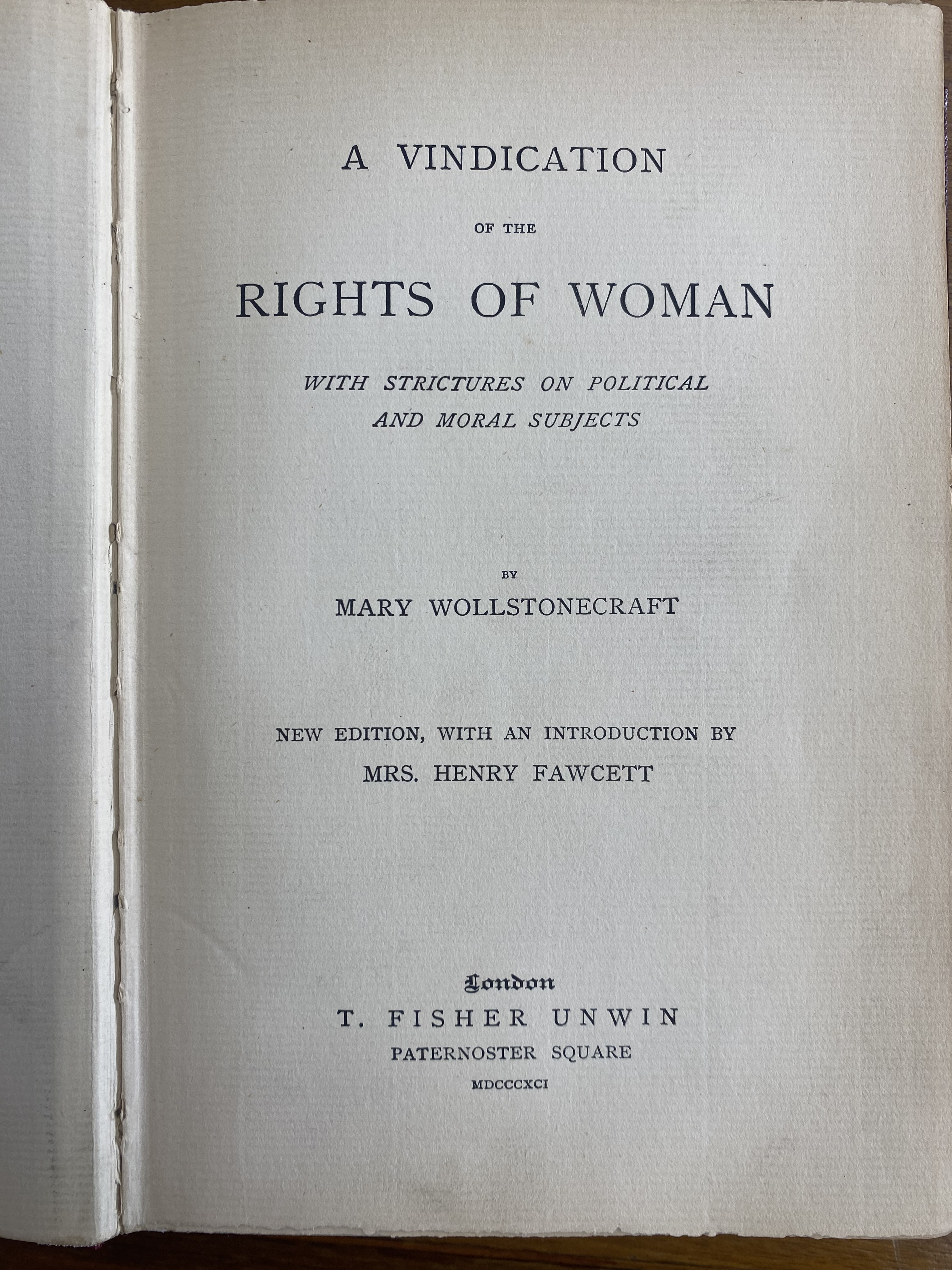
Page reads; New edition with an introduction by Mrs Henry Fawcett.
Suffragettes and suffragists in the UK were not the only people to take influence from the works of Mary Wollstonecraft. Author Mary Shelley credits her mother’s writing as being a big influence to her work. Wollstonecraft also inspired the suffrage movement in North America, with American crusaders for equal rights like Margaret Fuller, Lucretia Mott, and Elizabeth Cady Stanton all crediting A Vindication of the Rights of Woman as being a big inspiration to them. As author Virginia Woolf remarked about Wollstonecraft decades later, “we hear her voice and trace her influence even now among the living.”
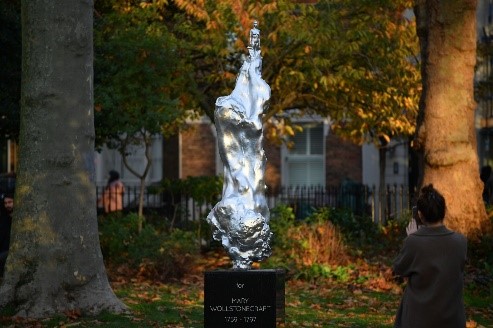
Mary Wollstonecraft has continued to cause controversy in the 21st century. A sculpture honouring her was unveiled in London in 2020 and led to many groups calling for it to be removed. The sculpture depicts a naked woman that, according to the artist, is supposed to represent womanhood rather than the author herself. Many called this sculpture distasteful and inappropriate for a public space; however, many thought that the sculpture was a fitting tribute to a woman who had led a scandalous life and paved the way for British Feminism.
 The Secret Library | Leeds Libraries Heritage Blog
Good to see there’s a first edition of Mary Wollstonecraft’s ‘Vindication of the rights of Woman’ in Leeds Libraries. I first read and wrote about her in 1972 after reading a biography.
Good to see that the first edition of ‘Vindication of the Rights of Woman’ is in Leeds Libraries. I first read, and wrote about Mary Wollstonecraft in 1972, surprised then that she was not more well known.