During February and March we delved deep into the Central Library collections to curate a display highlighting the contributions of women to the fields of science, medicine, health and wellbeing. That display is now reproduced below. Most of the content was created by Library and Digital Assistant Heather Edwards and further information can be found in Heather’s previous blog article.
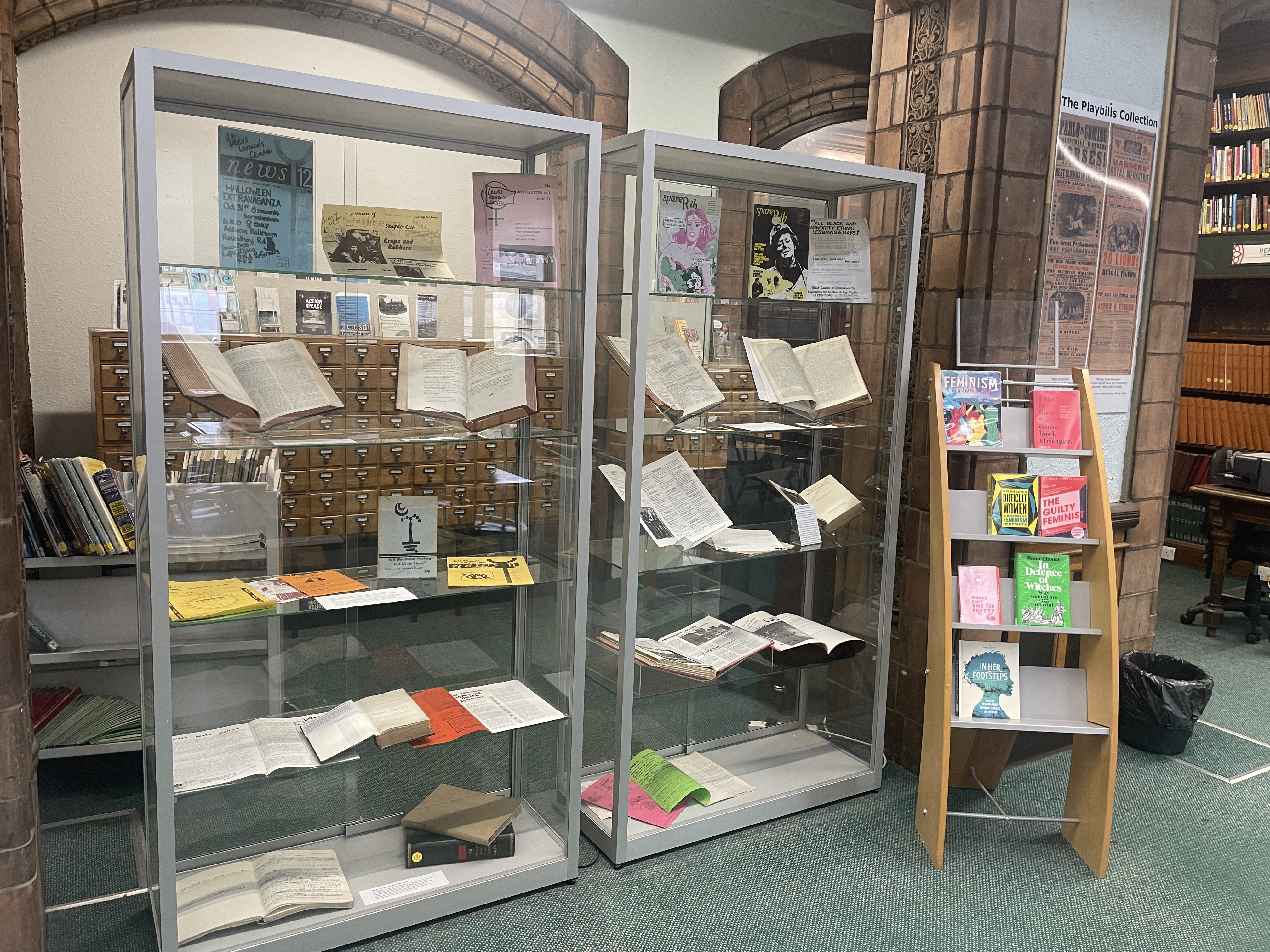
A Vindication of the Rights of Woman (1792)
This ground-breaking work is often considered the earliest and most important treatise advocating equality for women. Mary Wollstonecraft believed that if women were given the same opportunities they could contribute as much to society as men. Vindication still resonates with feminist movements today.

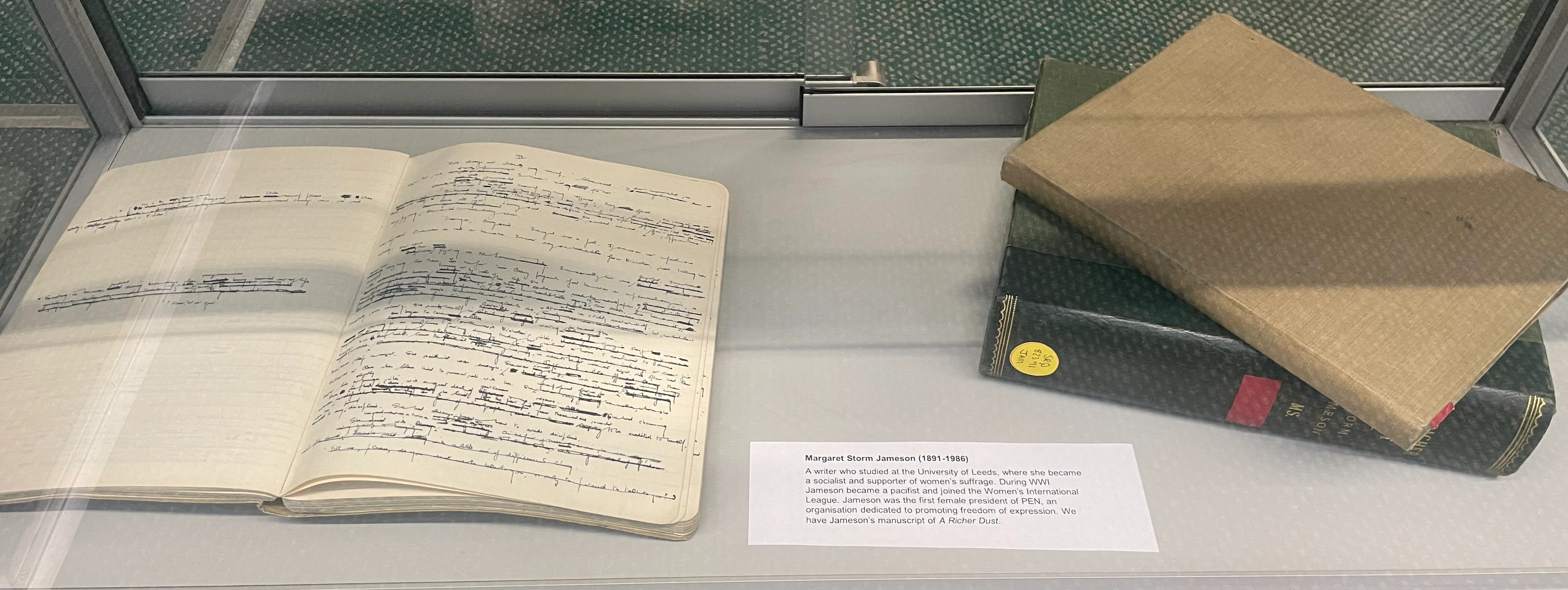
Margaret Storm Jameson (1891 – 1986)
A writer who studied at the University of Leeds, where she became a socialist and supporter of women’s suffrage. During WW1 Jameson became a pacifist and joined the Women’s International League. Jameson was the first female president of PEN, an organisation dedicated to promoting freedom of expression. We have Jameson’s manuscript of A Richer Dust.
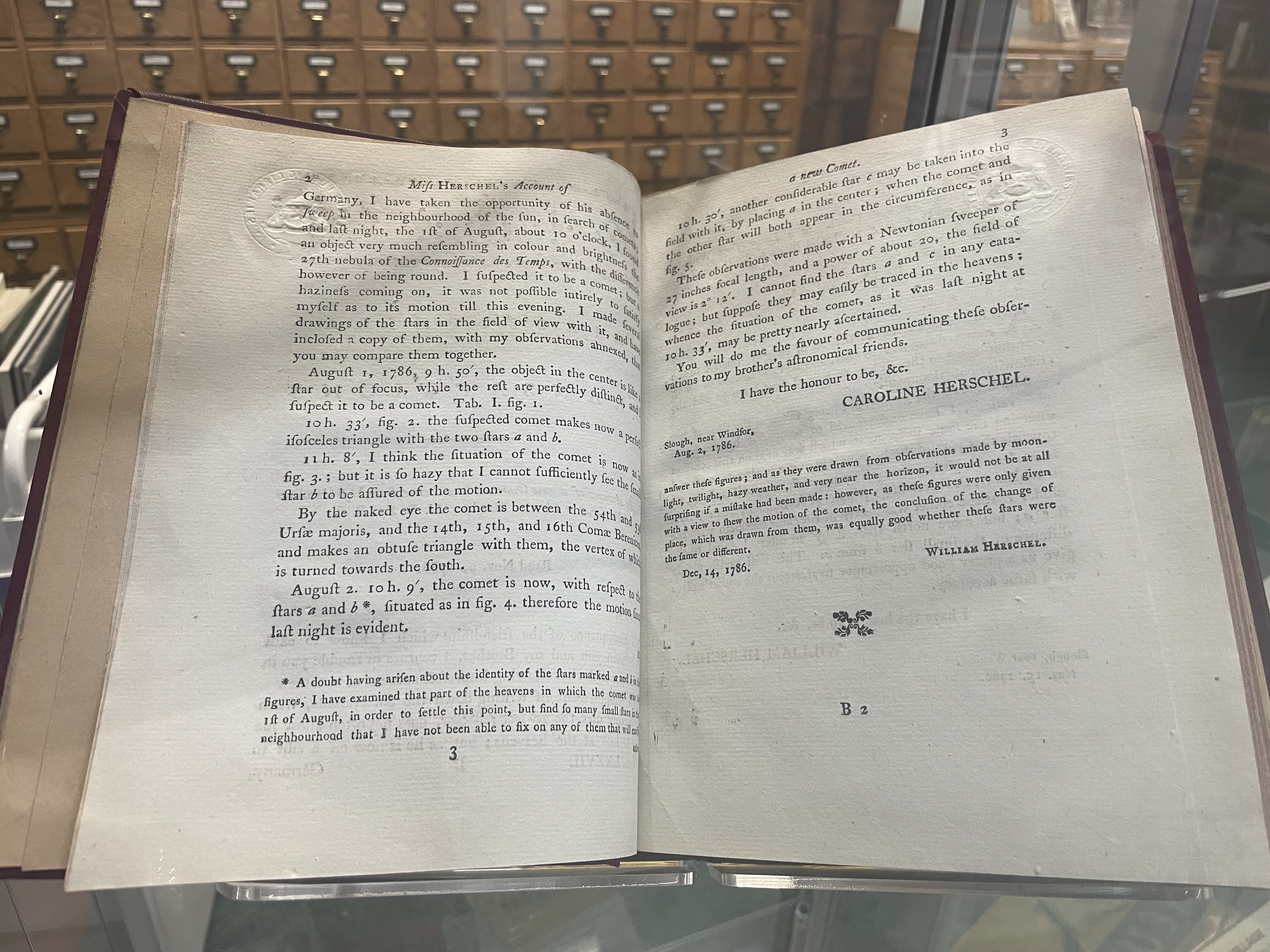
The Royal Society Philosophical Transactions
Caroline Herschel’s first comet sighting in The Royal Society Philosophical Transactions (January 1787)
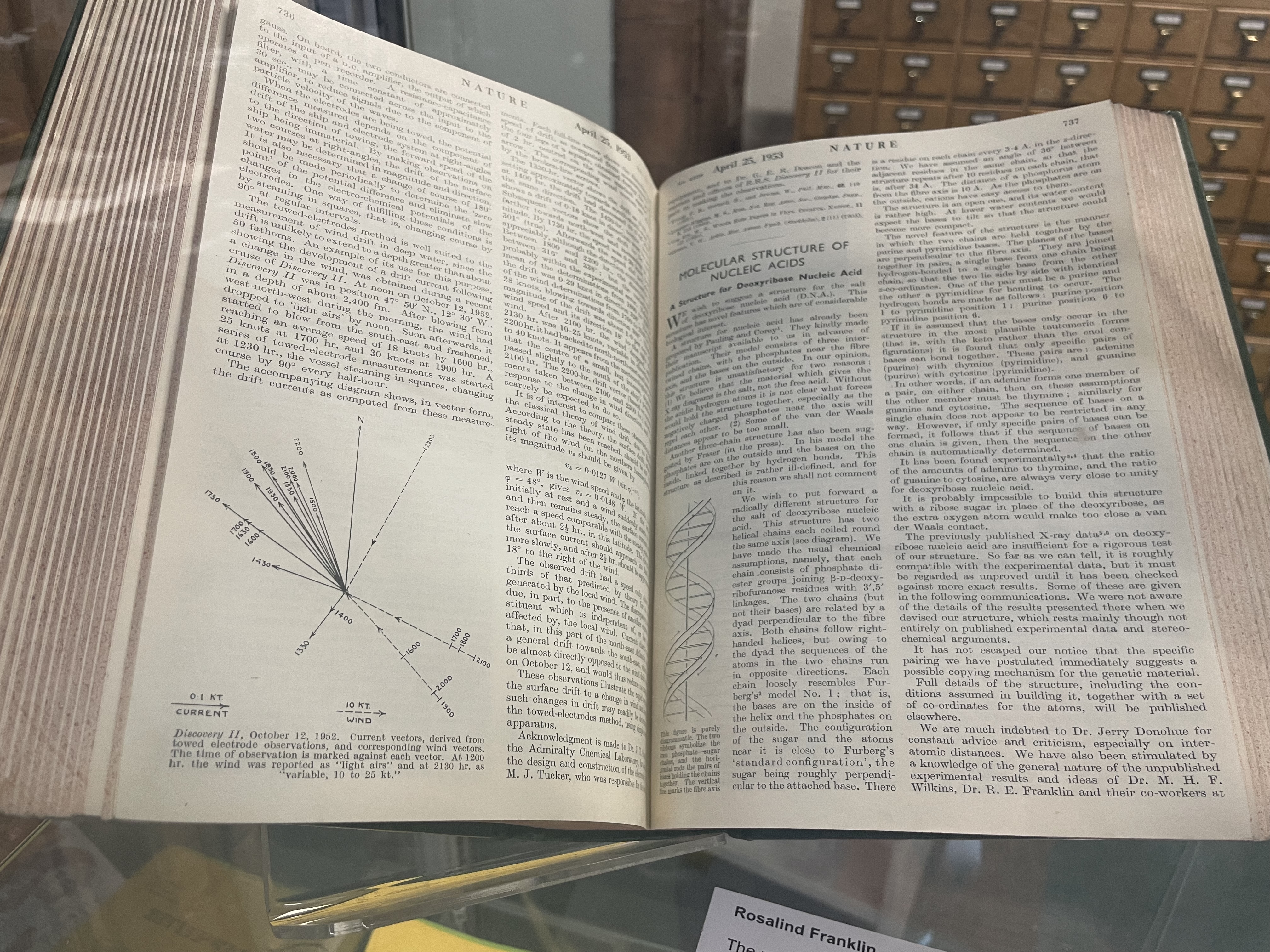
Rosalind Franklin (1920 – 1958)
The results of her work on two major biological problems, as well as the techniques used to obtain them, helped lay the foundations of structural molecular biology. In 1962 Watson, Crick, and Wilkins were awarded a Nobel prize for their work on DNA. The prize is not given posthumously so the practical question of whether Franklin should have been included did not arise. However, since Franklin’s contributions, and indeed her actual X-ray data, were crucial to the total achievement, it is difficult to see how she could have been denied a share.
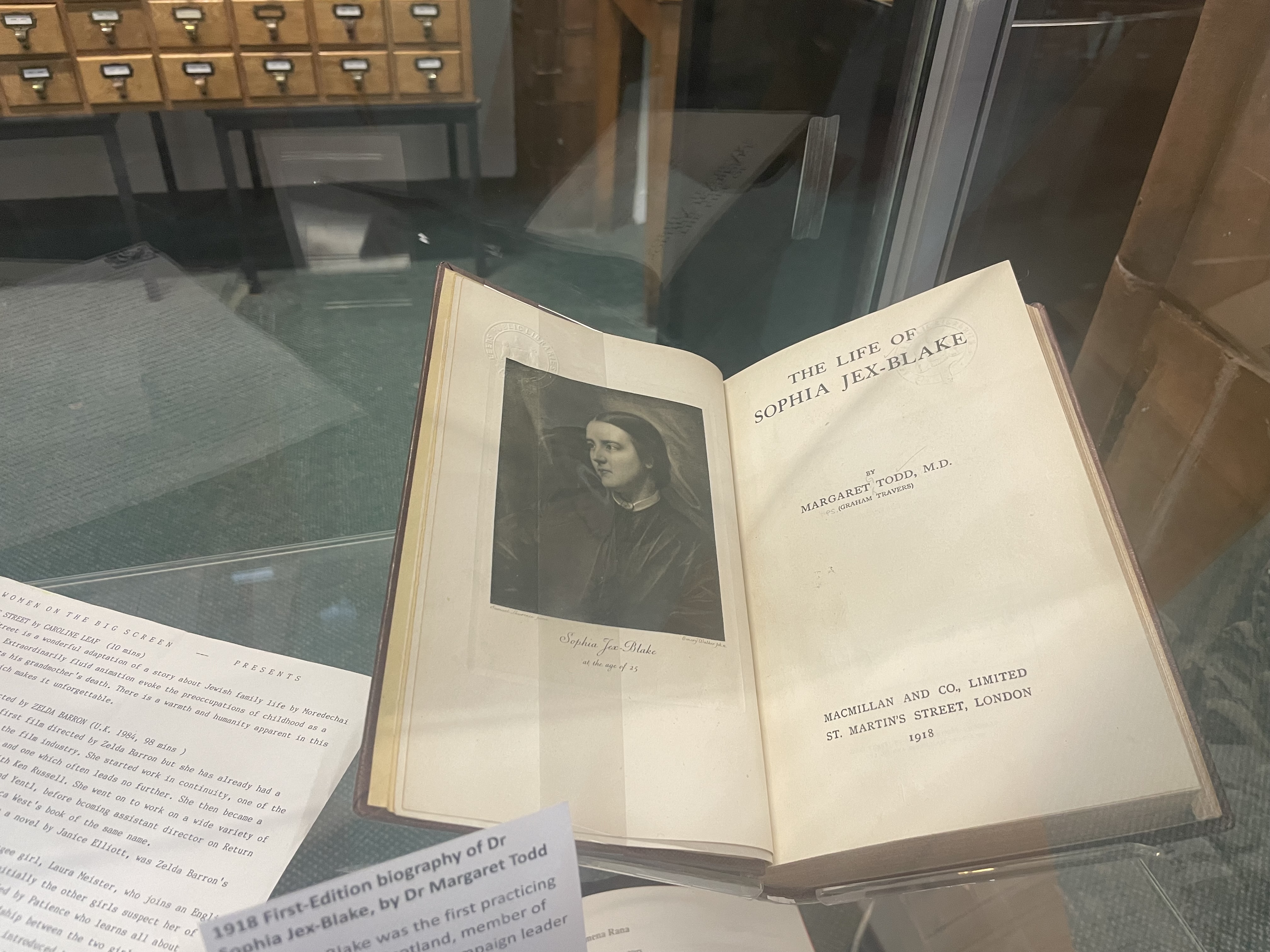
1918 First-Edition biography of Dr Sophia Jex-Blake, by Dr Margaret Todd
Sophia Jex-Blake was the first practicing female doctor in Scotland, member of The Edinburgh Seven, a campaign leader for women’s higher education.
At the forefront of providing medical training for women in the UK, she was a founder of The London School of Medicine for Women and The Edinburgh School of Medicine for Women. Many of the next generation of women doctors attended these schools, such as Dr Margaret Todd – Jex-Blakes’ life partner and future biographer. This biography was the first time Todd chose not to write under a male pseudonym. She died three months after its publication.
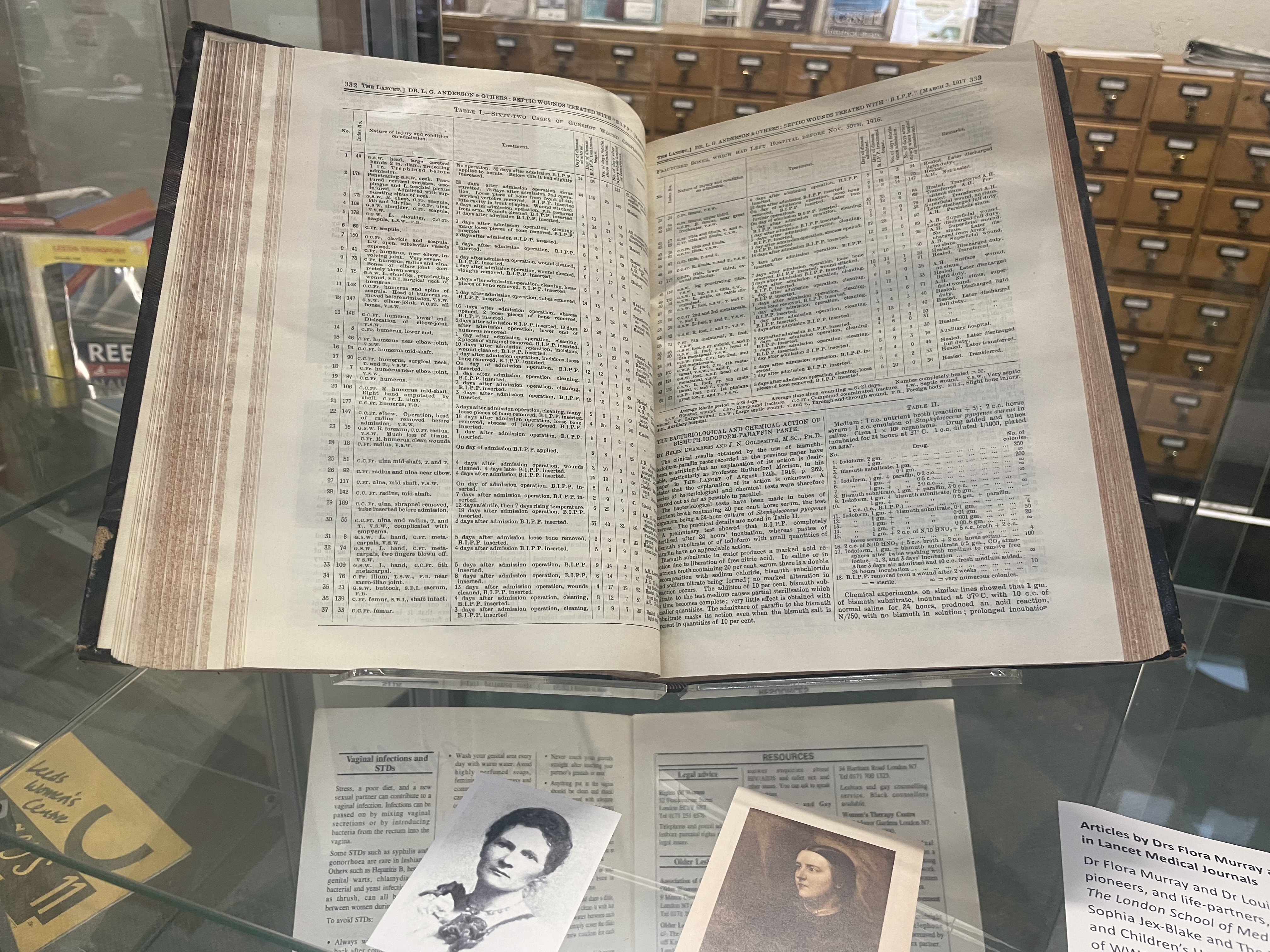
Articles by Drs Flora Murray and Louisa Garrett Anderson, published 1905 & 1917 in Lancet Medical Journals
Dr Flora Murray and Dr Louisa Garrett Anderson were Suffragettes, medical pioneers, and life-partners, co-founding multiple hospitals together. Both studied at The London School of Medicine for Women (started by Elizabeth Garrett Anderson, Sophia Jex-Blake and The Blackwell Sisters) before going on to set up The Women and Children’s Hospital in 1912, and the Women’s Hospital Corps before the outbreak of WW1. Provided with a newly built hotel wing by the French Red Cross, Murray became chief physician, and Garrett Anderson was chief surgeon. Despite British War Office expectation, the hospital was such a success that two more followed in Wimereux and London’s Endall Street. Endall Street was staffed entirely by women, largely Suffragettes, (sharing motto ‘Deeds not words’) who treated around 26,000 soldiers in under four years.
Dr Murray published ‘Ethyl chloride as an anaesthetic for children‘ in leading medical journal The Lancet in 1905 from her work as an anaesthetist at Chelsea Hospital for Women. Dr Garrett Anderson co-pioneered a method of treating septic wounds (BIPP) with Helen Chambers; the results of which were printed in The Lancet in 1917. BIPP is still used today.

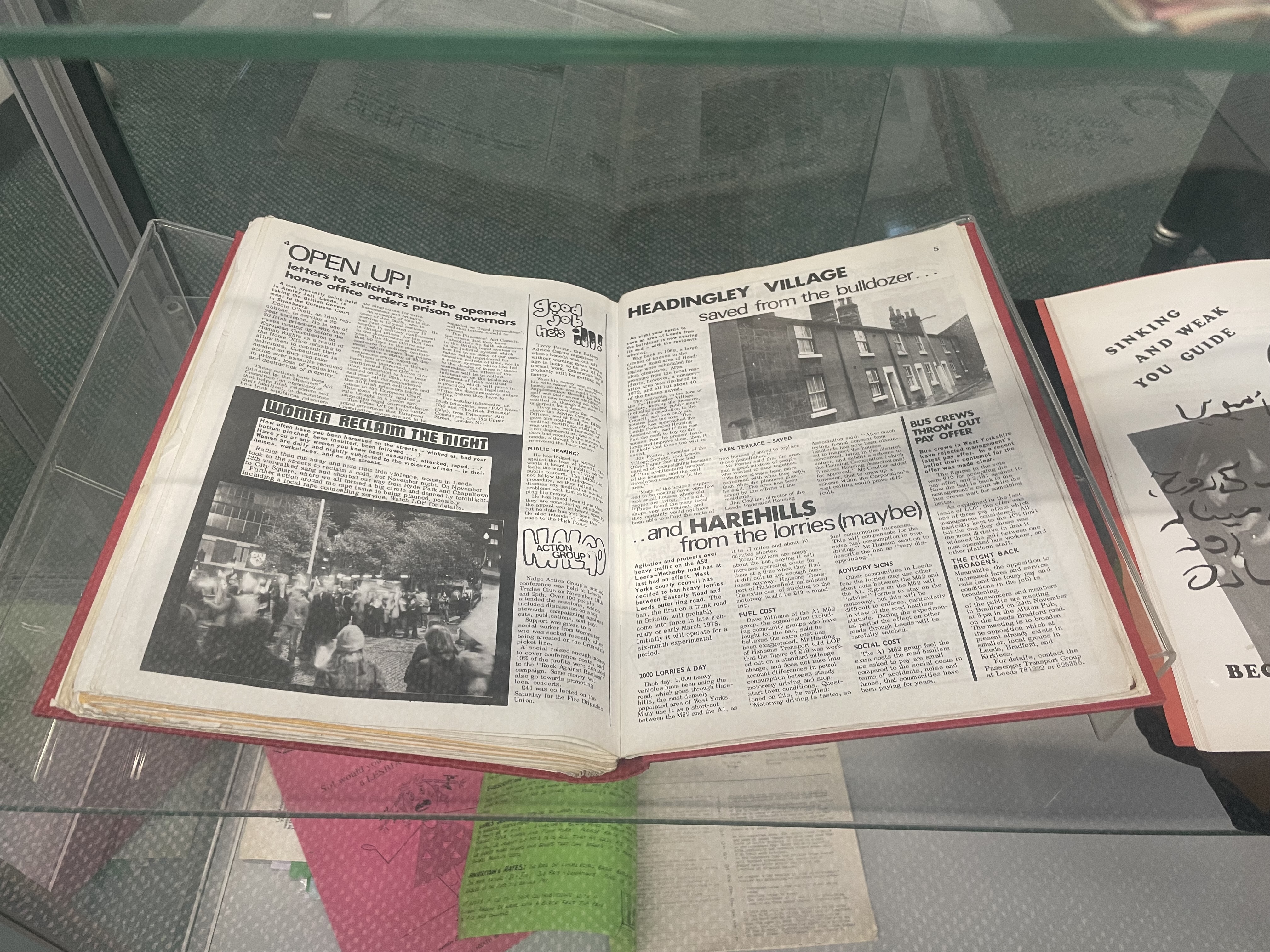
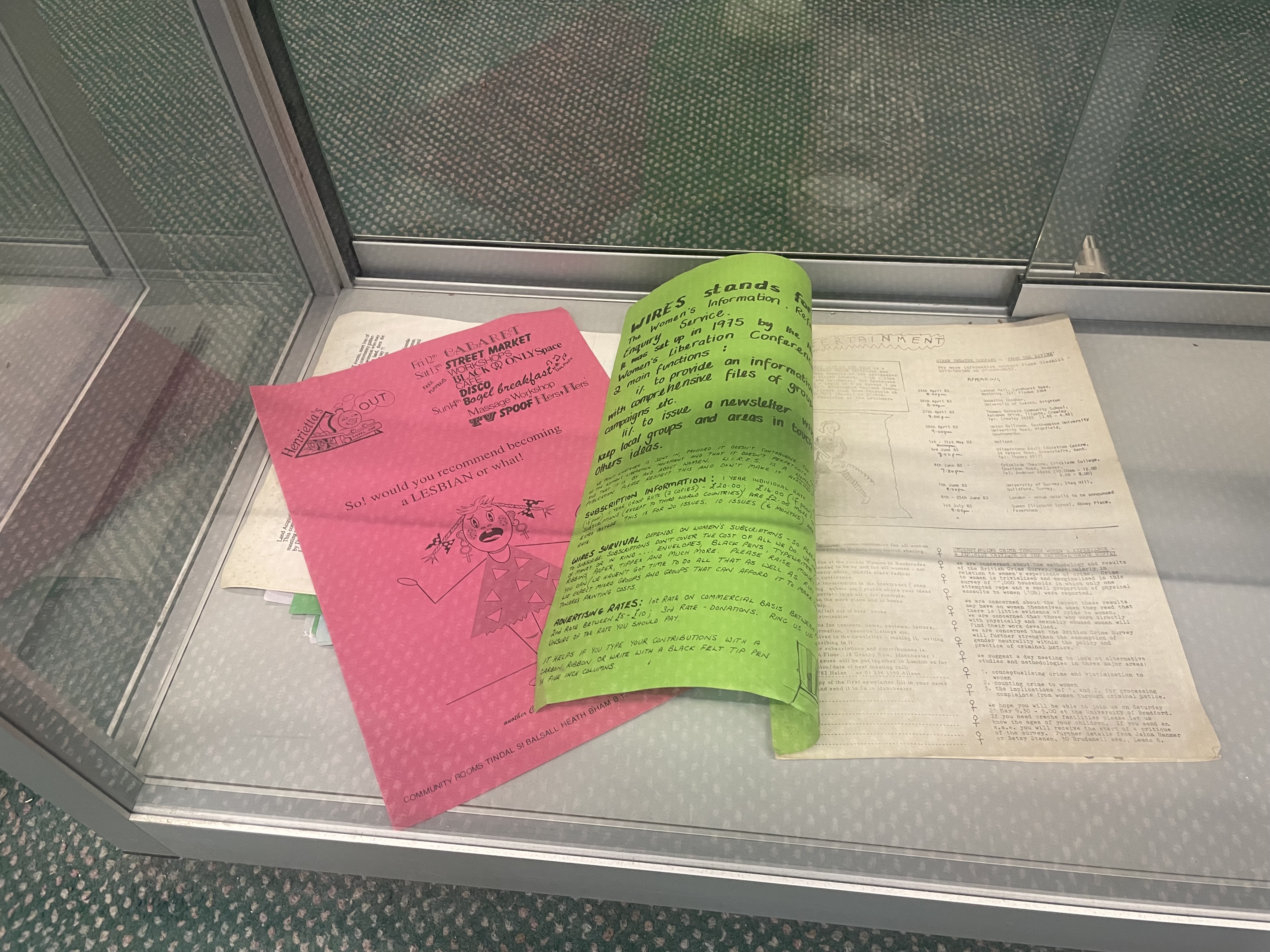
The Lynn Daniel Collection
Collection of lesbian feminist material donated by Lynn Daniel. Originally collated as part of the West Yorkshire Queer Stories 2019 ‘Scan-A-Thon’ event. After taking part in the project Lynn Daniel donated books from her person Library, newsletters, and badges.
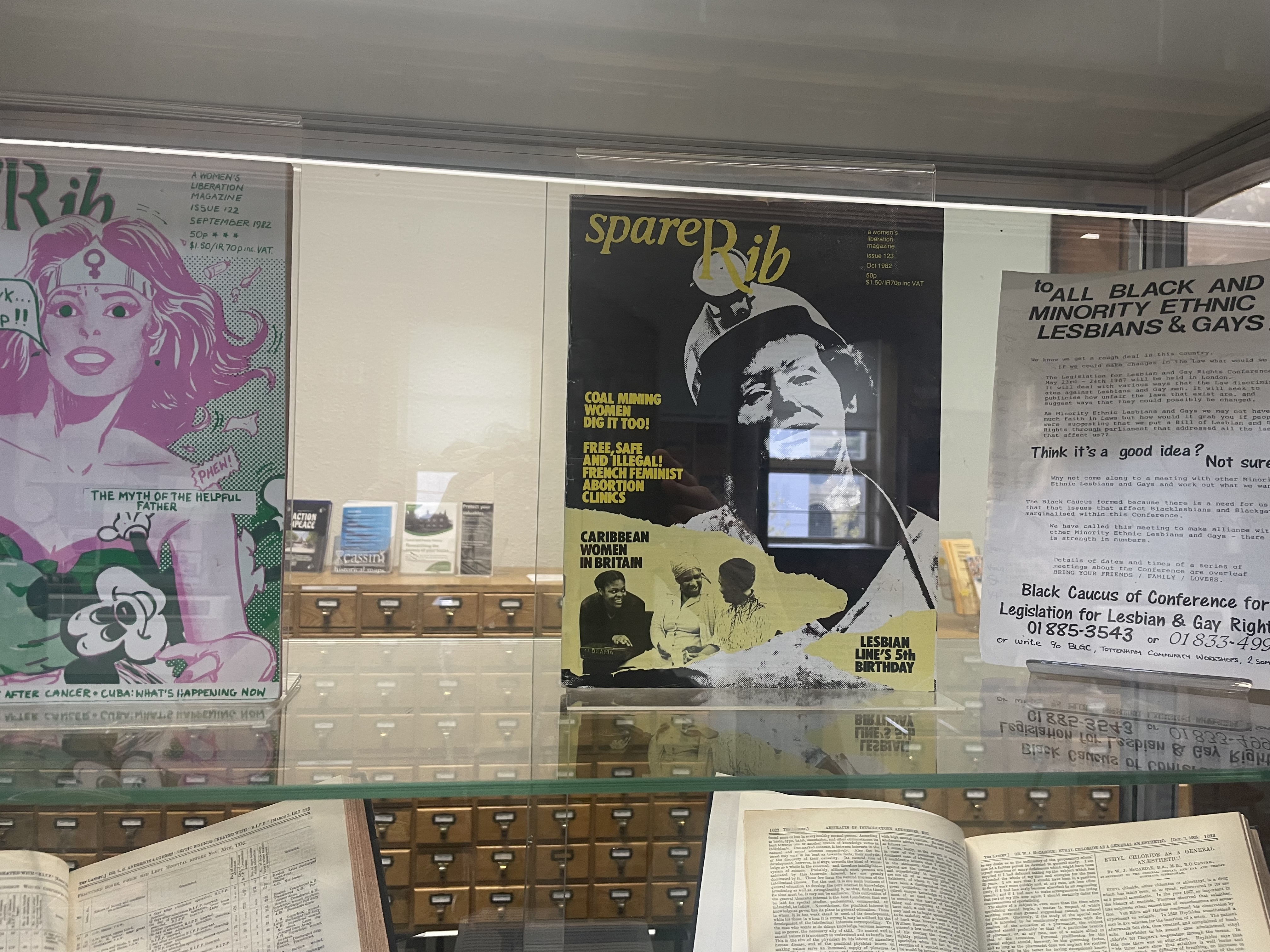
A selection of Feminist and LGBTQ publications. 1980s and 1990s
Many single issues of serial publications including Leeds / Bradford / Yorkshire newsletters as well as national / international publications.
Including: Leeds Women’s Centre newsletter — An axe to grind?!? (a newsletter for lesbians in Bradford) — Leeds Women’s Liberation newsletter — Irregular periods (a Bradford women’s newsletter) — Jezebel — Bread and roses — Re-sister — Scarlett women — Sapphic despatch — York feminist news — Lespop the lesbians and policing project — Rev/Rad — Catcall a feminist discussion paper — APN — Socialist woman – a journal of the International Marxist Group.



 The Secret Library | Leeds Libraries Heritage Blog
I take issue with the comment that there still appears to be the feeling (it seems to be among people who describes themselves as ‘feminists’) that if women were given the opportunities they could contribute so much more and there would be equality. I don’t see it like this. There is plenty of opportunity to pursue enterprises and endeavours of your choosing – in software, designing machinery, using software etc. You don’t have to be subservient to men in your outlook unless you are happy in this role and actively wish to pursue a conventional role. I’m sure there are still some men who will create barriers (they do it for other men I can assure you) because of various feelings (sometimes sexual ones) but they can always be worked around, they will always be men who are sympathetic and encouraging. It seems periods of women’s so called emancipation have coincided with great wars (making ammunitions and patching up injured men, for example) – what a sad comment. Surely they can be more proactive are work constructively to create societies which are avoided such a ridiculous carry-on.
An excellent exhibition laying out some great examples of endurance and endeavour. Very well curated. Thanks.