This week on the Secret Library Leeds we welcome Library and Digital Assistant Becky Bavill for a deep-dive into the family history archives, all sparked by some cross-departmental collaboration with our colleagues in the Music Library…
In a box in the music department is a printed pianoforte piece. It’s called ‘The Dream’ by the late Amelia Smith. Inside is a little story about how Amelia played the music from the memory of a dream where ‘she was floating over the Crystal Palace in a balloon’. She was persuaded to write the music by the mysterious SS who clearly felt it was good enough to share. Who were Amelia and SS? Did they have a connection to Leeds? And what would a soundtrack to a balloon ride over the Crystal Palace actually sound like? So many questions!
Thankfully, working at the library means you can always find an expert in any discipline. The first thing was to try and play the piece. I consulted Wren, one of our BIPC librarians who happens to be a really excellent piano player. They explained it to me. Every piece of written music has a time signature – this tells the musician how many beats are meant to be in a bar. A bar is a division of the music into chunks of the same size essentially, and it makes sure everything stays in time with itself. The time signature that Amelia has given her piece indicates that there should be 4 beats in each bar, which there are for the right hand part, but the left hand is a different story. For the left hand, every bar adds up to 6 beats rather than 4, which means it doesn’t work together. There is a way of making it work, by using triplets, which essentially means playing 3 notes in the space of 2, so it becomes kind of syncopated, but this is generally only used as ornamentation, and the way she has written the piece would mean triplets all the way through, which is definitely not the most effective way to write it. Since the story goes that she wrote it from a dream about a band, maybe there was more going on than she was capable of getting down to play just on a piano. And maybe her music theory (as in her understanding of how music works) wasn’t as thorough as her ability to play likely was.
So, if the piece is essentially unplayable, how did it come to be published in the first place? The printer, John Swallow of Leeds, was a letterpress and music printer. Adverts in the local newspapers suggest that he was available for any printing needs, including subscription pieces. It is probable that this was a private publishing exercise, a directly commissioned short run. The story has a date of January 1855, but we don’t know if that was the date of composition, or the date of Amelia’s death. Consulting the trade directories we found that Swallow relocated to Albion Street by 1870 so the piece must have been published in that 15-year window. An initial search for Amelia Smiths who died between 1855 and 1870 returned over 100 results – when we narrowed it to Leeds there was just one in October, November or December of 1857. A trawl of the obituaries in the newspapers gave us this:

So we have the death of an Amelia Smith in Leeds at the right time and her father Samuel Smith – SS?
Amelia Smith was born 10/02/1822 to Samuel Smith and his wife Amelia, making her 35 when she died. There is a picture pasted to the cover of the music of a mature woman in Victorian clothing – could that be her? From 1816 and at least to the time of her birth, the family lived on Commercial Street. The 1841 voters list had Samuel at Park Row and then by 1851, they had removed to 20 Park Place, where they would remain until at least 1867. Amelia junior leaves very little trace on the historical record. As a woman she was not eligible to vote and her death in 1857 meant she would only appear on two censuses. The only certain records I can find of her are her birth and baptism, the 1851 census, her obituary in the Leeds Times and the record of her burial at St John the Evangelist, Moor Allerton. There are several fleeting glimpses of her in the newspapers, attending Bachelors balls, Phil and Lit events and possibly exhibiting at the Leeds School of Practical Arts, but these are ephemeral, and I can’t be sure that they are actually her. There are a frustrating number of Misses Smith in Leeds at this time, and even more frustratingly, more than one of them has a father called Samuel – although the attendance of Mr S Smith and Miss Smith at several musical events feels like a fairly solid piece of evidence. Amelia’s father, Samuel has left more than a trace.

According to Spence, Samuel Smith was one of our eminent men (1). Born in Leeds in 1790 as the son of a banker, Samuel was destined for a medical career. In March 1815, he married Amelia Pyemount in Pontefract. They were married by licence with the consent of her parents as Amelia was 20. Their eldest son, George was born in October 1816. One of the founders and a sometime president of the Leeds School of Medicine, in 1819, Samuel became surgeon at the LGI, holding the post for 45 years until 1864. When he retired he took the role of consulting surgeon. A keen fisherman and musician his portrait was commissioned for the committee room at the LGI as well as a bust of him. The portrait can be found near the entrance of the post-graduate centre at the LGI today, above a list of honoured physicians and surgeons that bears his name.
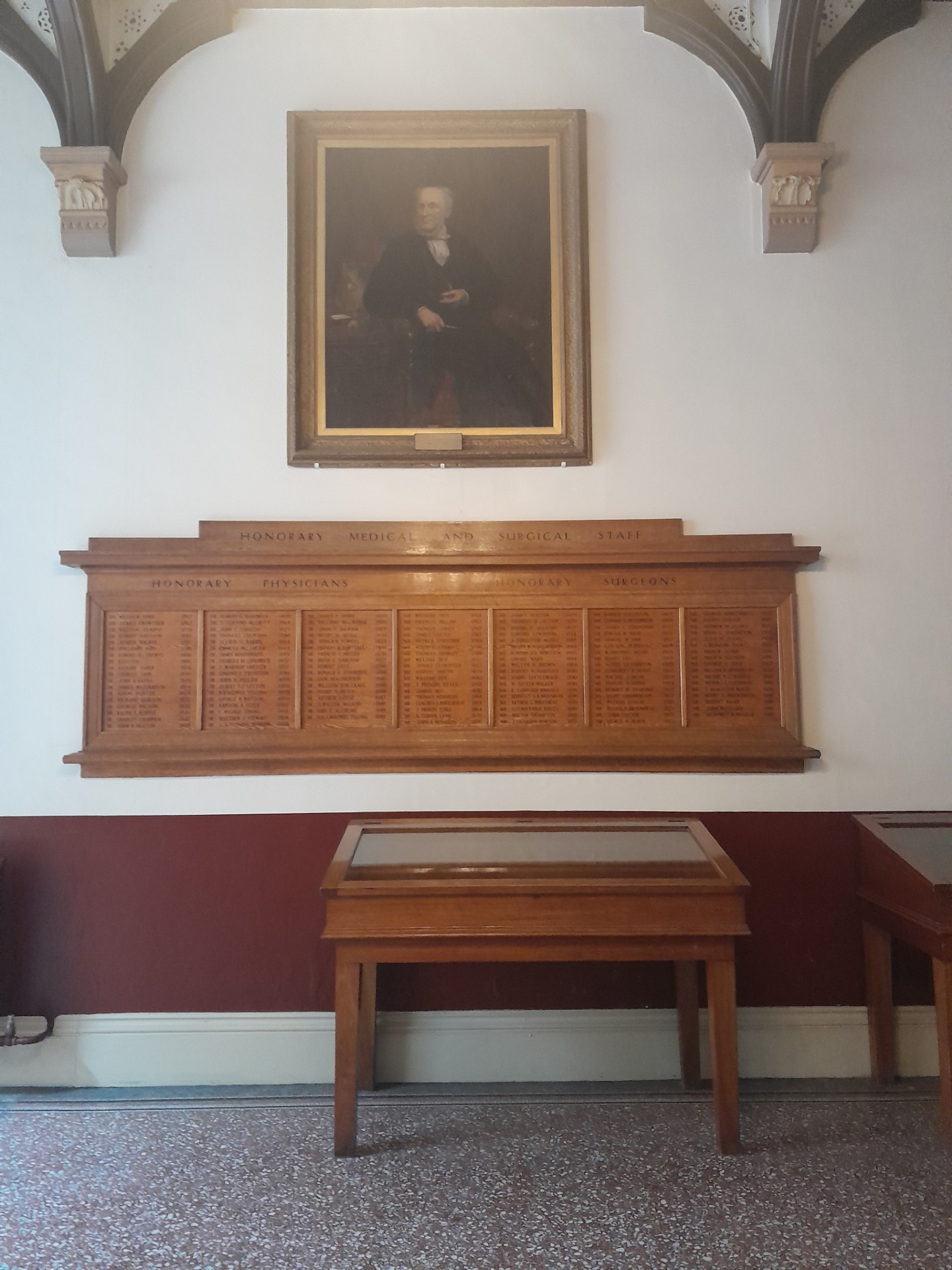
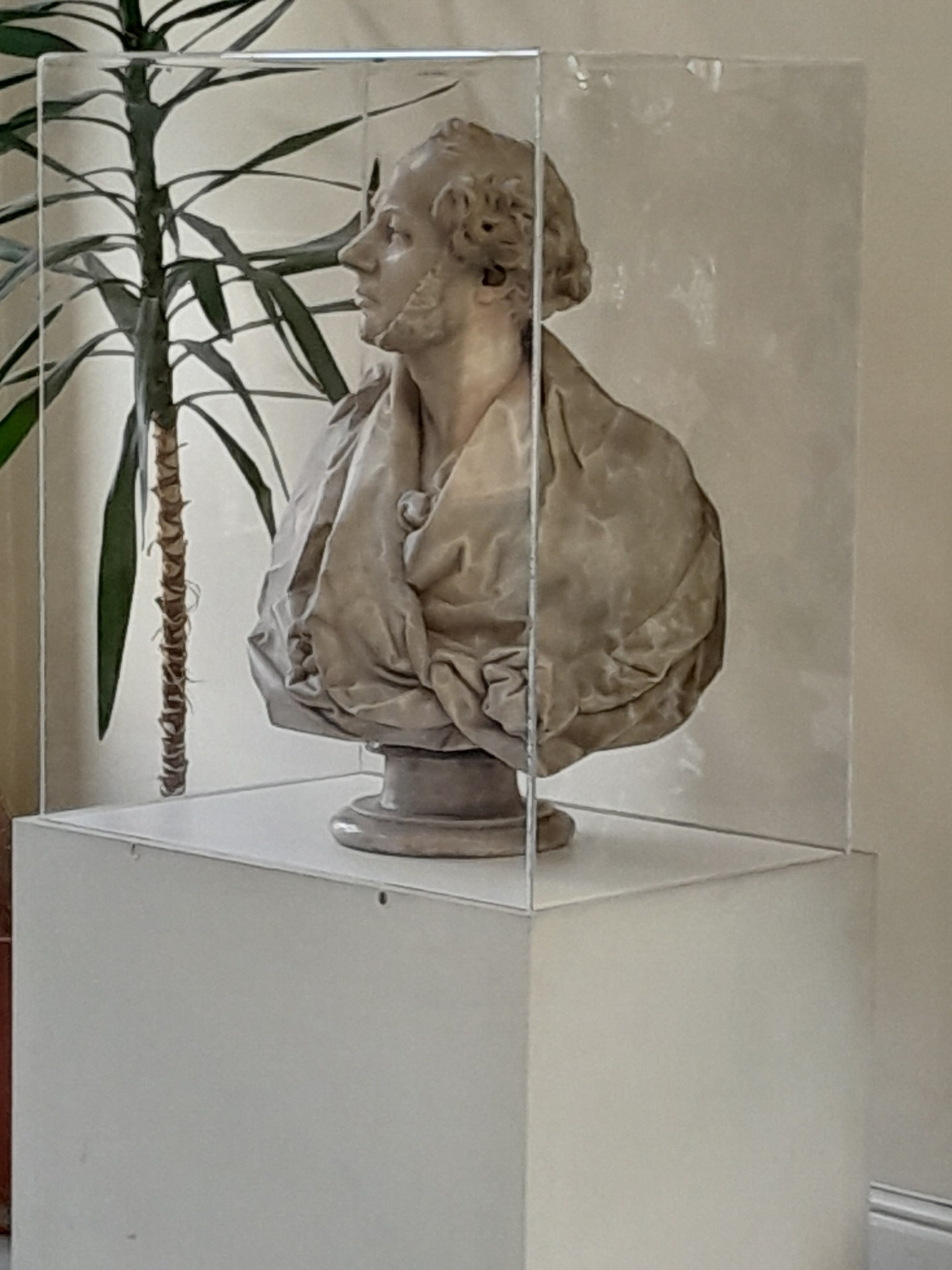
The bust is likely to survive too, as one of three lining the corridor between the Jubilee Wing and the old site although they do not have name plates on them.
Of Samuel and Amelia’s 4 children, 2 died young. His eldest son followed him into medicine and indeed the family must have been close because the two men not only worked together, running an asylum first in Armley and then Ilkley, but also all lived together at Park Place. Sadly, it looks likely that he was estranged from his wife – on the 1841 census she was visiting her sister in Hull; in 1851 she was visiting the same sister in Wales and by 1861 she was living with the same sister in Wales. Amelia senior died, still in Wales in 1866. Samuel’s fulsome obituary tells us he died relatively suddenly in 1867 aged 77 after a short illness. Like Amelia junior, he was buried at St John the Evangelist in Moor Allerton, but not in the same grave.
That might have been the end of the story, but a Google search of the music and the name indicated that there was one other copy at the British Library. It had the same publication details so it was from the same time. However, there were different inscriptions on them in the same hand. Ours was dedicated from ‘SS to Amy Young’; the BL one ‘SS to Martin Cawood Esquire’. Who were these people, and could they be connected to Amelia or Samuel?
- Spence, C.S, Memoirs of Eminent Men of Leeds (Leeds, D Green and Sons : 1868) L920 SPE (not on digital catalogue but available as a reference copy in LFH), pp77-79.
Join us soon for part 2!
 The Secret Library | Leeds Libraries Heritage Blog
The son of a Leeds iron founder Martin Cawood was among other things secretary to the Chamber of Commerce and an amateur composer with several published works to his credit. He is perhaps best remembered for his role in engaging Samuel Sebastian Wesley as organist at Leeds Parish Church in 1842, even paying half of Wesley’s salary of £200 per year. Cawood was well connected in Leeds musical circles at the time and his path may have crossed with the Smith family. He met a sad end, his body being recovered from the River Aire near Allerton Bywater in 1867.
This article is very interesting especially the music. I would very much like a copy of this piece of music.
Hello,
Thank you for your interest in the blog and the piece of music. Please email our Music and performing Arts department on musiclibrary@leeds.gov.uk for further information.
Best wishes
Antony
Leeds Central Library
Leeds Libraries
I’ve been looking at this piece of music and I’m happy to say that it’s totally playable! As you would expect from dream music, the notation is inconsistent. Basically, the left hand and parts of the right hand are written for a 12/8 time signature (12 half-beats per bar), while the rest of the right hand is written for a 4/4 time signature (4 beats per bar). But it’s clear to see how the piece is meant to be played.
Amelia Smith was obviously a talented musician and this has all the hallmarks of a well-structured composition. With its dreamy nature, I can’t help thinking of the Cloud Atlas Sextet from David Mitchell’s novel, although that would probably have been far more off-the-wall in its harmonics, while this is mostly quite lyrical. It’ll take me a while a to learn to play it properly, but it’s so exciting to be playing music that might not have been heard for 150 years or more!