This week on the Secret Library Leeds Librarian Antony Ramm offers a break from our usual programming to mark a significant anniversary in modern American politics…
“Our secret’s safe and still well kept |
Where even Richard Nixon has got soul.” – Neil Young
On this day, 50-years ago, President Richard Nixon of the United States of America resigned in disgrace following the Watergate scandal, the subsequent attempt at a cover-up by his administration – and the very real threat of impeachment proceedings by the House of Representatives. Last November this Librarian was laid-up with flu and became strangely obsessed with these events – reading several books and watching various TV and film retellings of this frankly bizarre and more-then-occasionally inexplicable narrative.
So, here are some suggested readings options available from Leeds Libraries* – for anyone else who wishes to immerse themselves in what was, until January 6 2021, the most tumultuous American political scandal since…well, the one before that. (Take your pick)
*****
The President
“Richard Nixon back again | Moonshot, Woodstock | Watergate, punk rock.” – Billy Joel
While it’s seriously debatable whether Richard Nixon himself had any direct involvement or oversight in the still-mysterious events at the Watergate complex, he certainly set the tone and direction for those below him, and was clearly open to actions of dubious legality in the fight against what he saw as illegitimate elements of the so-called ‘counter-culture’ and ‘hard left’. In his book The Shattering: America in the 1960s, Kevin Boyle quotes Nixon in 1971, just before the Watergate events –
We’re up against an enemy, a conspiracy. They’re using any means. We are going to use any means. Is that clear?
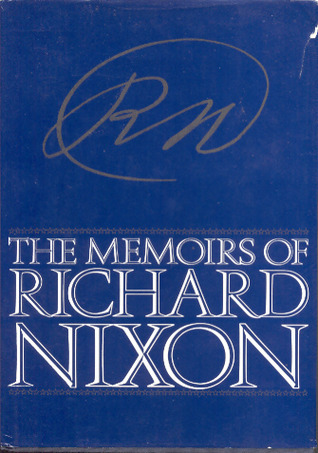
Nixon’s life and career, then, how he developed this line of thinking, becomes the obvious starting-point for any investigation into the Watergate affair, the journey to “an administration that became increasingly about pro-Nixon insiders, a paranoid us vs. them dynamic.” For that, the reader is directed to several biographies – most specifically Stephen Ambrose’s balanced and definitive three volume telling of this American epic. Anyone wishing to hear the story in the words of the man himself is directed to Nixon’s own memoir. The chapter on the Nixon presidency in Stephen R. Graubard’s The presidents: the transformation of the American presidency from Theodore Roosevelt to George W. Bush is a useful summary of the man’s career (though strangely lacking in a detailed analysis of Watergate itself).
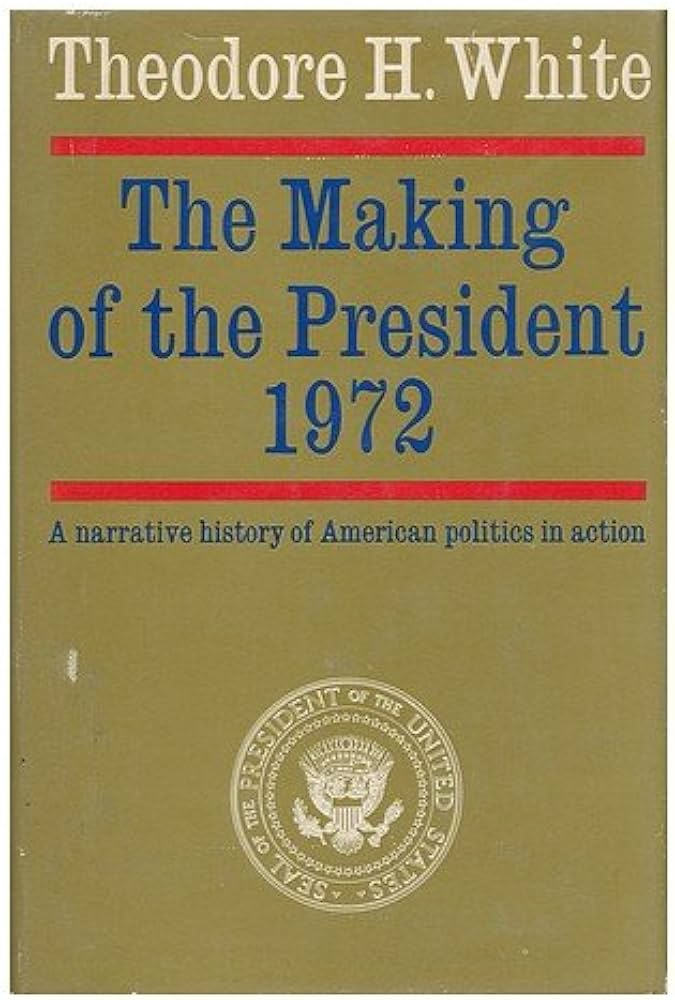
Nixon’s bumpy road to and in the White House is further illuminated in classic texts such as Theodore White’s definitive accounts of the 1960 and 1972 presidential elections. Nixon’s paranoid and bitter rivalry with John F. Kennedy (his opponent in the 1960 election), which seemingly framed the former’s worldview, and continued even after the tragic events of November 22 1963, at least according to the script for Oliver Stone’s 1995 biopic.
“Nixon: [to a portrait of Kennedy] When they look at you, they see what they want to be. When they look at me, they see what they are. ” – Nixon (1995)
The break-in
“Tried to warn you | ’bout Chino and Daddy Gee.” – Steely Dan
The Watergate break-in itself took place on June 17 1972 when five men were caught by police in the act of installing listening devices in the headquarters of the Democrat National Committee’s headquarters at the Watergate Complex. It soon became obvious that the men had clear links to shadowy figures – G. Gordon Liddy (‘Daddy Gee’) and E. Howard Hunt, former FBI and CIA agents respectively – who could themselves be connected to the White House and/or the related Committee to Re-elect the President [Nixon], a campaign and fundraising group working towards the 1972 Presidential election. The events of that election are covered in Theodore White’s The making of the president, 1972; the Watergate chapter in that book remains one of the clearest, most accessible summaries of the scandal, not to mention both fair and wise. A rather different take is offered by Hunter S. Thompson in his Fear and loathing : on the campaign trail ’72.
The classic account of those events, of course, remains the dramatic telling by Washington Post reporters Bob Woodward and Carl Bernstein in their 1974 classic All the President’s Men. Woodward and Bernstein’s dogged investigatory work both uncovered and drove events, creating an attempted and rather incompetent cover-up through cash payments by the Nixon administration, keen to distance themselves from involvement in wiretaps, bugging and other so-called ‘dirty tricks’ aimed at their political opponents.
The cover-up
“I can’t stand it, I know you planned it | I’m gonna set it straight, this Watergate.” – Beastie Boys
It’s entirely possible that nobody – then, or now – truly understands what the Watergate scandal was all about; it seems doubtful that not a single one of the very many main protagonists had access to the whole story at any stage of its unravelling. But one thing is certain: an attempt was made, by various administration figures, to prevent exposure of Presidential or Republican involvement in, not only the Watergate incident itself, but a whole range of other broadly criminal actions aimed at political opponents (often loosely defined). Eventually, the uncovering of those efforts led directly to Nixon’s resignation – inevitable once the existence of his secret taping system became public knowledge.
Bernstein and Woodward are, again, the classic source for the later stages of the scandal in The Final Days, their sequel to All the President’s Men. A rather different account is given in Len Colodny’s Silent Coup: an opaque, dense book that is overwhelming in its sheer accumulation of details of meetings and memos – but also gripping and seductive in its atmosphere of backstabbing paranoia at the highest levels of government; most notably in the actions of former White House Counsel John Dean, identified as the likely ‘mastermind’ of the Watergate scandal and ensuing cover-up, and General Alexander Haig, fingered as self-serving and the most-likely basis for the legendary ‘Deep Throat’ informant in Woodward and Bernstein’s All the President’s Men.
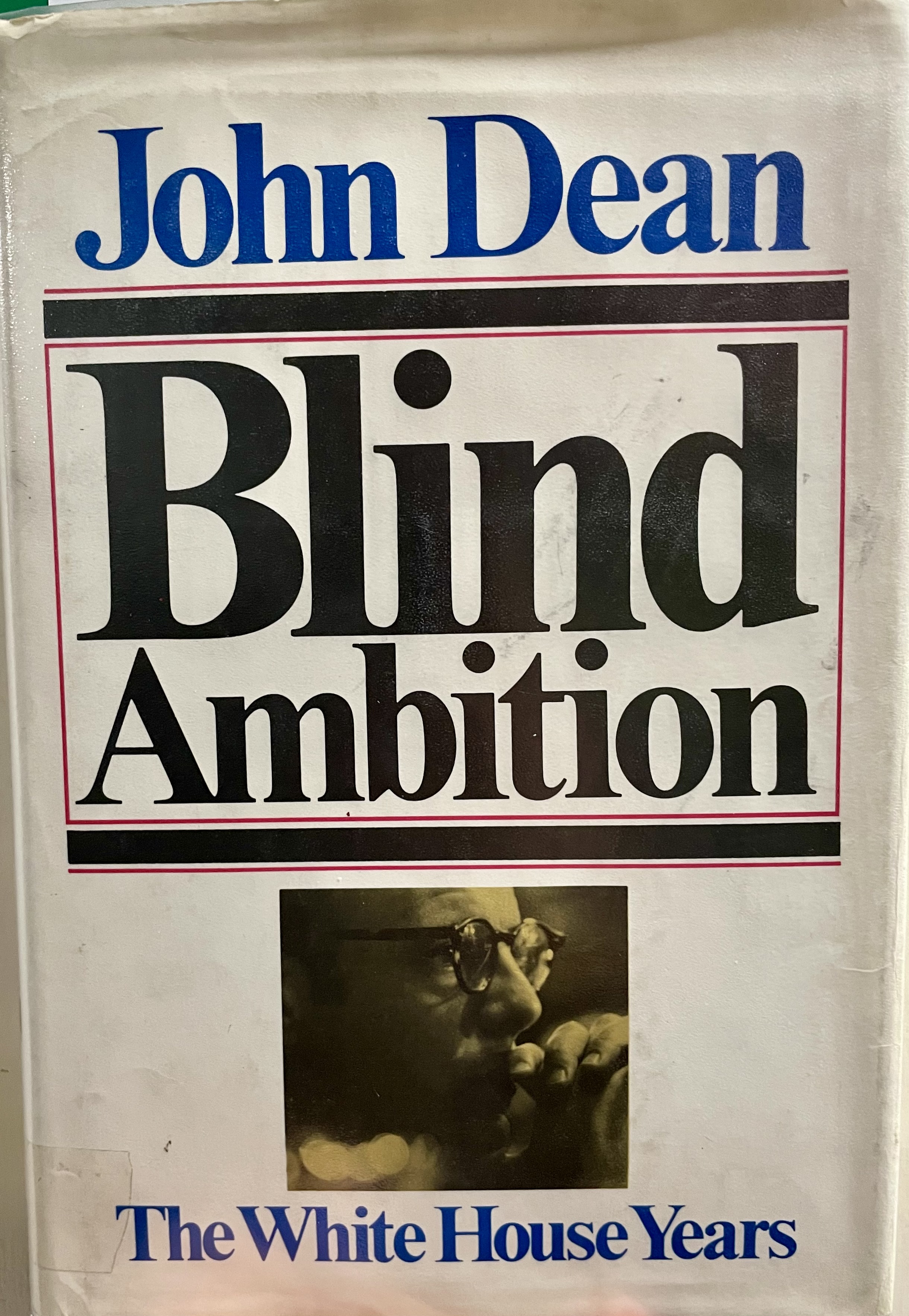
Dean gets his chance to tell his own story in his autobiography, Blind Ambition. The man actually identified as ‘Deep Throat’ by Woodward himself, former FBI Deputy Director Mark Felt, tells his version of the story in Felt: The Man who Brought Down the White House.
Maybe the People Would Be the Times
“I don’t wanna be a candidate | For Vietnam or Watergate.” – Queen
Of course, the other way of coming at Watergate is through the broader study of American politics and culture in the ‘long 1960s’ (roughly 1954 to 1974) – and the way paranoia seeped into the very fabric of the nation during domestic conflicts over major issues like the Vietnam War and the Civil Rights movement; the beginnings of the so-called ‘culture wars’ that have dominated political discourse since that decade.
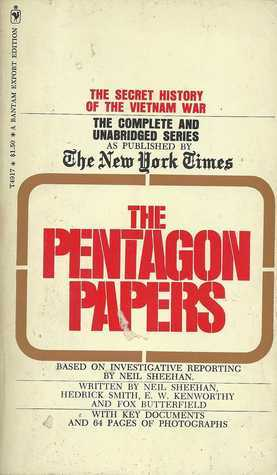
For that, readers are directed to such books as the aforementioned The shattering, and deeper explorations of specific aspects of that tumultuous decade in books such as Anthony Lewis’ The second American revolution: a first-hand account of the struggle for civil rights; Stephen B. Oates’ biography of Martin Luther King Junior; Neil Sheehan’s books on Vietnam and the Pentagon Papers (which are themselves part of the pre-history of Watergate); David Talbot’s By the light of burning dreams : the triumphs and tragedies of the second American revolution; and the various biographies of the Presidents preceding Nixon – JFK and Lyndon B. Johnson.
The specifics of the broad counter-culture’s emergence, meanwhile, are covered in books like Robert C. Cottrell’s Sex, drugs, and rock ‘n’ roll : the rise of America’s 1960s counterculture, as well as classic texts such as Tom Wolfe’s The electric kool-aid acid test. The broader free speech and protest movement is explored in several books: historically, in James Miller’s Democracy is in the streets : from Port Huron to the siege of Chicago and contemporaneously in Norman Mailer’s Miami and the siege of Chicago : an informal history of the American political conventions of 1968.
Any student of America in the 1960s knows that paranoia defines the period – Nixon and his acolytes, yes, but his domestic ‘opponents’ too, as occult thought and drugs took hold of the hippie movement while the decade slouched towards the 1970s. That sinister turn is explored in Gary Lachman’s Turn off your mind : the mystic sixties and the dark side of the age of Aquarius, but the work of Hunter S. Thompson and Joan Didion is also useful in this respect. The close intersection between the worlds of politics and music are thoroughly excavated in Peter Doggett’s There’s a riot going on : revolutionaries, rock stars and the rise and fall of ’60s counter-culture; Peter Biskind’s Easy Riders, Raging Bulls: How the Sex-Drugs-and-Rock ‘N Roll Generation Saved Hollywood tells a similar tale.
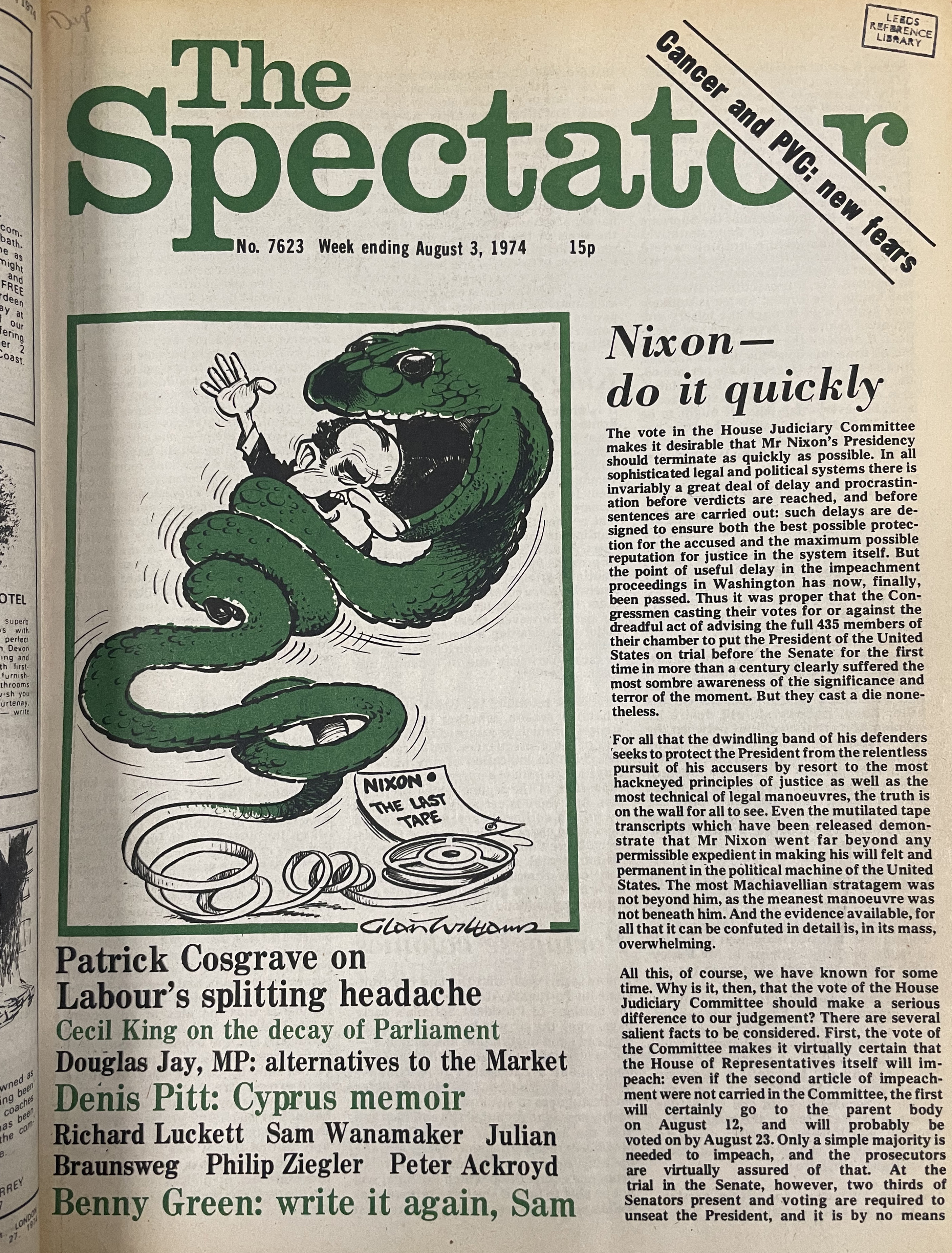
Any of those books will bring the reader closer to understanding the wider world of what is known with a very short-hand as ‘Watergate’. But perhaps the most effective way of experiencing those strange times as they unfolded, as well as the slow, ominous build to the climactic events of Watergate itself, is through contemporary reporting. Thankfully our collections are rich in such archival material – including significant runs of important current-affairs journals such as New Society and The Spectator, as well as digital access to the archives of UK newspapers like The Times.
“I’ve grown tired of living Nixon’s mess.” – Meat Puppets
*****
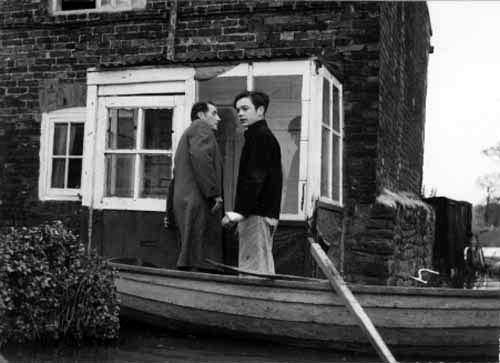
Utterly unrelated to the Watergate of this article, but readers may be interested to hear there is a location in Methley also known by that name. Our Leodis image archive has many excellent photographs of flooding that occurred in that area during the winter of 1960.
*Not currently available from Leeds Libraries, Garrett M. Graff’s Watergate: A New History (2023) is the most up-to date and comprehensive narrative account of the Nixon era and the Watergate scandal

