Students from the University of Leeds tackle some important hidden histories in Leeds Libraries’ local collections
Ben Beard, Grace Deane, Niave Kilkelly & Nic McDowell – Supervised by Dr Yuexin Rachel Lin
On 3 June 1917, as the First World War entered its third gruelling year, more than one thousand delegates from trade unions, left-wing parties, women’s organisations and peace societies converged on the Coliseum (now the O2 Academy) in Leeds. The event they held, the Leeds Convention, was attended by a who’s who of the British Left, including individuals who would rise to the highest political office: Sylvia Pankhurst, Charlotte Despard, Ramsay MacDonald, Philip Snowden, Bertrand Russell and others. They were united by a set of common goals: a democratic and anti-imperial peace, votes for women and working-class men, and complete civil and political rights such as freedom of the press, workers’ rights, and an amnesty for conscientious objectors. Their speeches also called attention to the rise of anti-imperial sentiments worldwide, including in India, Ireland, Russia, and Egypt. Most controversially, the Convention hailed the February Revolution in Russia, a democratic revolution that overthrew the tsar. It called for workers’ and soldiers’ councils – effectively, soviets – to be formed in Britain.
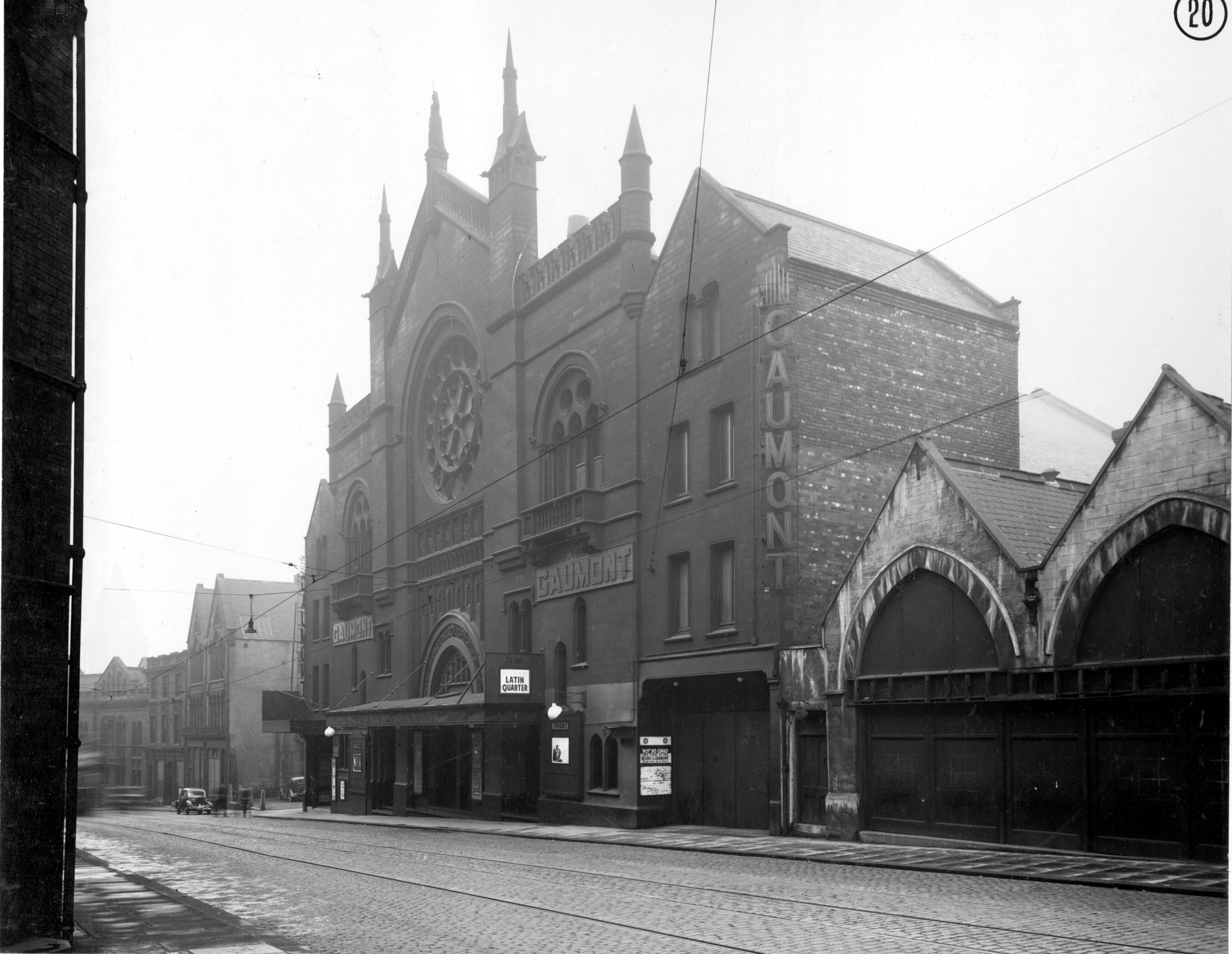
Reactions to the Leeds Convention came from across Britain, both positive and negative. Even the Cabinet considered stopping the meeting and resolved to wage a decisive campaign against pacifism after it took place. Yet the Convention remains a little-known episode in Leeds’ and British history.
Reviving the History of the Leeds Convention
As Liberal Arts students at the University of Leeds, we had to undertake a year-long student-led research project as part of our second-year studies. The four of us, with the help of our project supervisor, were tasked to explore the Leeds Convention. Due to the Convention’s neglected history, a large part of our work went into attempting to find out a bit more about it than what is easily accessible online. We also had to build a foundation for this research, gaining knowledge on the context in Britain – and more specifically, Leeds – at the time to try and understand a bit more about the reasoning for the Convention. Importantly, we looked into some of the main players at the Convention to understand the people who made up the movements involved in wartime issues, pacifism, as well as other social and political causes.
Our research revealed that the Convention was important not only in the strength of its demands or the fact that it included leading political figures. Instead, it reflected global anti-imperial sentiments and was pioneering in its call for women’s emancipation.
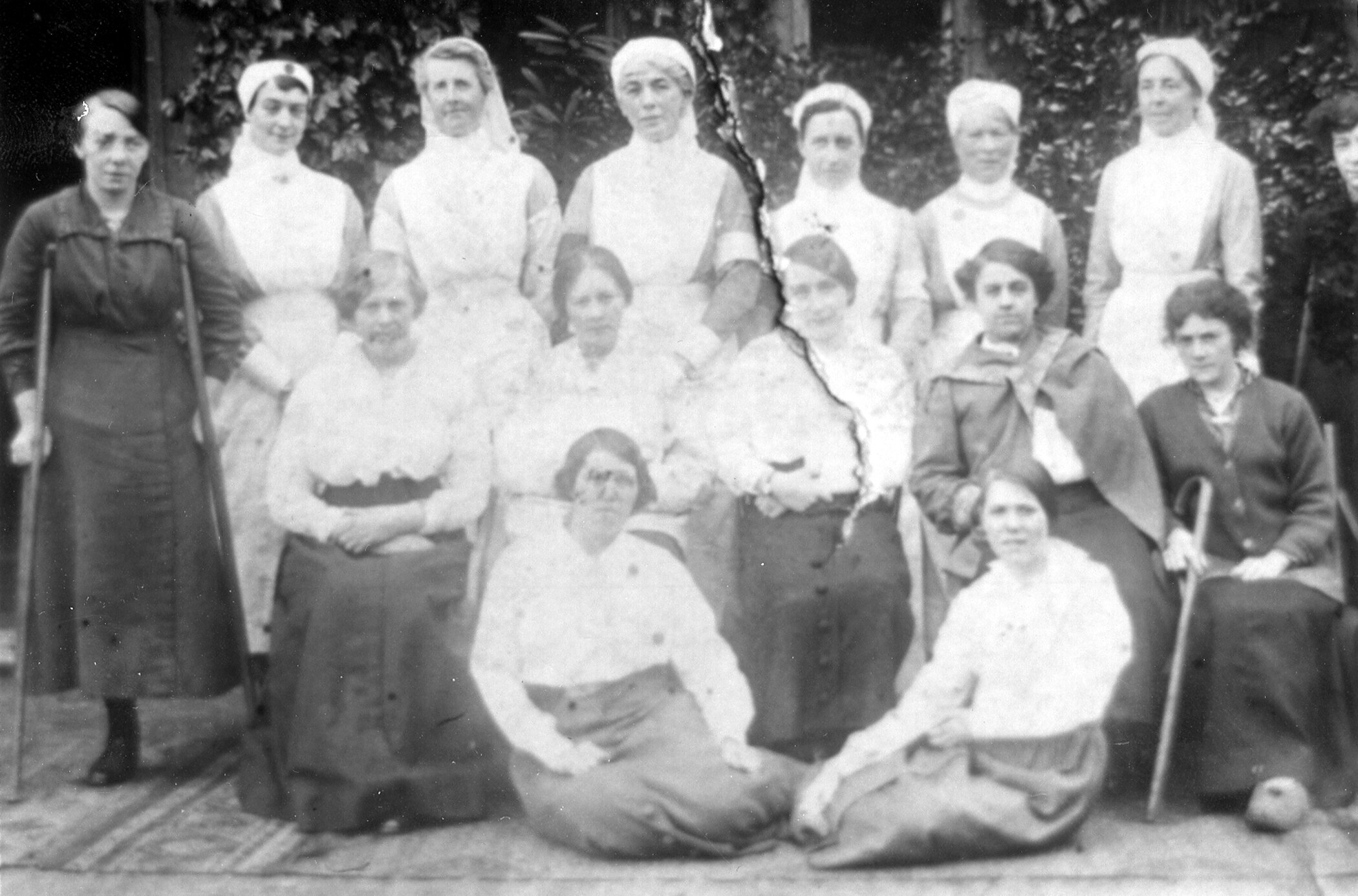
We aim to present our findings in a digital Storymap, which we hope will be an interactive means for people interested in the Convention to gain more information on it in a condensed manner that highlights its most interesting and important themes. Additionally, we are also in the process of applying for a Blue Plaque on the O2 Building and hope to get an opportunity to pitch this idea to Leeds City Council due to the local, historic and global impact of the Convention.
Visiting the Leeds Library’s Local and Family History Department and the Frustrations of Archive Work
At the early stages of the project, we tried to collate as much information about the Leeds Convention and its context as possible. We also focused on online newspaper archives, including the Daily Mirror, Daily Mail and other national papers of the time to give us a range of opinions about the Convention. After we had done a large amount of online research, we got in contact with Leeds Library to begin some in-depth archival work. Specifically, we wanted to explore local newspapers and resources to find relevant information on some of the key themes we had been exploring, such as women’s suffrage and the anti-imperial movement. We also hoped to locate police records around the time of the Convention as well as any political posters that may have relevance. We went to the Library full of hope that we would find a wealth of new information on the Convention itself. To begin with, we dug through large numbers of newspaper articles and court documents from the time, and scanned through index cards to locate resources on the Convention. Unfortunately, this thorough trawl left us with very little specifically about the Convention. Whenever we came across a brief mention of the event, our eyes lit up with excitement only to find that that was it.
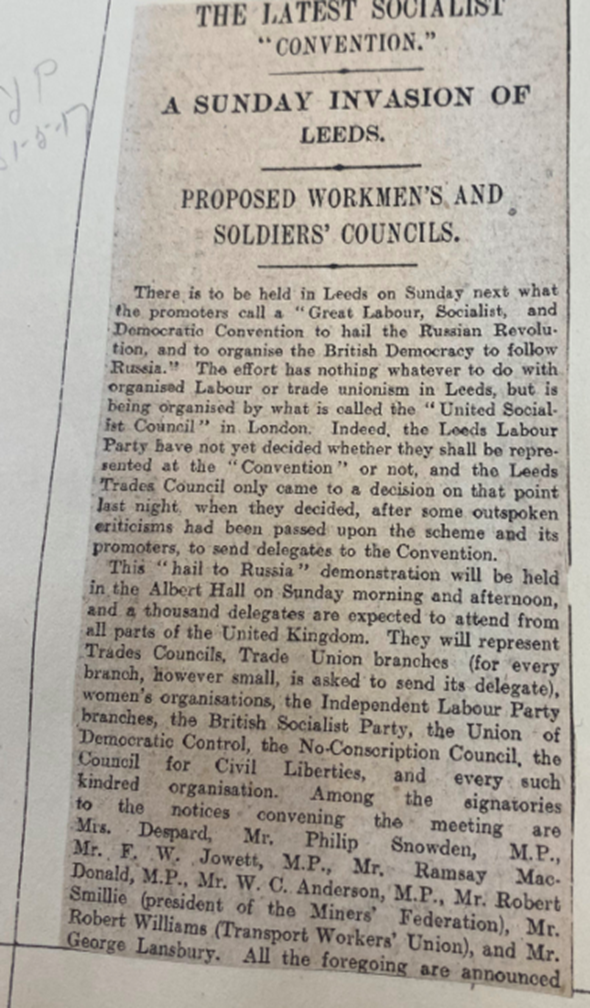
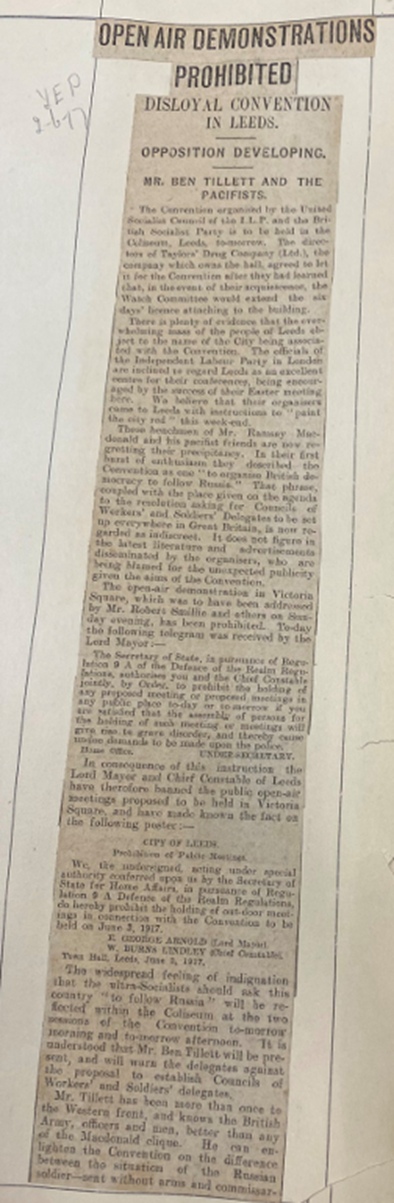
While it was certainly good to get snapshots of local insight into the rise of left-wing sentiment in Leeds and across Britain, the First World War was still the main topic of discussion in the news. The Convention itself remained elusive.
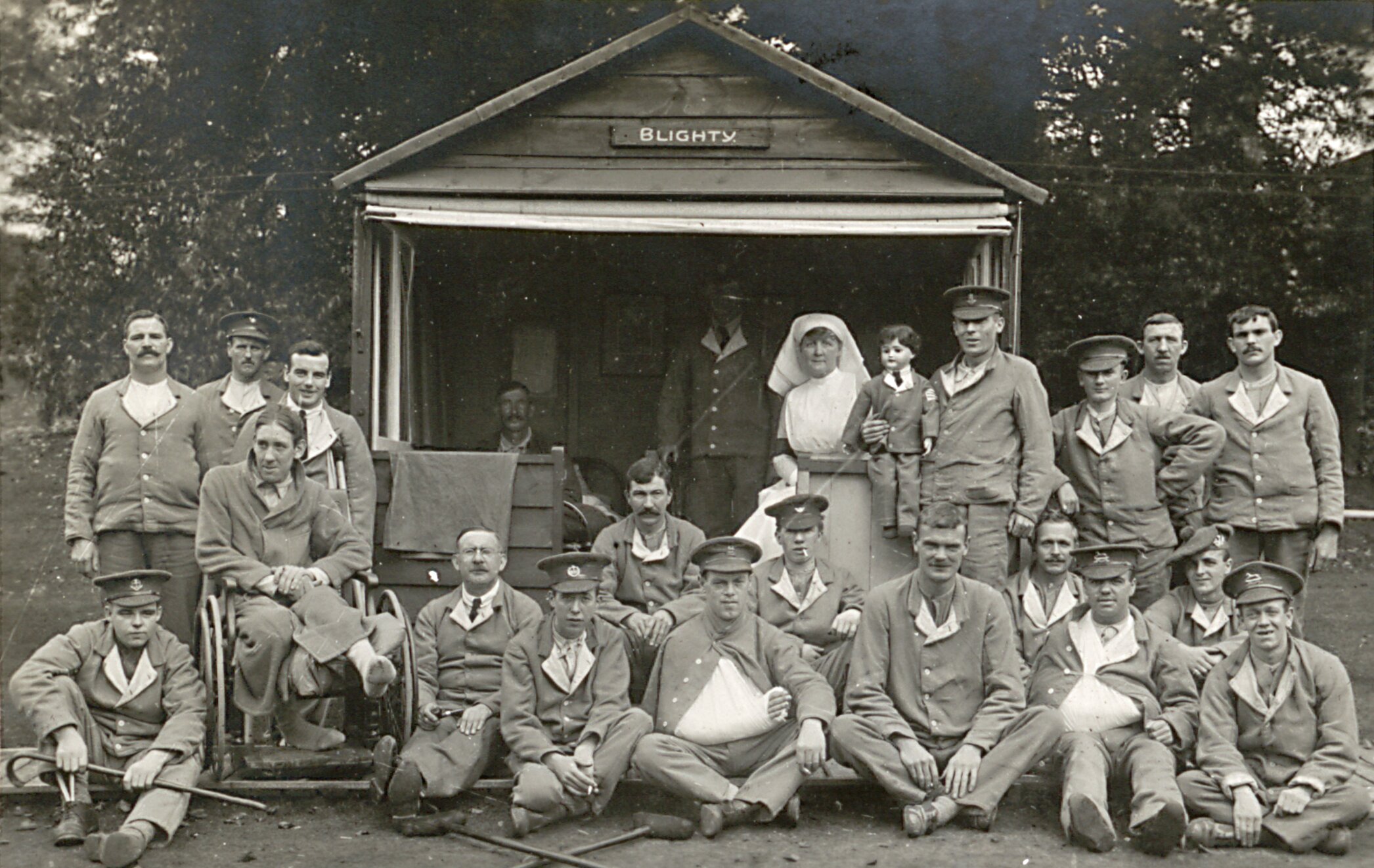
This was a frustrating task! The sheer volume of newspaper clippings, court documents and books made it difficult to conduct in-depth analysis quickly and easily. Our legwork yielded little initial results. We realised we would need to be more creative about where and how we were searching.
Creative Solutions to Research Roadblocks
We started thinking about how we could search around the Convention as a solution to this problem. Reading newspaper clippings from the Yorkshire Evening Post in 1917 helped us to build a better picture of the context surrounding the Convention and its sentiments. The everyday impacts of the war were documented through stories of schools closing to accommodate wounded soldiers, leading to children missing school or lacking the resources for their education.
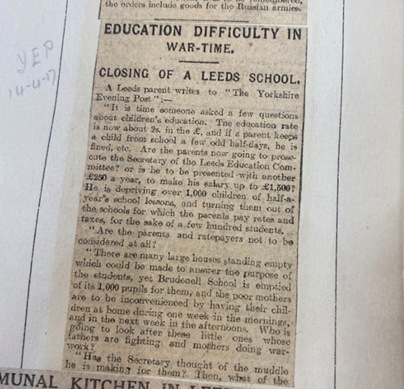
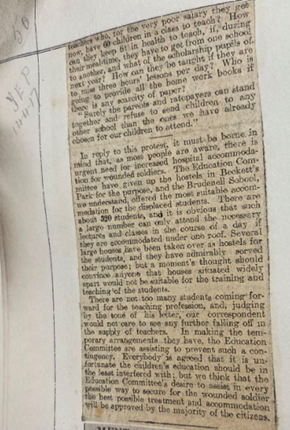
A Yorkshire Evening Post article from April 1917 on how schools were being closed to accommodate wounded soldiers, disrupting children’s schooling.)
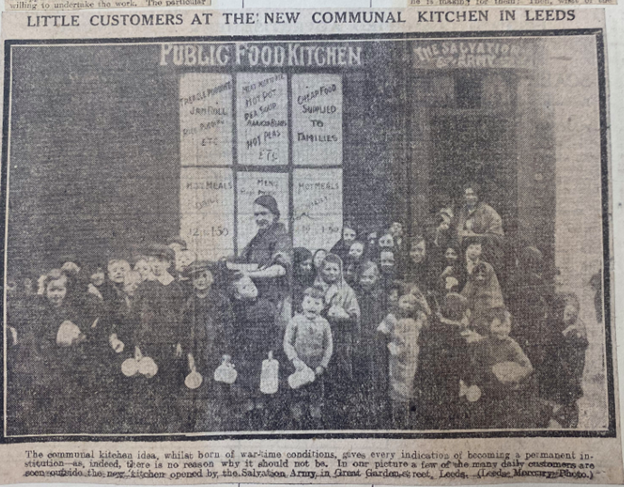
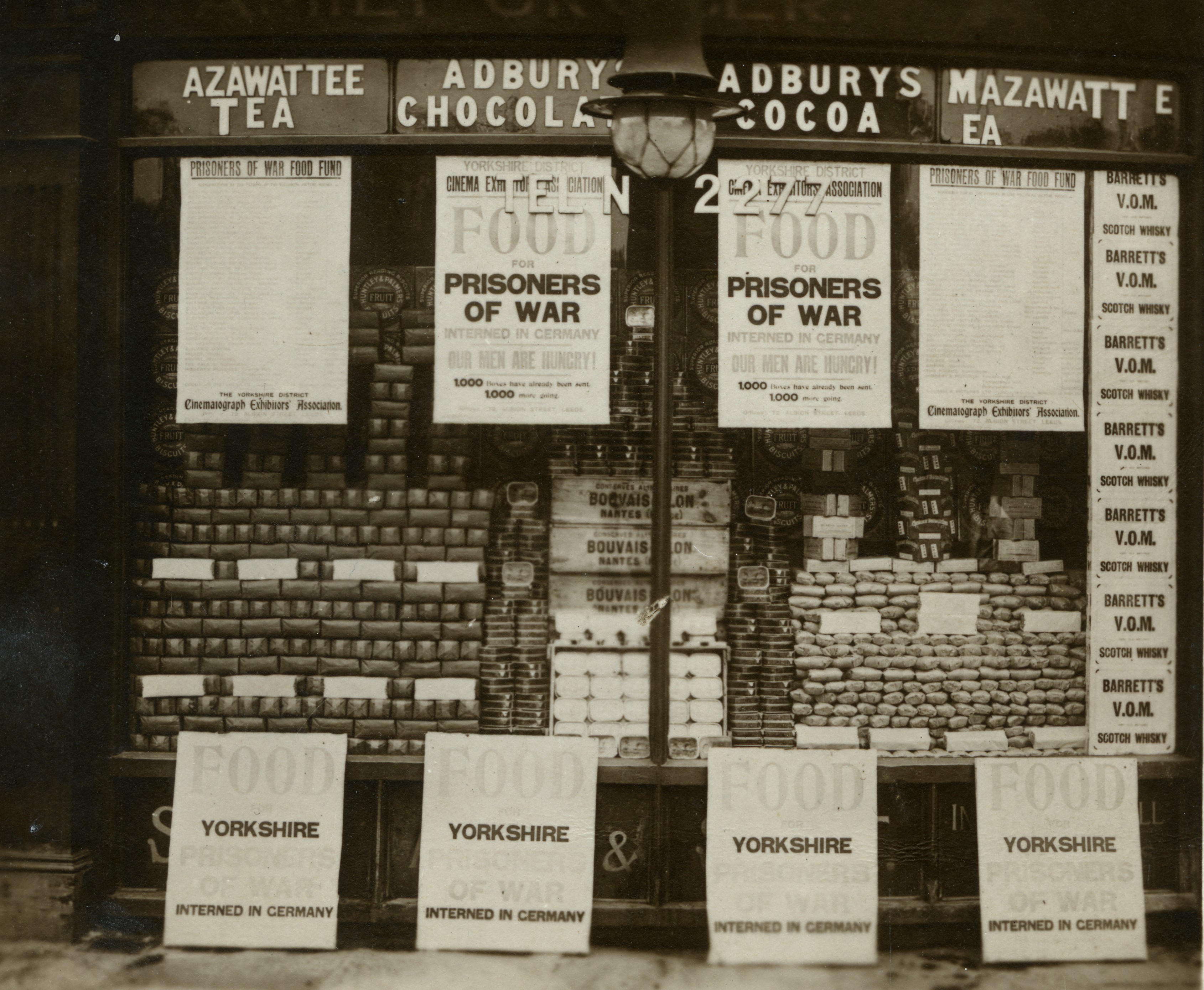
However, we also began to see the strong theme of patriotism which ran throughout these articles, and the disdain for pacifism. Surrounded by articles about the pain, loss and sacrifice that the British people were experiencing as a result of the war, discussions of “disloyal” conscientious objectors and pacifists calling for the end of the First World War became even more emotionally heightened. This began to provide us with a bit more understanding as to why the Convention faced such criticism in the media, when to our eyes it had only aimed to advocate peace and rights in the interests of the British working class and women.
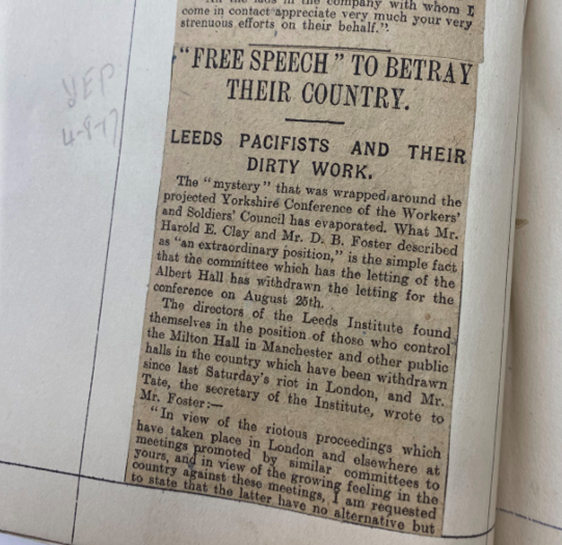
(The Convention proposed to set up workers’ and soldiers’ councils to enact its resolutions, including the push for a democratic peace. This article from the Yorkshire Evening Post, however, shows some of the negative reactions to these councils and to pacifism in general.)
As well as reading about the general sentiments and living conditions at the time of the Convention, we also looked for key words in our search through the newspaper clippings. This allowed us to quickly scan through lots of material to see if it related to our project. We identified key themes, individuals and countries mentioned in the Convention proceedings to widen our search beyond the event itself and began to form connections. This helped us to gain more understanding about international relationships and the sorts of information that the British public were receiving about Russia, Ireland, India and Egypt.
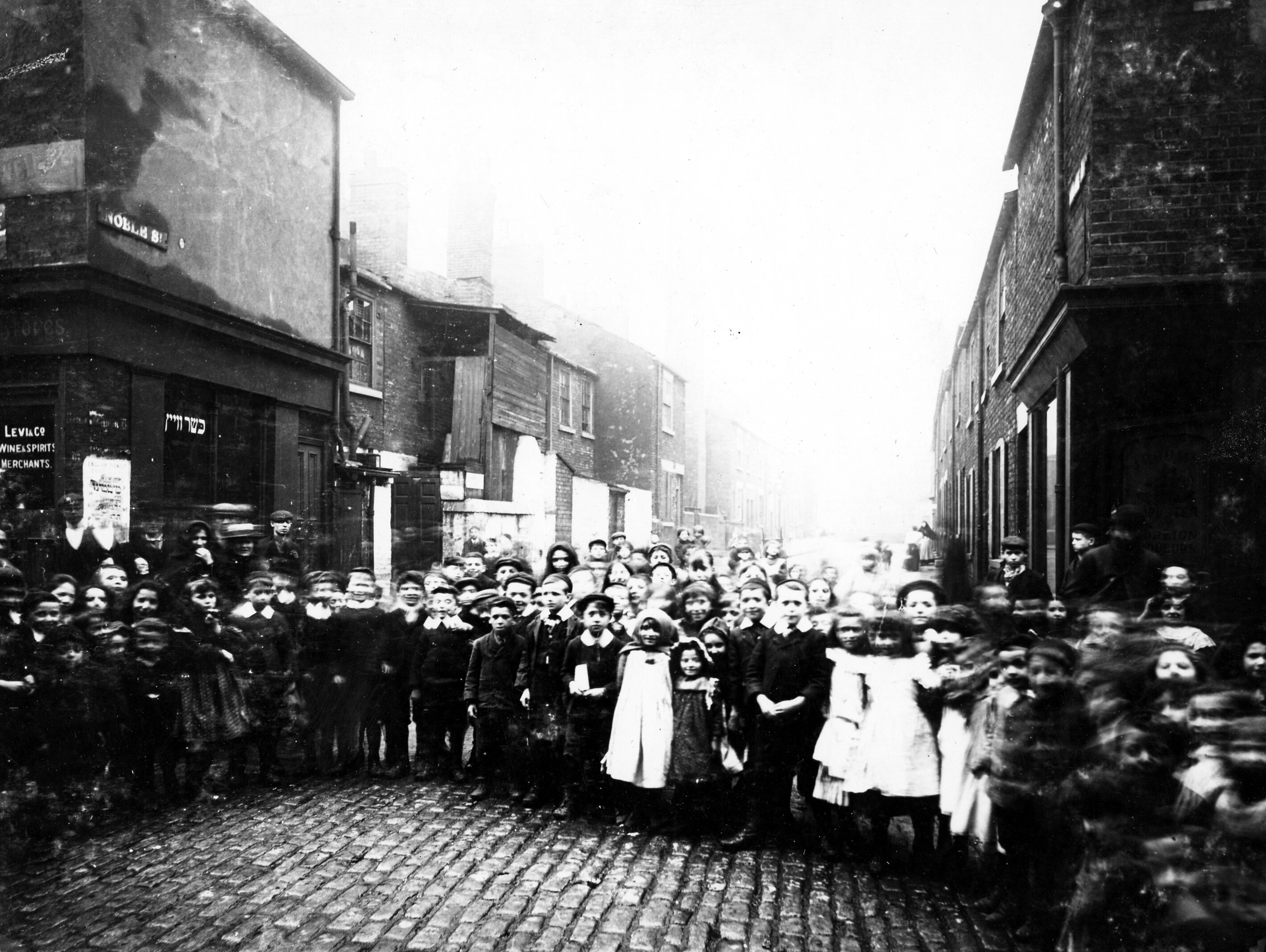
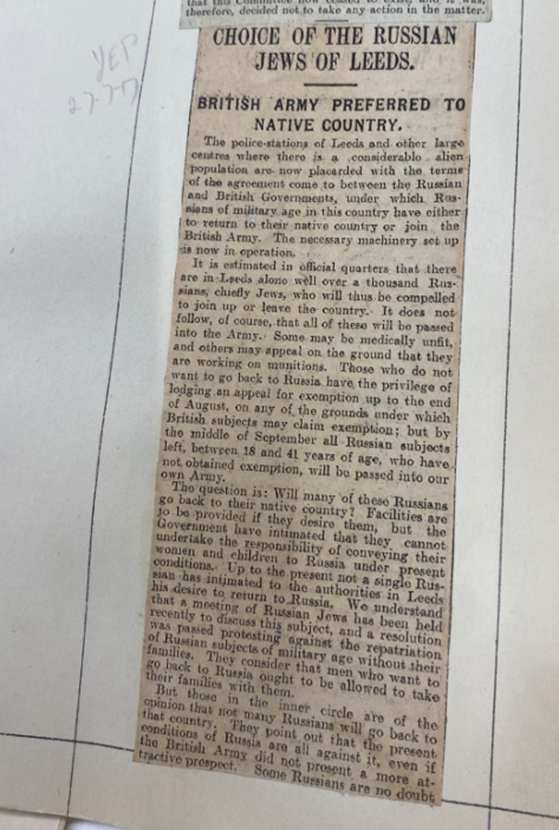
Another solution that we discovered was to think deeply and critically about the mediums that we were using to search for different types of information. Earlier in our project, during our background research, we had read about an incident of antisemitic violence following the Leeds Convention, but we had struggled to find further primary sources about it online, in books, in court proceedings and police records, or in larger newspapers. This silence around the incident seemed significant and intentional. We decided to look through microfilms from the Jewish Chronicle. There, we found a long and detailed account of the incident, described as “Anti-Jewish Riots in Leeds”. The severity and scale of the violence was particularly shocking since we had spent so much time looking for contemporary reports about it and had until this point found only silence. This led us to consider why certain news outlets chose to report on this event and others didn’t. Similarly, the Leeds Weekly Citizen, a Labour newspaper, contained far more coverage on the Leeds Convention than more conservative news outlets.
Reflections and Resonances
This experience showed us how archival research could be frustrating at first. We struggled – and still do! – to find content about the Leeds Convention itself. However, this did make it all the more exciting when we eventually discovered hidden gems within piles of newspaper clippings or reels of microfilm. Our trip to the library definitely made us more emotionally invested in the project, not only because of all the time and energy we spent there, but also because it allowed us to gain a more holistic understanding of Leeds during the First World War. Reading about the history of the city we live in proved to be a more emotional experience than we expected and made us feel much closer to the project. Leafing through page after page of newspapers, we came across seemingly un-ending lists of people who had lost their lives and messages of grief from their parents, siblings, partners and children. Photographs of young men and descriptions of where they lived in our city brought the reality of the war home to us, in a way that was no longer just academic but personal and emotionally significant.
Moreover, we continue to notice themes and moments which evoke strong emotions within us all because of how the Leeds Convention resonated with issues we see in our everyday lives today. Despite happening over 100 years ago, the ideas and aspirations of the Leeds Convention are still relevant and just as important now. Women’s rights, worker’s rights, peace, the treatment of political prisoners, anti-imperialism, immigration, and the lives of people living under occupation are causes that are just as urgent in 2026 as they were in 1917. Our reflections on what newspapers chose to report on also prompted us to think about media “echo chambers” and how people’s opinions are shaped by the news they consume. Even though we have a vastly wider range of information available to us today, could we still be falling into the trap of only reading about what certain media outlets push to us, or media that agrees with our views?


Great piece of research, thanks for sharing