Leeds Beckett University graduate Grace Hairyes looks back on her participation in a public history project involving researching zines and youth subcultures in 1990s’ British cities, including Leeds.
As part of my final year at Leeds Beckett University, I took the Public History Project module where we explored youth subcultures through the 1990s. This was a defining period in the making of new subcultural identities, ranging from Baggy to Grunge and Riot Grrrl. We covered a range of topics from music, fashion trends and football fandom. These are topics I was already quite interested in before the project, so I appreciated the chance to delve into them. We learned how these topics have periodically shaped and moulded society, particularly since the 1960s, so understanding the root of these trends is vital. In recent years there has been a resurgence in the ‘baggy’ aesthetic of the 1990s, while the re-emergence of iconic bands such as Oasis and Pulp and sports personalities of the 1990s have struck a chord with many young people today.
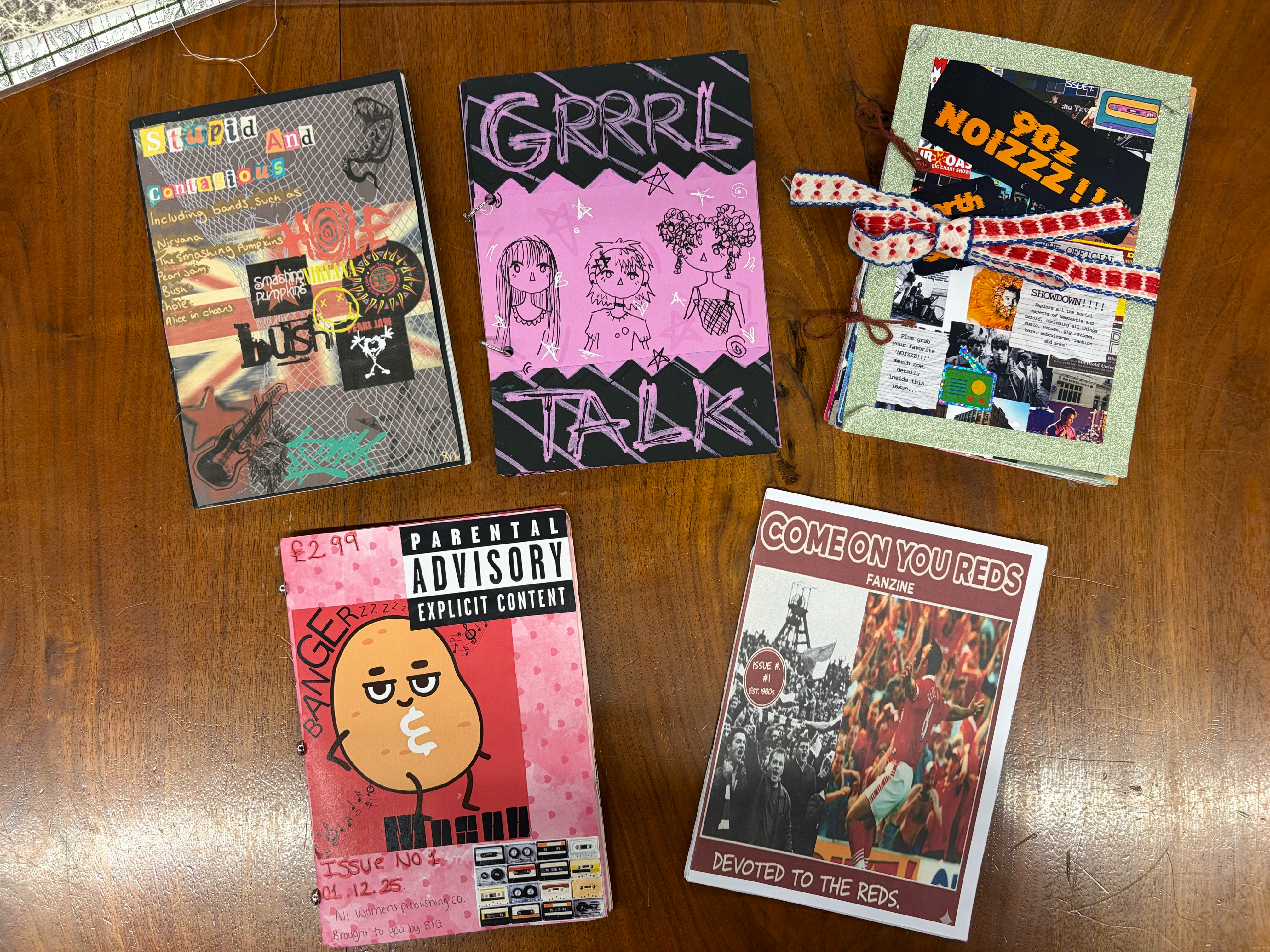
After exploring the different sub-cultures, we were tasked with creating a fanzine for our assessment. In doing so, we had the opportunity to work with Leeds City Library’s zine collection, following the hugely successful Voices of the Fans exhibition held at the library in 2025. The collection contains a growing number of zines, covering genres ranging from punk to electronic dance music and football. Produced with a Do-It-Yourself attitude, the zines provide a snapshot into youth subcultures of the recent past as well as original testimonies from the creators to share their knowledge and enthusiasm to readers in creative and independent ways.
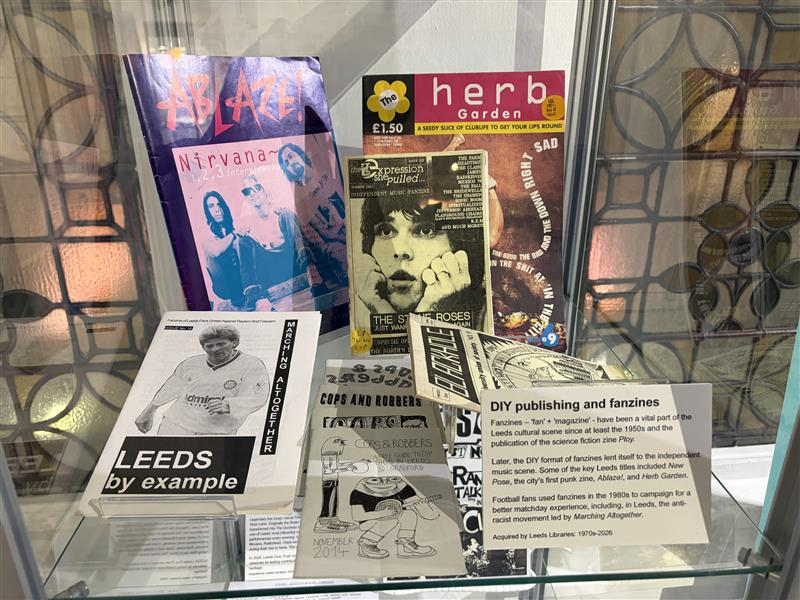
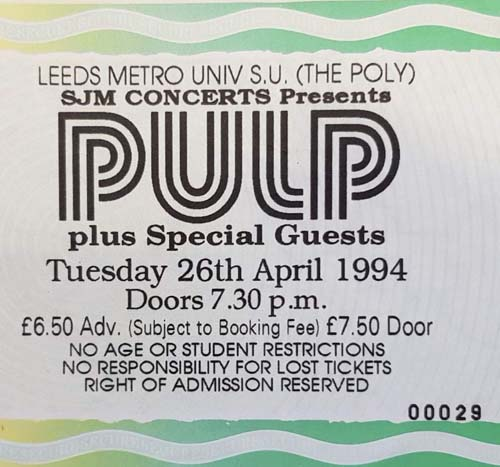
The focus of my zine was the indie scene of the 1990s. My choice for this topic was largely rooted in my own upbringing with a music obsessed family. Growing up I remember being in primary school and other kids would be talking about the pop band One Direction and had no idea what I was on about when I sang lyrics from Pulp’s ‘Common People’ (1995) or ‘Trash’ by Suede (1996). This meant that as soon as the project was pitched, I instantly knew I wanted to express my own love of 1990s’ music. Furthermore, as cultural historians like Andy Bennett and Dion Georgiou have argued, progressive indie music has outlived the 1990s and is very much still a prevalent form of music to this day, therefore it is important to pay tribute to these earlier inspirations. Similarly, with the end of the hugely successful Oasis ‘Live 2025’ tour around the same time as our project was taking place it was timely to highlight the importance of individuals and groups in the 1990s.
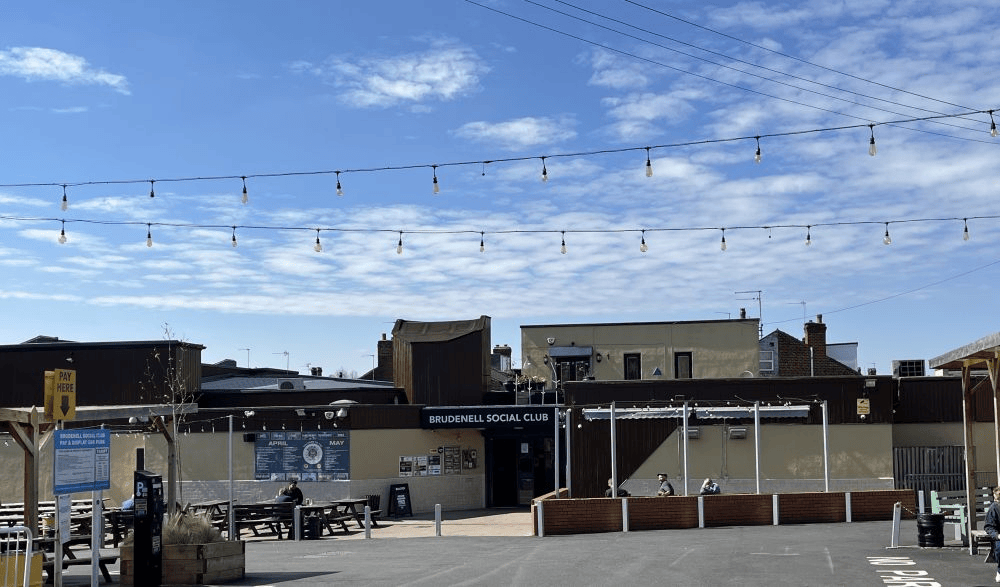
Being from Leeds myself presented the opportunity of exploring the city’s musical heritage. My fanzine included a timeline of past and present grassroots venues in Leeds. Without these venues, Leeds would not have a thriving music and entertainment scene bringing considerable culture as well as investment to the city. I was inspired by local zines within the library’s collection which covered local grassroots venues, as well as the ‘Music, Leeds, Us’ exhibition at Leeds City Museum. As a result, I produced a map of iconic Leeds venues, where some of the leading bands of the decade toured. These included The Duchess pub on Vicar Lane, Warehouse, the Town and Country Club (now the 02 Academy) and the Brudenell Social Club.
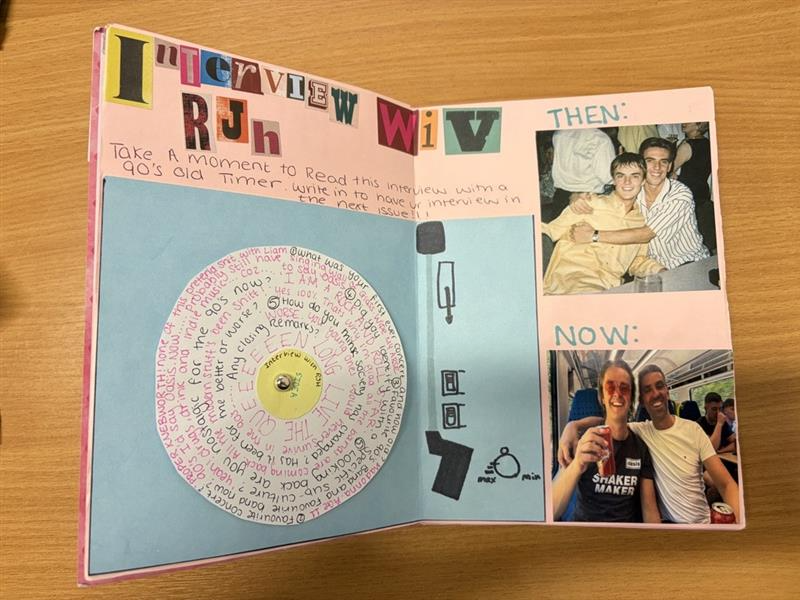
To ensure authenticity I opted for a home-made DIY zine. This necessitated many hours of cutting, glueing, drawing and handwriting. I researched bands, venues, and fashion, drawing upon historic zines like Sniffin Glue and those in the library’s collection for inspiration. I did not want my zine to be too full of information as that didn’t align with original works of the time. Instead, I opted for a more subjective approach including my own opinions on music and fashion which is more authentic to the DIY culture of the time. The most interesting part of my zine was the interview I conducted with my dad where he shared his experiences as a teenager in the 1990s, which allowed for a sense of nostalgia to be shared through the zine (Dion Georgiou has written about the importance of nostalgia to the revival of British indie music since the 2010s). I transcribed the interview and wrote it up on a hand drawn vinyl record, which I pinned into the zine. This can be read by rotating the record around the page, again invoking a feeling for how we used to listen to music in its material form before streaming.
This project provided a truly creative opportunity to express attitudes, tastes and material culture in the 1990s. It has inspired myself and other students from the module to continue to take creative approaches towards sharing history as a way of reaching new audiences and giving a voice to alternative, non-traditional subjects. I hope our zines, which we have deposited in the Leeds City Library’s collection, help inspire you to produce your own social histories of the recent past.

