Over the past few weeks we’ve been posting a few more articles than usual, all tied to our exhibition Leodis: 400 Years of Leeds in the Leeds Libraries Collections. The exhibition can be seen in our City Library until November 11. In this post our focus is on selections from our local and special collections that illustrate life in the wider metropolitan district.
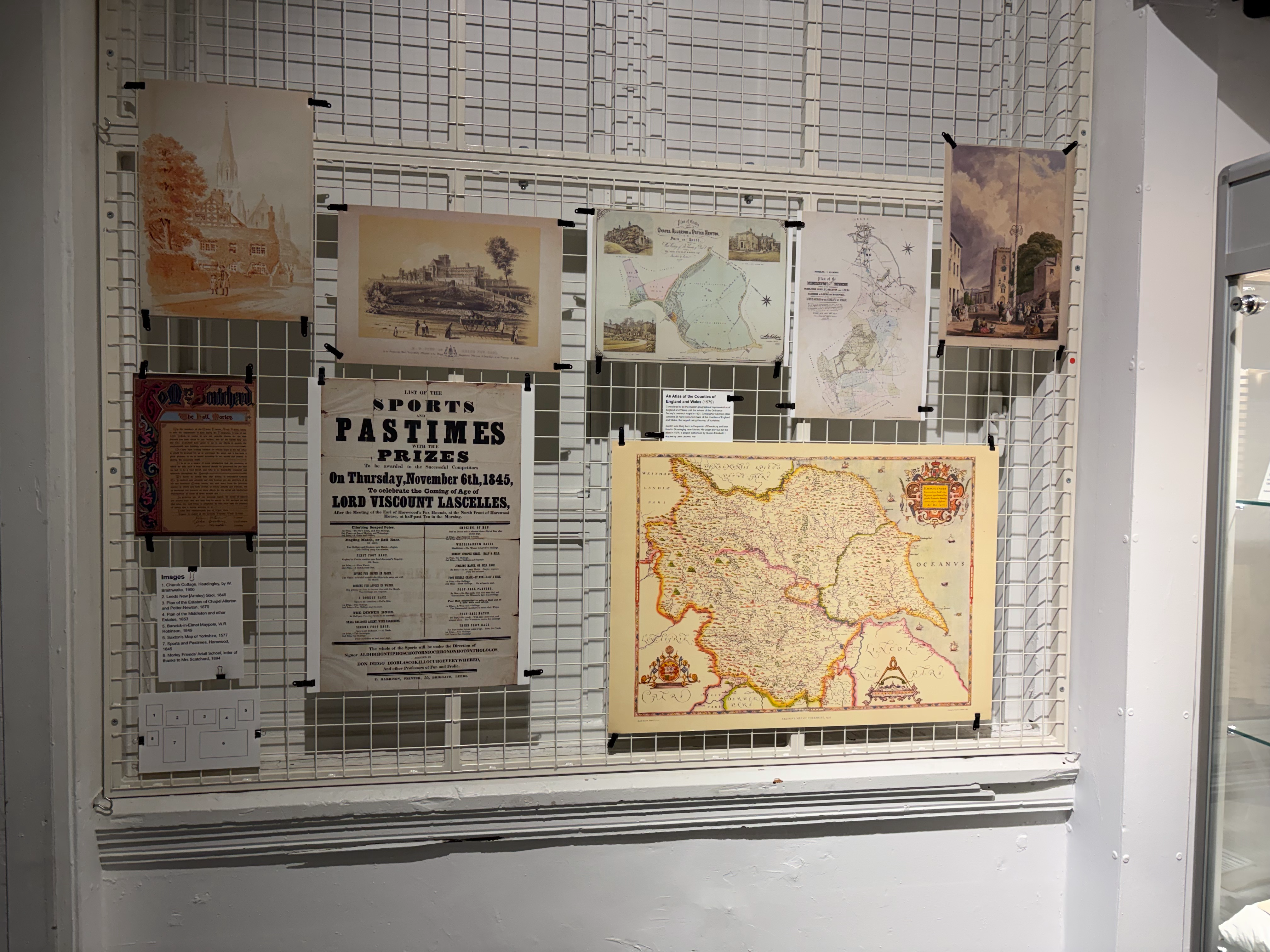
An Atlas of the Counties of England and Wales (1579)
Considered to be the master geographical representation of England and Wales until the advent of the Ordnance Survey’s one-inch maps in 1801, Christopher Saxton’s atlas contains 35 hand-coloured maps of the counties of England and Wales, the largest being the map of Yorkshire.
Saxton was likely born in the parish of Dewsbury and later lived in Dunningley near Morley. He began surveys for the atlas in 1574, a project authorised by Queen Elizabeth I.

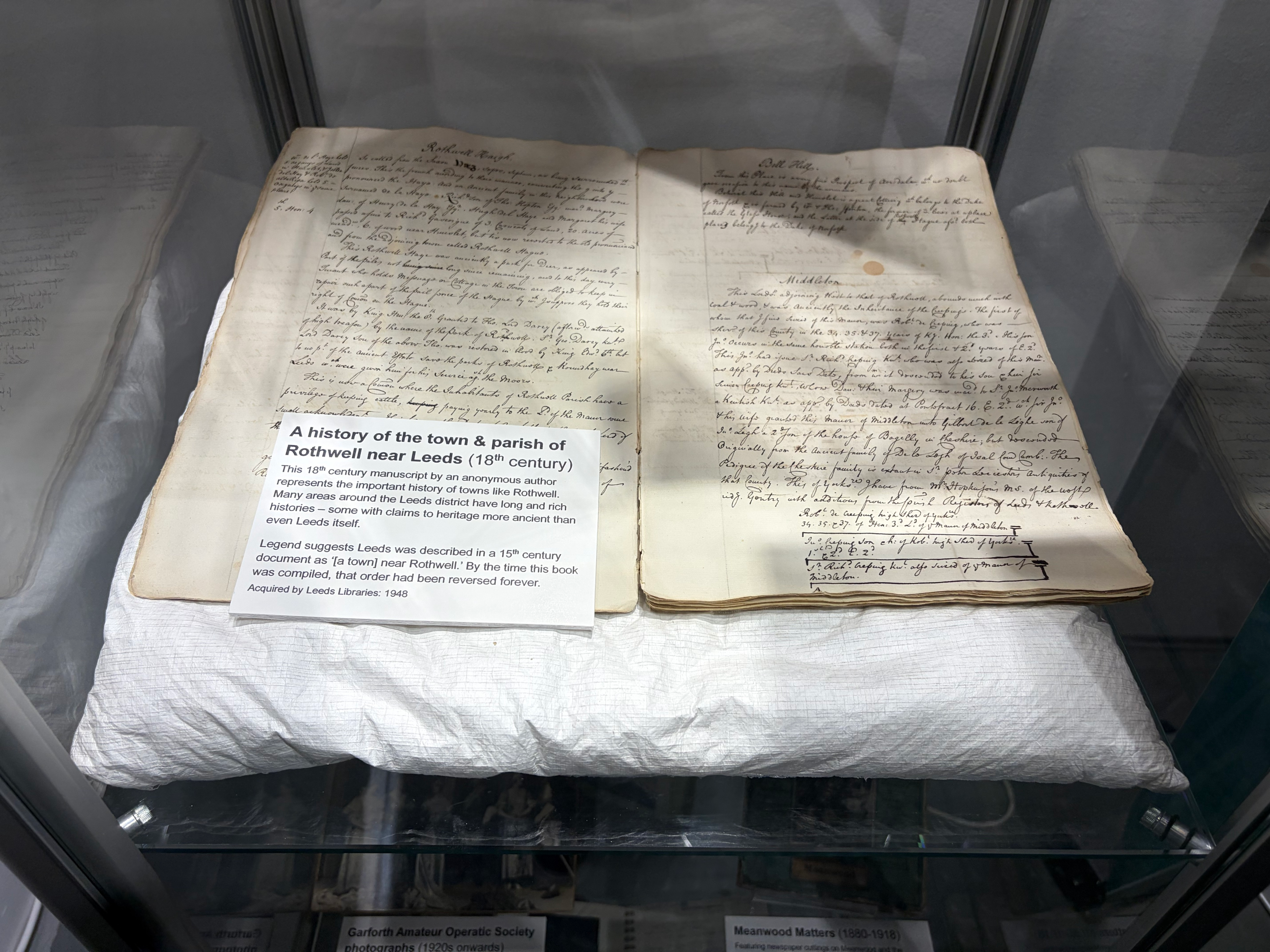
A history of the town & parish of Rothwell near Leeds (18th century)
This 18th century manuscript by an anonymous author represents the important history of towns like Rothwell. Many areas around the Leeds district have long and rich histories – some with claims to heritage more ancient than even Leeds itself. Legend suggests Leeds was described in a 15th century document as ‘[a town] near Rothwell.’ By the time this book was compiled, that order had been reversed forever.
Leeds Jewish Board of Guardians Annual Reports (1893, 1919, 1922)
The Leeds Jewish Board of Guardians was established on 28th February 1878 to provide relief for those in need. Its first office was next to the Great Synagogue on Belgrave Street. The annual reports provide a detailed account of subscriptions and donations given, at a time when the Jewish community in Leeds was growing from the Leylands area to other parts of the city. The organisation still exists and is now known as Leeds Jewish Welfare Board.
Meanwood Matters (1880-1918)
Featuring newspaper cuttings on Meanwood and the surrounding Leeds area, this scrapbook was compiled by Dr F. Arnold Lees, a doctor and renowned botanist. Using articles from publications such as the Yorkshire Evening Post and the Leeds Mercury, Lees enriched the collection with handwritten annotations, adding further detail and personal observations.
Today, Lees is best remembered for The Flora of West Yorkshire (1888), a comprehensive survey of the region’s plant life.
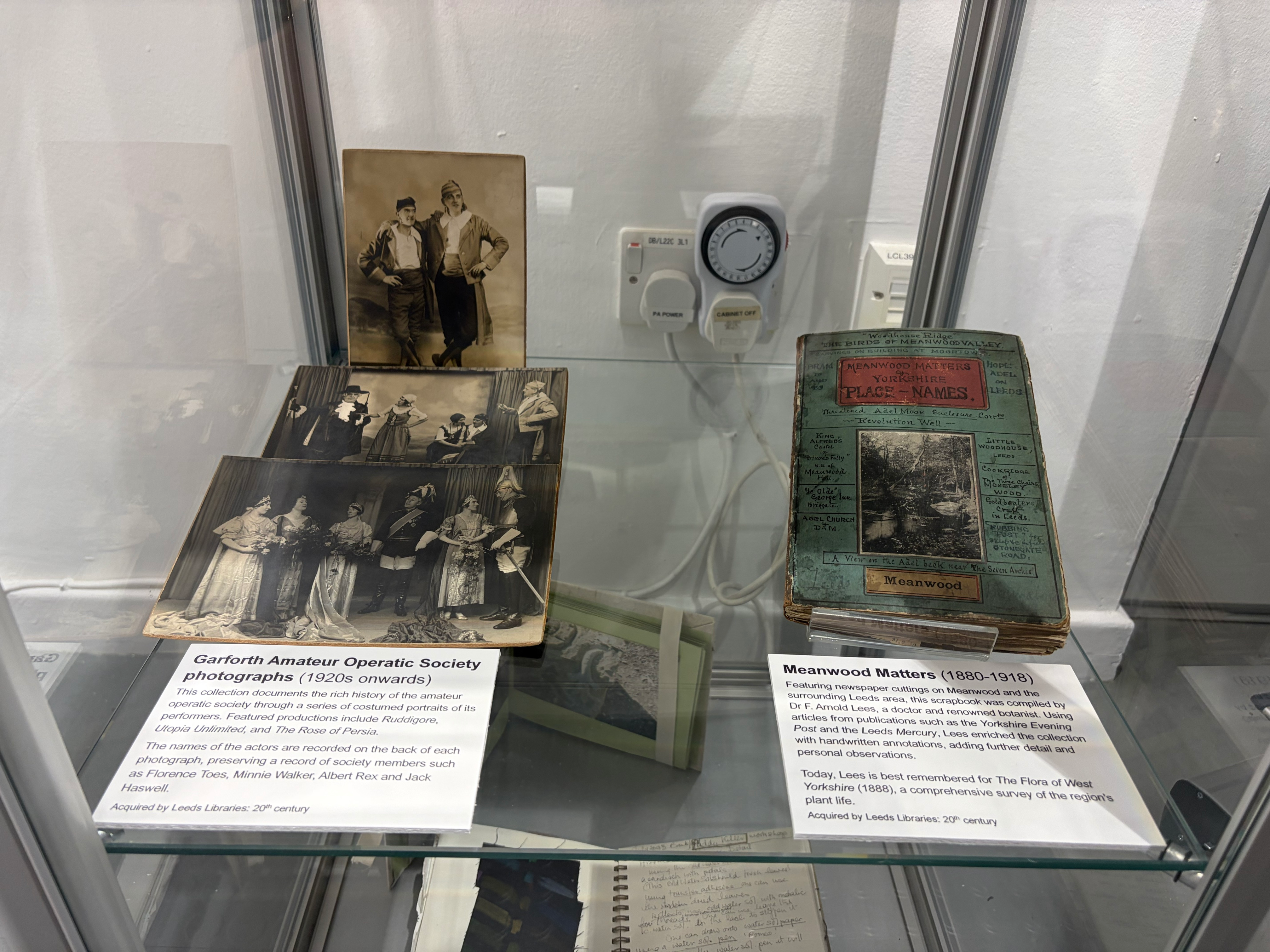
Garforth Amateur Operatic Society photographs (1920s onwards)
This collection documents the rich history of the amateur operatic society through a series of costumed portraits of its performers. Featured productions include Ruddigore, Utopia Unlimited, and The Rose of Persia.
The names of the actors are recorded on the back of each photograph, preserving a record of society members such as Florence Toes, Minnie Walker, Albert Rex and Jack Haswell.
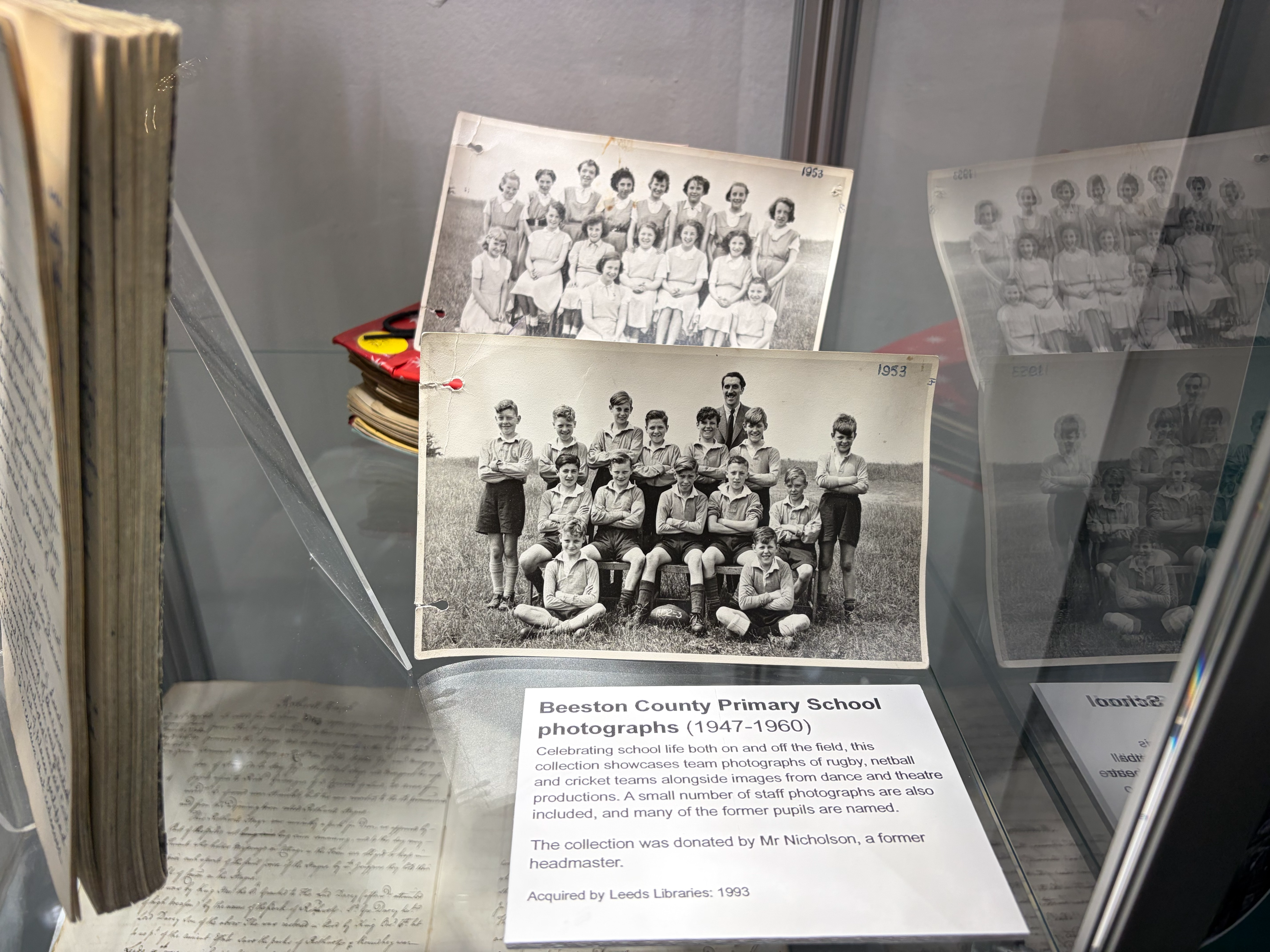
Beeston County Primary School photographs (1947-1960)
Celebrating school life both on and off the field, this collection showcases team photographs of rugby, netball and cricket teams alongside images from dance and theatre productions. A small number of staff photographs are also included, and many of the former pupils are named.
The collection was donated by Mr Nicholson, a former headmaster.
Hunslet de Ledes (1950)
This handwritten manuscript, Hunslet de Ledes: A Miscellany of History, Events, Dates and Lore, was compiled by William Calvert and reflects his personal observations and experiences of Hunslet in south Leeds.
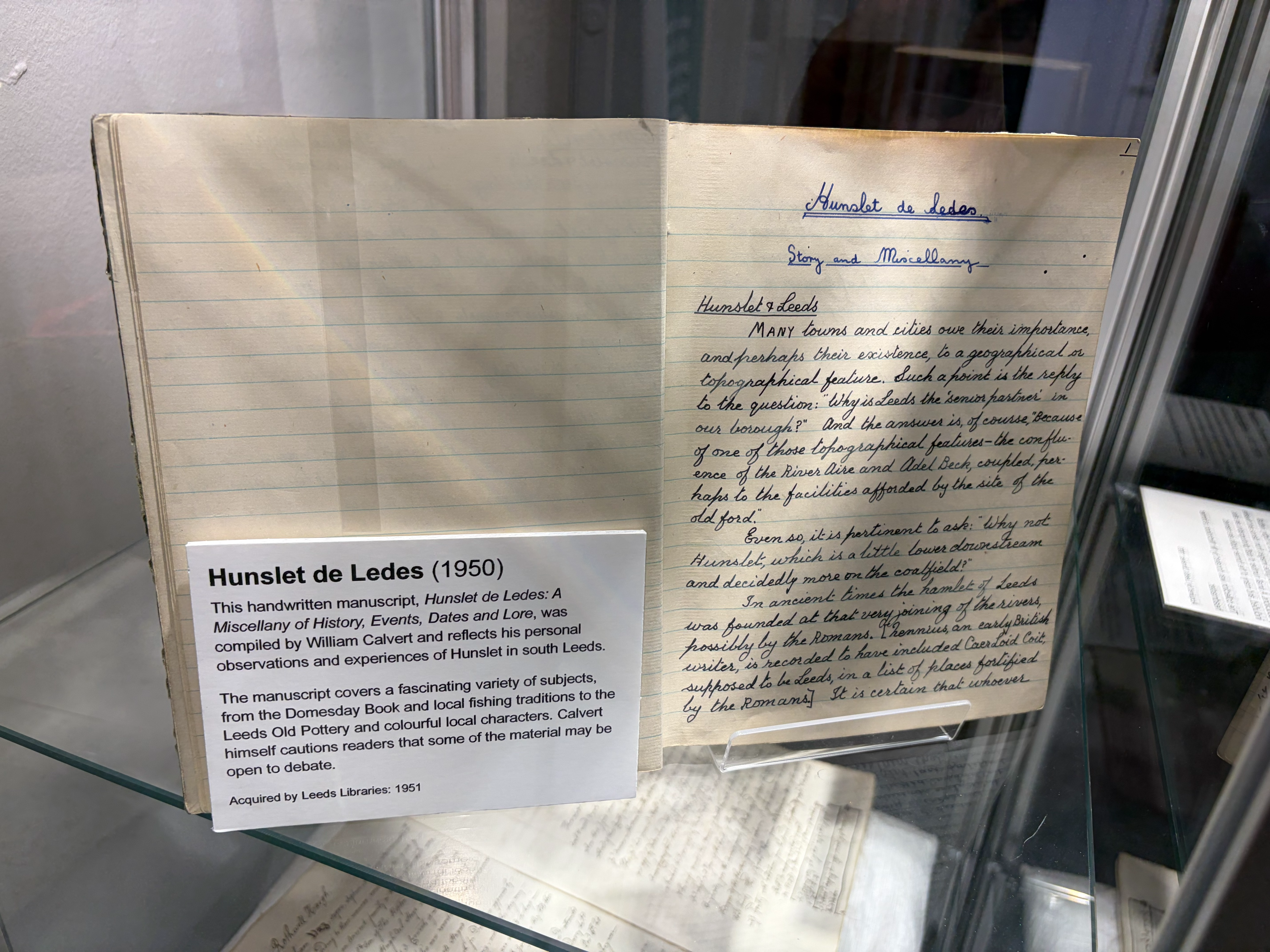
The manuscript covers a fascinating variety of subjects, from the Domesday Book and local fishing traditions to the Leeds Old Pottery and colourful local characters. Calvert himself cautions readers that some of the material may be open to debate.
Woodhouse and Camp Road: photographic survey & notes (1970)
This important collection of photographs shows the Woodhouse area of Leeds prior to redevelopment. The introduction suggests these images were taken by ‘architects and planners’ opposed to those changes.
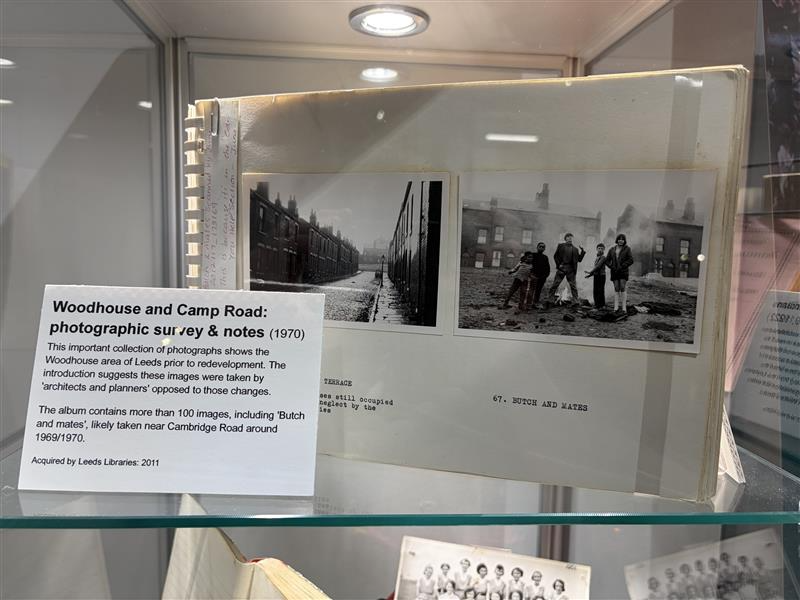
The album contains more than 100 images, including ‘Butch and mates’, likely taken near Cambridge Road around 1969/1970.
Anne Cove (1990s)
Leeds textile artist Anne Cove contributed to many heritage projects around the city – including the Leeds Tapestry, permanently on display on the 1st floor of the City Library, and the Rothwell Colliery Project (1998-2000) as Artist-in-Residence.
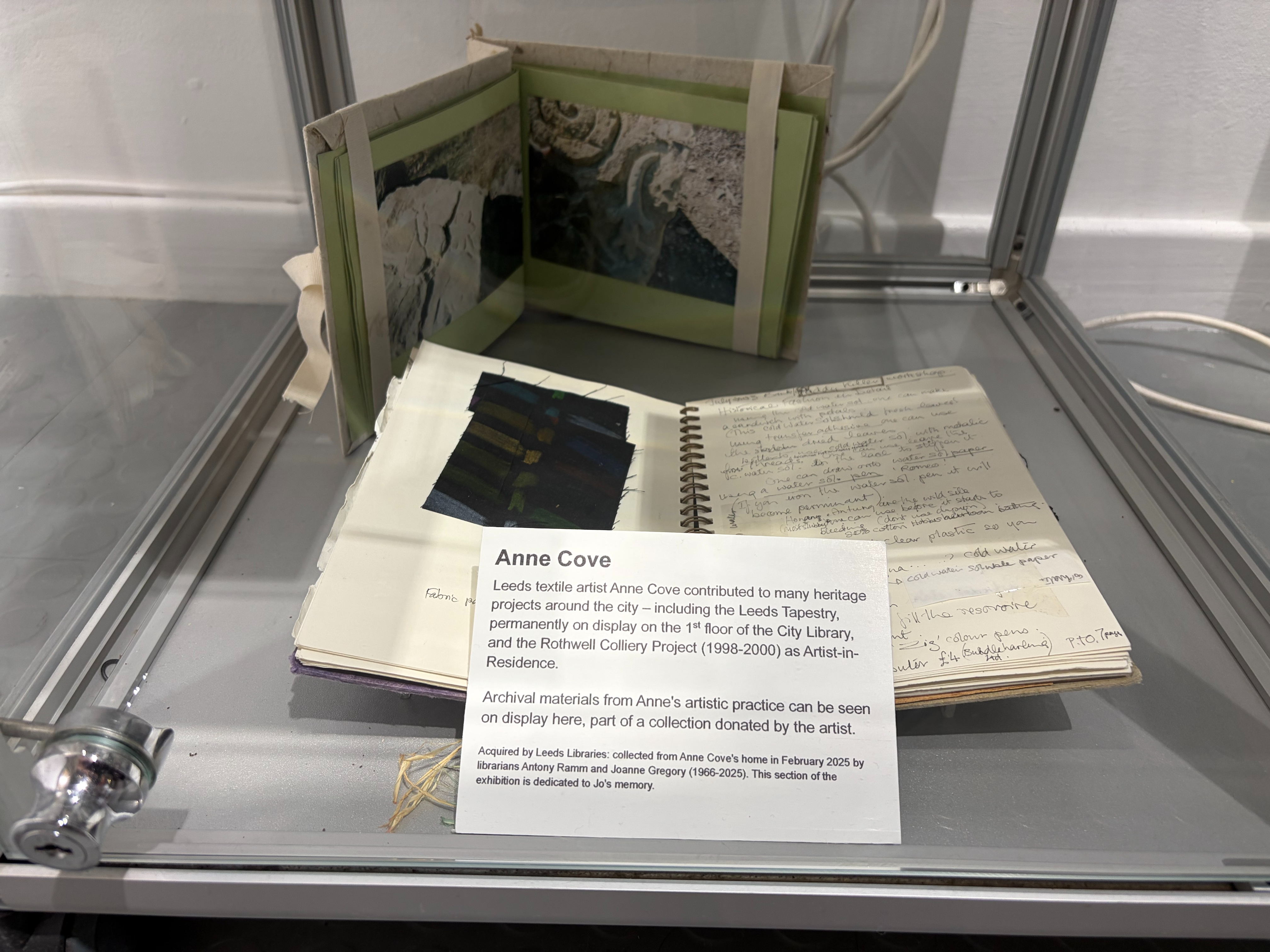
Archival materials from Anne’s artistic practice could be seen on display in the exhibition, part of a collection donated by the artist.

