This week we hear from Library and Digital Assistant Rosaleen Williams, who uncovers the life, career, and incredible achievements of a pioneering Leeds librarian – now rightly celebrated as part of the newly refurbished Central Library. This article also forms #28 in our People of Leeds series.
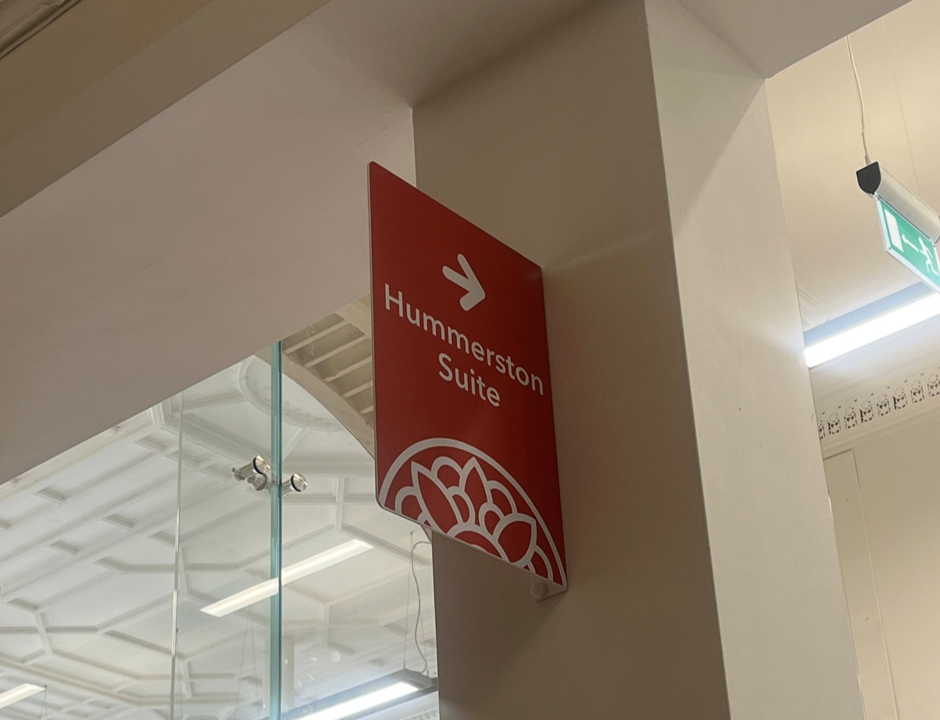
The ground floor of Leeds Central Library has now reopened after being shut for refurbishment. Alongside a brand-new adult fiction and non-fiction section and Children’s Library (coming soon!) there is also a new conference room, named the Hummerston Suite. This space is named after Leeds Libraries’ first ever female librarian, Maud Hummerston.
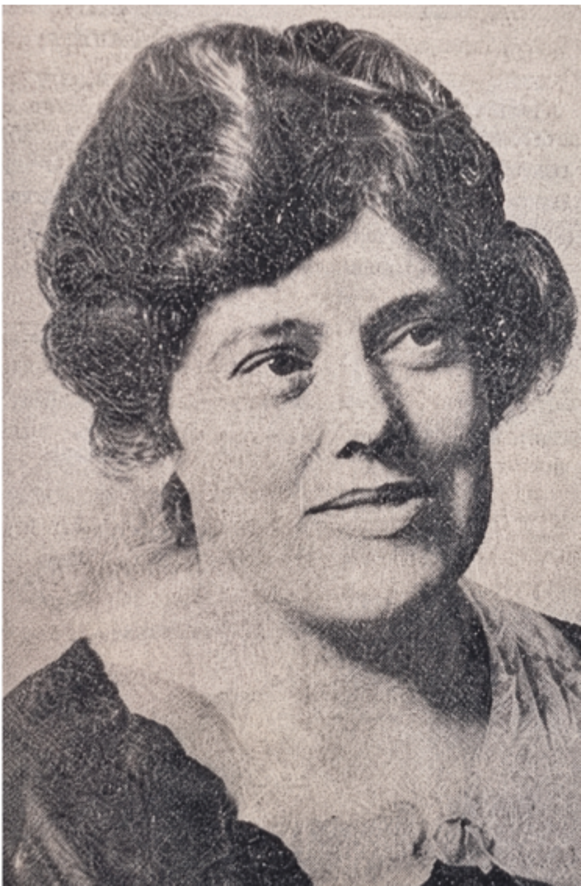
She was also the first Children’s librarian and pioneered the role in the city of Leeds and beyond. Maud dedicated much of her time to advocating for children’s access to books, reading and library spaces through her various networks across the country. In conjunction with the Leeds 400 celebrations, I set out to discover more about this person who carved the way for women in the library profession.
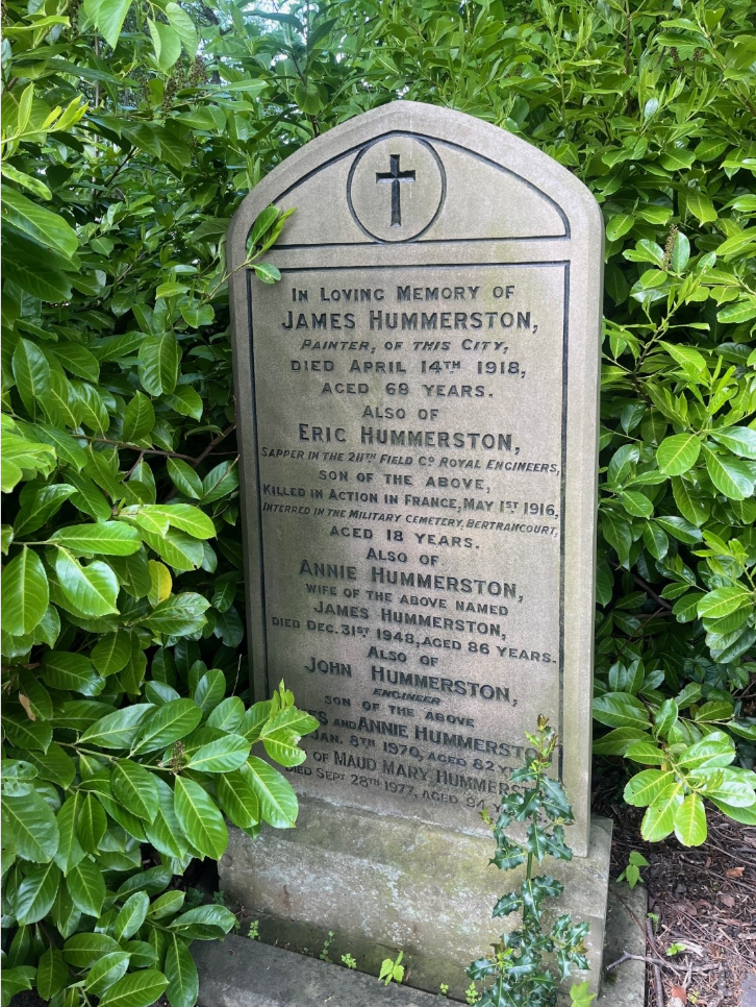
Maud was born in 1883 to father James Hummerston and mother Annie Breach. To her friends and family, she was nicknamed ‘Maudy’ or ‘Hummy’.[1] The eldest of four siblings, she was followed by her brother John, who became an engineer and sister Effie, who became a school teacher and artist. The library, along with Leeds Art Gallery, is fortunate enough to have some collections of Effie’s work. The library also holds a collection of newspaper cuttings from the First World War, compiled by John. Because John was a council engineer, he may well have worked in Leeds Central Library building, back when some of the rooms were different municipal departments (you can learn more about the history of the building, here). Lastly, Maud was followed by her brother Eric, who unfortunately died in the war in 1916. In 1923, Maud visited the Commonwealth War Graves in France, writing a short piece about her time there.[2] Shortly after Eric, her father passed away in 1918, leaving her, her two siblings and mother. She then lived with her family at various houses around Leeds for most of her life.
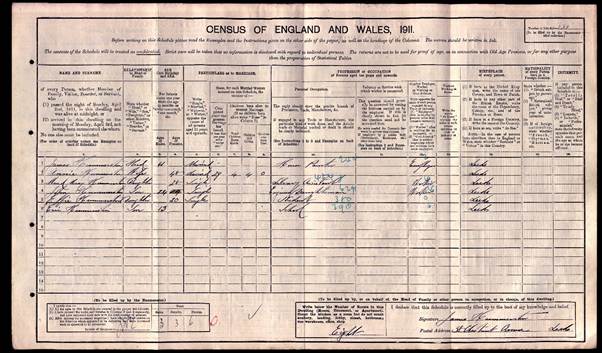
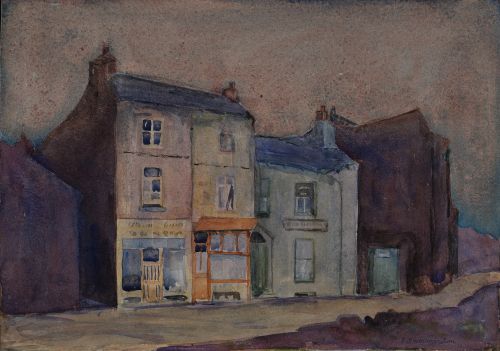
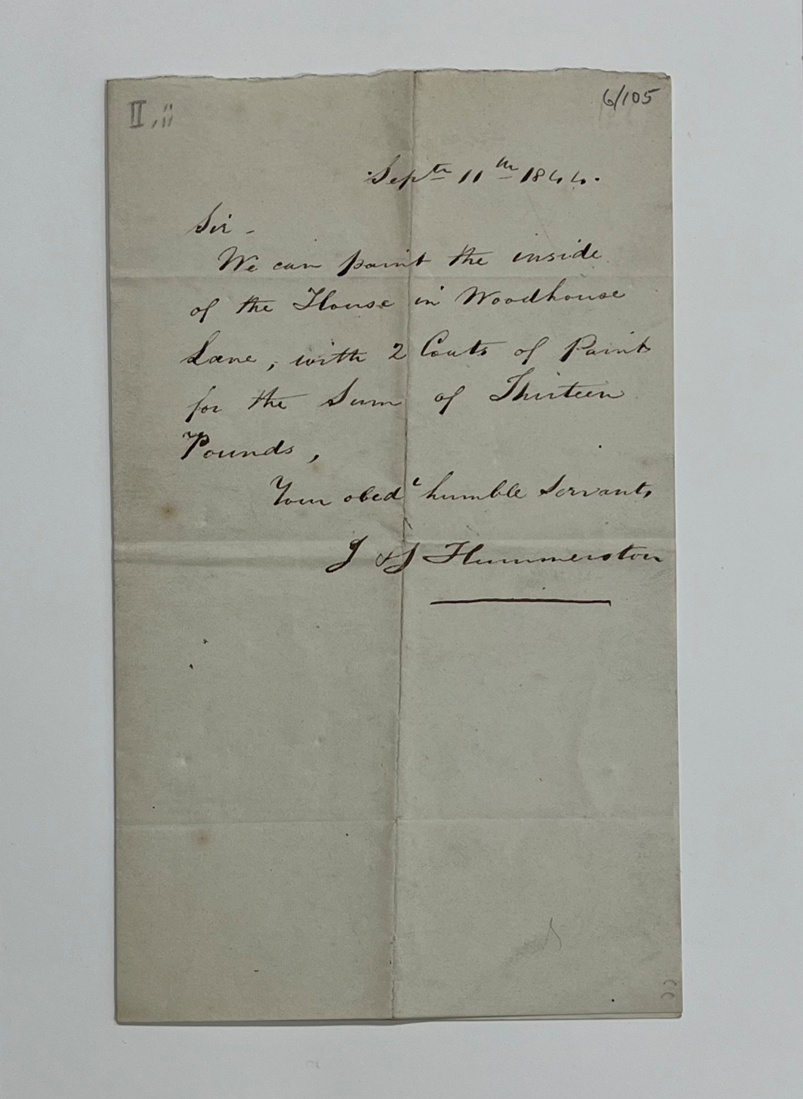
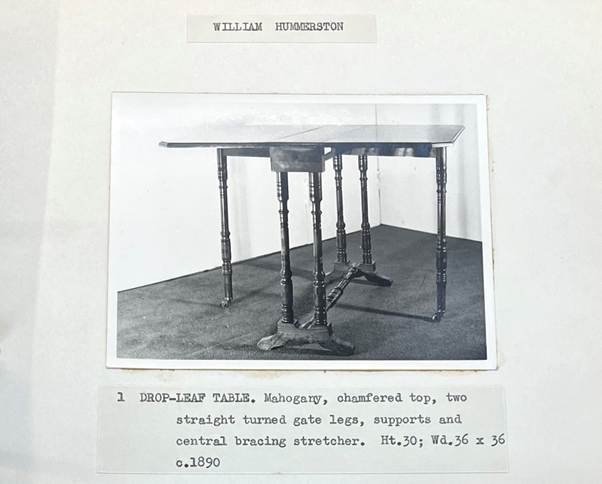
Her uncle William was a cabinet maker and her father was a painter decorator – endearingly written as ‘painter of this city’ on the family headstone. Together, along with Maud’s grandfather John and other uncle Henry, they had a business named the ‘Hummerston Brothers’. There is evidence of the firm painting William Gott’s house (relation to the Gott bequest of Leeds Libraries donated by Beryl Gott), Leeds City Music Hall and Harewood House, as well as refitting rooms at Temple Newsam House for then resident, Emily Meynell Ingram.
Maud was employed by the library service from 1910, with the 1911 census stating that she worked as a Library Assistant. From 1912, she was employed at Armley Library as ‘Chief Storyteller’ where she read books to children, beginning our now beloved ‘story & rhyme’ sessions. She begins to contribute to The Library Assistant magazine, first in 1912 with the article ‘The Art and Practice of Story-telling to Children’. In this she writes that story telling is an ‘ancient form of artistry’, as story tellers have the gift that they can know a story, ‘not by rote, but by heart.’[3]
In 1920, she is in the Yorkshire Evening Post describing awkward questions asked by children, such as ‘where does dirt come from?’.[4] She writes that she must ponder whether to tell the child there is no such thing, but just ‘matter in the wrong place’. In another article in the same paper, she is praised by the reporter for instilling a sense of respect and care for books amongst children. The reporter attends one of her talks, where she supposedly brought along a Caxton Press manuscript, to demonstrate the history of printed books.[5] It is delightful that Maud acknowledged the value of bringing along one of the oldest and rarest of books to inspire young people. By 1924, she is reported to have read over 460 stories to 36,670 children across the city.
The same year, Maud began working for a new radio station covering Leeds and Bradford called 2LS. Here, she was nicknamed ‘Auntie Nora’ for her programmes reading to children. She was also employed to talk on what were deemed ‘women’s’ topics’, one titled ‘The Art of Shopping’.[6] It is evident Maud was also an avid amateur historian, presenting features on English furniture history, rare books and Leeds folklore. The Science and Media Museum in Bradford holds many items relating to her, including diaries and scrapbooks of her experiences, as well as lots of family memorabilia.
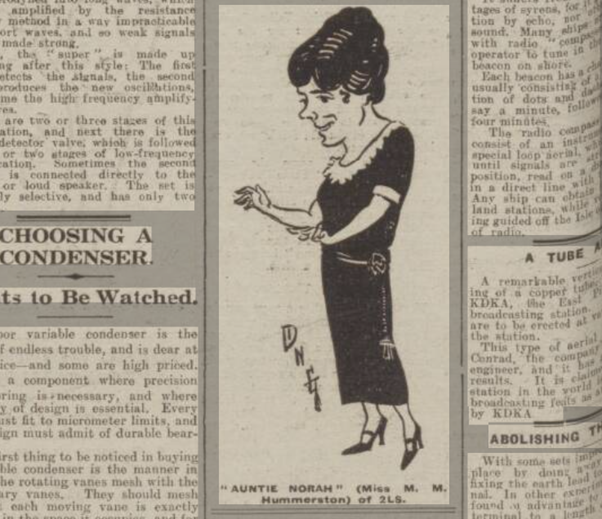
She was eventually dropped from radio, as she spoke in her native Yorkshire accent. Her accent led to complaints from parents that they ‘did not pay wireless licenses to have their children listen to the Yorkshire dialect.’[7]
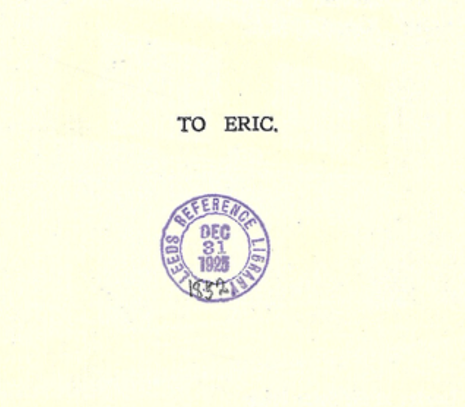
In 1925 Maud wrote a book titled The Battle of Briggate detailing the civil war event of the same name (often called the Battle of Leeds) in 1643. The book is dedicated to her brother Eric, who passed away in combat. It is a delightful and accessible retelling of a now forgotten time of Leeds’ history, accompanied by essay prompts in the back, as well as advice on how to make civil war models.
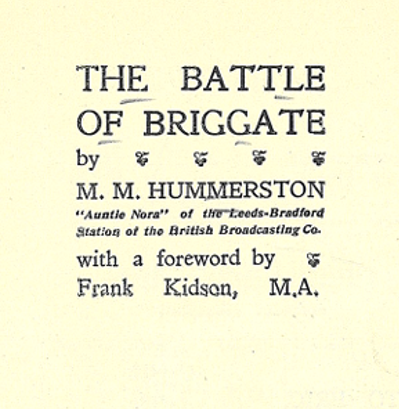
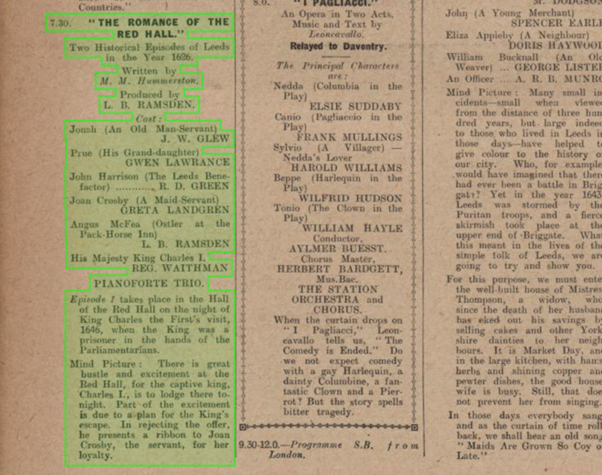
The last page of the book hints at a soon to be published work, ‘The Romance of the Red Hall’. Red Hall was a place Charles I was imprisoned before his capture in 1647, a building which has since been demolished, being the site of the now also demolished Core shopping centre. It is unclear whether this was ever published as a written manuscript, but a year later it appeared as a radio drama on 2LS. Maud is being researched in conjunction with Leeds400 celebrations, marking the quatercentenary of Leeds becoming a city in 1626. Maud’s ‘Red Hall’ programme was part of Leeds tercentenary celebrations exactly 100 years before, in 1926. Another programme for these celebrations by Maud was evocatively titled ‘Leeds Roads: Past and Present.’
As well as these radio programmes and published book, Maud wrote many journal articles about the role of librarians. These include ‘Public Library Work with Children and Young People’ in The Year’s Work in Librianship, which details an a-z list of libraries across the world, noting what they are doing or need done in relation to children’s reading.[8] It also includes writing about possible links between libraries and schools, which we proudly have now in our School Library Service.
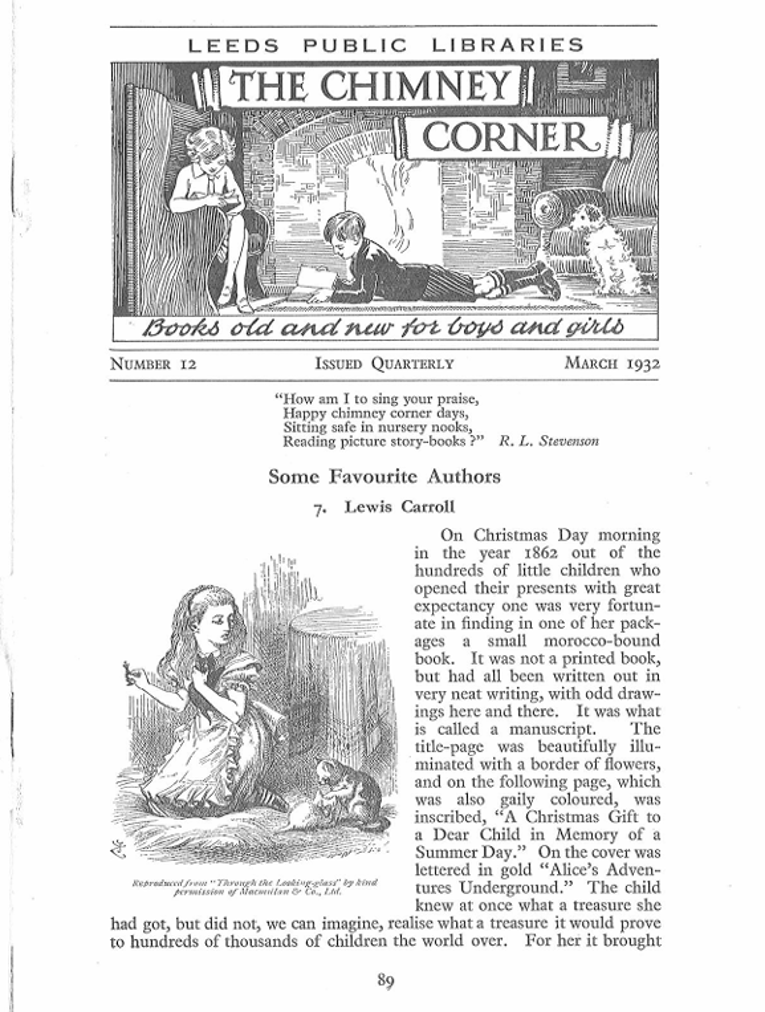
From 1927, she was employed as the Children’s Librarian, which she worked as for another two decades. She remained dedicated to the lives of children and cared deeply for the pursuit of literacy and reading skills. She regularly read out to children during library sessions across the city, creating her own glove puppets and watercolour illustrations to go with her talks.[9] She also created the children’s library bulletin, named the ‘Chimney Corner’ which recommended old and new books.[10] Further, Maud wrote plays for and performed by children in the library, such as ‘The Blue Bird Among the Books’.[11]
She evidently had a presence amongst academic librarian circles, taking over as honorary secretary for the Library Assistant magazine during the First World War. Maud was involved in organising and chairing conferences, such as the Library Association annual conference in 1934, whereby she set up the ‘Circle of Library Workers with Children’.[12]
In 1972, she wrote in the Yorkshire Post reflecting on her career, titled ‘Through the Pages of Time’. A year later, she was also featured in the Yorkshire Evening Post, titled ‘Thanks to a Boy with No Boots’. She writes that ‘The greatest compliment ever paid to me was by a boy of about 12 who had enjoyed one of my stories so much at Holbeck library that he borrowed a pair of boots from another boy and walked in the rain to Dewsbury Road library to hear it again.’
She reflects on the role of libraries during war time, as a place of refuge and comfort to children. She also talks fondly of her time on radio, ‘taking children on imagined trips into the Yorkshire countryside’. The interviewer describes her as an ‘independent lady of strong character’, who persevered through the challenges of being a woman in a male dominated industry. Beginning her time for Leeds Libraries in 1910, Maud was discouraged by her manager to take the library examination, as he stated there were no opportunities for women in the service. But, thank goodness Maud never listened to that advice and pursued her library career. The city will be forever grateful that she was able to inspire generations of young people and create a legacy in Leeds that prevails today in all our children’s library services, activities and programmes.
Did you know Maud Hummerston? Please get in touch with the library at localandfamilyhistory@leeds.gov.uk
If you are interested in learning more about Maud and her publications, a folder of information is available to view in the Heritage & Research department of Leeds Central Library.
And we’re delighted to announce that our Children’s Library team have recently published a special one-off edition of The Chimney Corner to celebrate Maud and to mark Leeds400. Please click the link to download, print and circulate The Chimney Corner 2026.
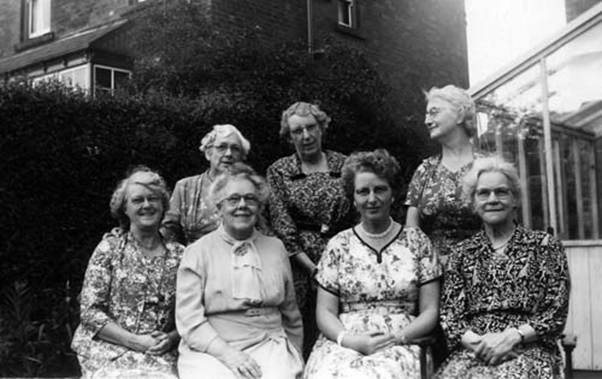
[1] ‘Thanks to a Boy with No Boots’, Yorkshire Evening Post. 29th October 1973.
[2] This can be found in the Science and Media Museum (Bradford) archive: Selection of documents relating to Maud Hummerston | Science Museum Group Collection
[3] ‘The Art and Practice of Story-telling to Children’, The Library Assistant (1912).
[4] ‘Awkward Questions Asked by Children’, Yorkshire Evening Post. 25th November 1920.
[5] ‘A Teller of Stories to Leeds Children’, Yorkshire Evening Post. 16th January 1924.
[6] See more of her radio programmes in the BBC programme index: Search – BBC Programme Index.
[7] See more about 2LS in this Secret Library blog post: 2LS calling: When the Wireless Came to Leeds – The Secret Library | Leeds Libraries Heritage Blog.
[8] ‘Public Library Work with Children and Young People’ in The Year’s Work in Librianship. Vol 2 (1929), p.138.
[9] ‘Through the Pages of Time’, Yorkshire Evening Post. 26th June 1972.
[10] ‘Leeds Publications’, Yorkshire Post. 12th September 1934.
[11] ‘Leeds Child Actors’, Leeds Mercury. 2nd January 1929.
[12] Library Association Record (1934), p.52. [PER 020.5 LIB].


Well done Rosaleen for such a well researched and well written blog on one of my favourite Leeds characters. It is so appropriate that Maud has made it onto the people of Leeds list. A true and doughty pioneer for women as librarians. For library services for children. Recognising that basement Juvenile Section in the Central Library of her early days was no place for children. So that in the1930s when Maud had some power and Leeds was able to build Carnegie branch libraries , she ensured that they were all had bright, airy spaces for children. I like to think that Seacroft Library (1939) with its Children’s Corner and had an, at that time revolutionary , free standing electric heater was her peak achievement.
As you would expect of a pioneer, she embraced change, social and technological. In her story sessions with children across Leeds she was an early adopter gramophones and lantern slides. So it should be no surprise that within two years of the 2LS wireless station coming to Leeds she took her story telling skills to the airwaves. As Rosaleen, points out though she later lost her fight against prejudice towards regional accents.
When, in 1912 ,her first boss said to her that she should apply herself solely to the pursuit of matrimony , Leeds, its libraries, its once and future children and accent should be grateful that she ignored him completely.
What a wonderful article! Really glad to read about both the family and Maud herself. There must be many who never forgot the stories they heard as children. Hope there are plans to have a blue plaque or other memorial for her. Sent from my iPadOn 16 Jul 2026,