In today’s special post we’re welcoming Library and Digital Assistant Becky who has been working hard on researching a WWI photograph album, Material on the 7th and 8th Battalions of the West Yorkshire Regiment (Prince of Wales’s Own) during the 1st World War . If you think you could help us with finding out more about the locations or people in the photos do get in touch. Details of how to view the album are at the end of this post.
This album is one of my favourite library treasures. I first saw it when we put it on display for Armed Forces Day in 2023, and I’ve been a bit obsessed with it ever since. Beautifully bound with a marbled cover, Material on the 7th and 8th Battalions of the West Yorkshire Regiment (Prince of Wales’s Own) during the 1st World War (SRQ 940.41 MAT) is very special indeed.
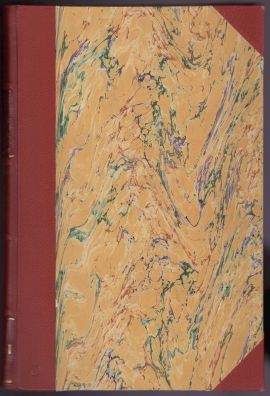
It’s a collection of mostly photographs but some ephemera including Christmas cards relating to who we tend now to call the Leeds Rifles. The title assigned to it is a little inaccurate because it contains items likely to be outside the 7th and 8th; and definitely covering a period greater than the 1st World War. We believe it was assembled as a collection by Dr Pat Morris. We have a couple of newspaper articles about Dr Morris which tell her story – her father had a very deep connection with the Great War Leeds Rifles which led her to try and connect with other veterans, recording their stories and collecting their memories. From this grew her 1983 PhD – Leeds and the amateur military tradition : the Leeds Rifles and their antecedents, c. 1859-1918. We have a reference copy of it in the department (LQ 356 MOR) it’s very interesting and although available online it has never actually been published. Some of the photos in the album appear in the thesis. What we don’t know is who assembled the album or when exactly. We know that it was created by the Library’s inhouse binding team thanks to the rose stamp on the binding. But we don’t know who chose the arrangement of the contents, or who supplied the small number of captions that accompany the material.
So what it is that makes this item so captivating?
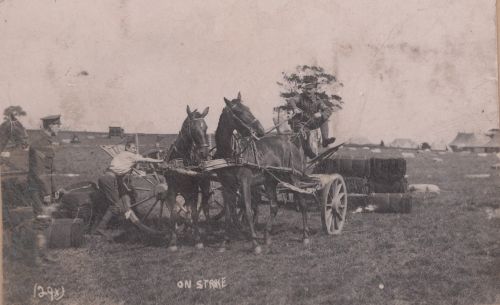
Many of these photos depict the Regiment at ‘play’. Regular camps and exercises took place for the Territorial Battalions to give the volunteers a taste of army life. The Yorkshire Evening Post ran a regular column of ‘Territorial News’ reporting on the results of shooting competitions so it was obviously something that mattered to the people of Leeds. Many aspects of camp life were competitive, with regiments competing to put on the best displays of marksmanship, music, catering, team sports and, judging by the pictures on page 17, transport circus horses.
Some of the pictures are formal, depicting inspections, parades, and formal groupings. But it’s the other ones I like, the more informal ones and the more you look at these, the more you see. Like on page 42, where if you look closely at the 15 men in mostly civilian clothes, you will notice that some of them have cuddly toys. In many of the group shots posed in front of tents, the subjects have taken their boots off, presumably just having had enough of wearing them. A group of 3 men on page 37 are captioned ‘The Highland Brigade’ – they appear to have attempted to fashion kilts out of their tunics. On page 20 a sleepy sergeant snoozes in a deckchair. On page 41 on the boat to the 1910 Ramsey camp 2 rufty-tufty soldiers are cooing over a tiny little kitten. The ‘doomed youth’ narrative is pretty pervasive when studying the Great War, and it’s not surprising, but seeing them having fun, enjoying being part of the territorials, it’s heartwarming, but as the same time, rather heartbreaking.
I’ve spent a lot of time with this album, and I’ve made an attempt at indexing it, but in all honesty, I just don’t know enough. Many of my entries read ‘formal group of men, some wearing side caps’. I don’t know enough to describe what I’m seeing. I really need to take it for a trip to the University of Leeds to compare it with the Liddell collection, but recently I did take it on a special outing. Because it’s in a modern binding it is pretty robust, had this album been made during the 1910s there’s no way it would ever be leaving the library.
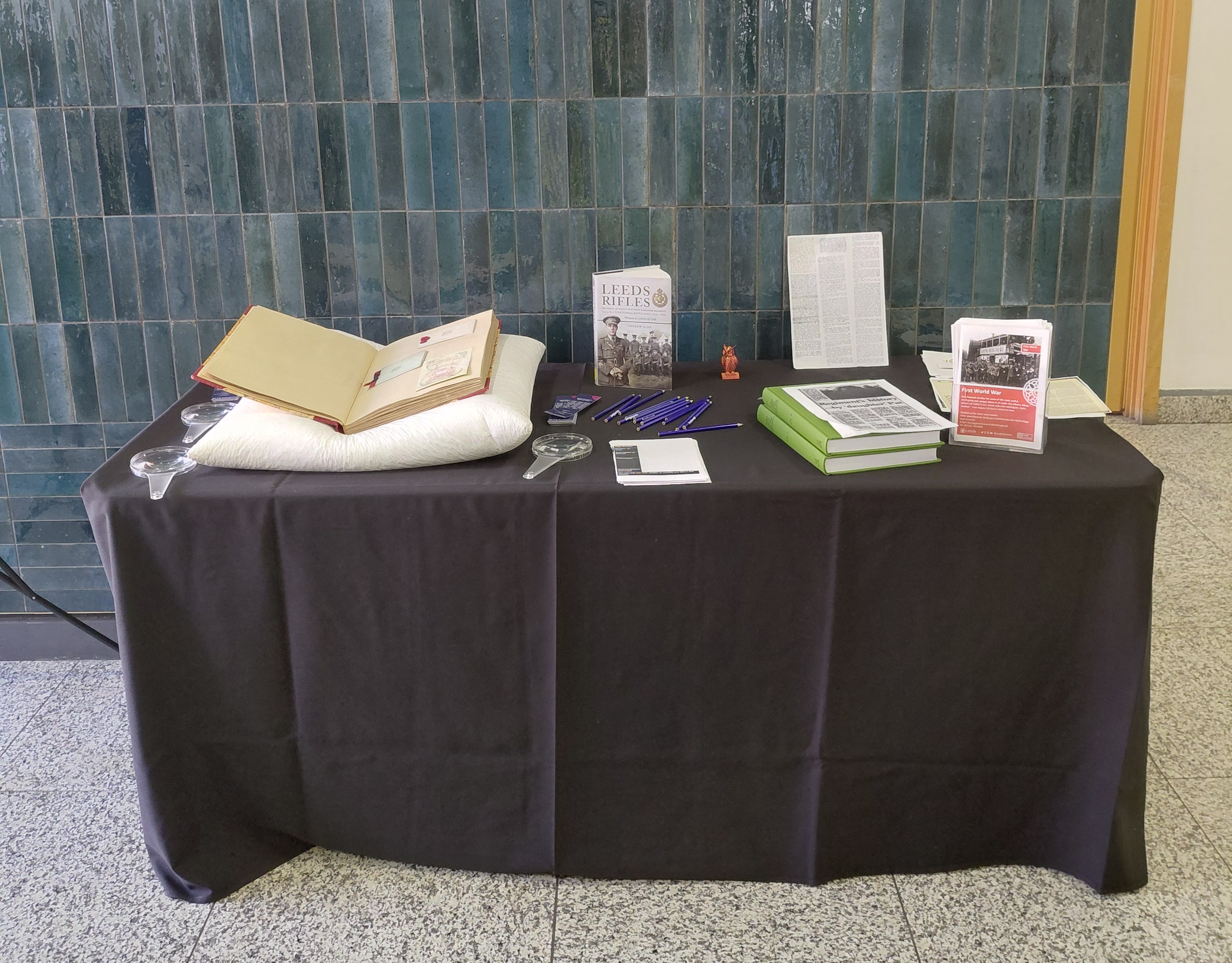
The Great War Group held its annual conference at the Royal Armouries in October this year. A group of both professional and amateur historians, they are a lively bunch whose collective knowledge of the Great War across the globe is astonishing. My aim was to share the album with a wider audience and see if anyone could help figure out what was going on in some of the photos. Thanks to their delegates we managed to identify the type of stoves they were using in some of the cookhouse pictures which might help to date them. A puzzlingly formal photo of someone who has received an almost fatal dose of first aid was identified as a First Aid Competition Display. Sadly, doubt was cast on one of my favourite photos which purports to show a trophy at Ypres – delegates thought that the background of the picture depicted an environment at odds with the swamp that it really should have been; which suggests it might be a staged photo.
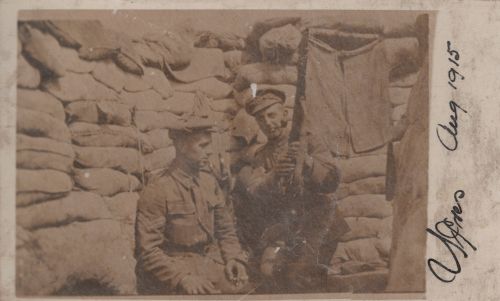
But probably the best moment was when someone found their great grandad. The picture was a familiar one, so it wasn’t a surprise, but because that picture can now be dated it gives me chance of finding out who the other people in the picture are. I was hoping that the Eighth Doctor might have some insight for me but Paul McGann was in a bit of hurry, with just enough time to grab a Leeds library card before he went.
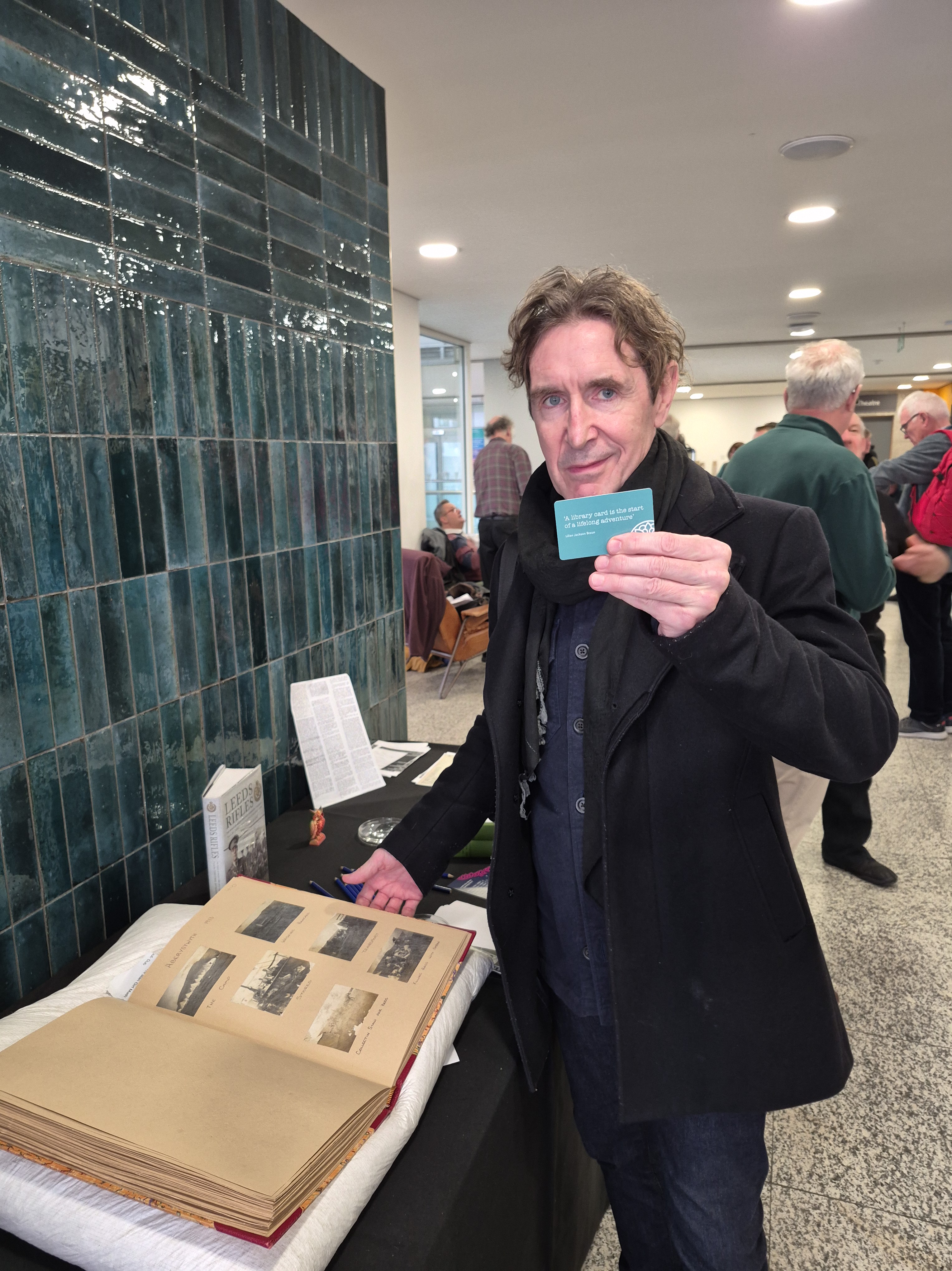
In a bid to share this wonderful artefact more widely, we’ve recently scanned it at a high resolution, and we’re making it available on Borrowbox in mid November – this post will be updated when the album is available with a link.
Members of Leeds Libraries will be able to borrow the album and look at it at their leisure by searching the title on the Borrowbox eBook section. Non-members of Leeds Libraries can join here: Become a library member |Leeds Libraries
Maybe some of you can tell me something new? I’d love to hear from you. You can contact the department on heritageandresearch@leeds.gov.uk if you can shed any light on our much loved album.

