Today’s blog post is by guest contributor Harriet Hicks.
Harriet Hicks is scientific writer and archive enthusiast from London who now lives locally. She has volunteered with the Dead Plants Society since January 2026.
It has been 400 years since Leeds town charter was first signed in July 1626, and the city has been the site of many important historical and cultural events since. With a rich social history, fascinating heritage sites and absorbing cultural institutions, dipping into local history always provides interesting facts or hidden gems worthy of a blog of their own.
Today’s hidden gem is a crowd favourite, John Grimshaw Wilkinson. Known as Leeds’ ‘Blind Botanist’, he would have celebrated his 170th birthday earlier this year. He has been the subject of a few blogs and articles recently, but this piece will delve a bit deeper into his remarkable herbarium and its connection to the area, and the volunteers involved in its care.
The Blind Botanist
In his youth, John Grimshaw Wilkinson (1856–1937) was a self-taught artist. He possibly sought to follow in the footsteps of his ‘second cousin’, the celebrated painter John Atkinson Grimshaw.[1] However, after losing his sight to rheumatic fever at age 22, Wilkinson, who had ‘always been much attracted by trees and plants’, dedicated himself to the study of botany.[1,2]
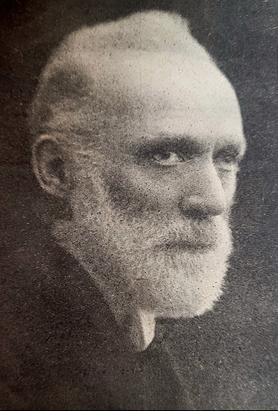
His mother, Theodosia Grimshaw Wilkinson, assisted his research ‘in every possible way’, from reading textbooks aloud, to helping him identify leaves by touch.[2] She also mounted and compiled his botanical specimens. Together, they created an extensive herbarium collection categorising native and cultivated specimens from Yorkshire and beyond. The impressive collection has a significant presence of plants from in and around Leeds.
Wilkinson’s keen senses and incredible memory meant there was ‘not a leaf, stem, fruit or flower of any plant or tree in the British islands which (he) did not know’. [1] Although a bold claim, he is thought to have classified over ‘1,800 British plants… 200 alien weeds, and 1,000 foreign trees’.[3] He is credited with helping the Leeds Park Service choose suitable plants and became President of the Leeds Naturalists Club and Scientific Society in the early 1900s. And, recognised for his extensive knowledge of systematic botany, Wilkinson was awarded an honorary Master’s degree by the University of Leeds in 1915. [4]
The Herbarium Collection
Wilkinson’s stunning collection came into the care of Leeds City Museum in 1982. As well as including common foliage from public spaces, gardens and private greenhouses, it contains a number of rare, endangered and/or poisonous plants. This is particularly noteworthy considering Wilkinson famously identified pants with his tongue.[1,3]
Part of the collection is currently being digitised by volunteers from the Dead Plant Society, a collaboration between Leeds Museum and Galleries and Space2, a social change charity based in East Leeds.
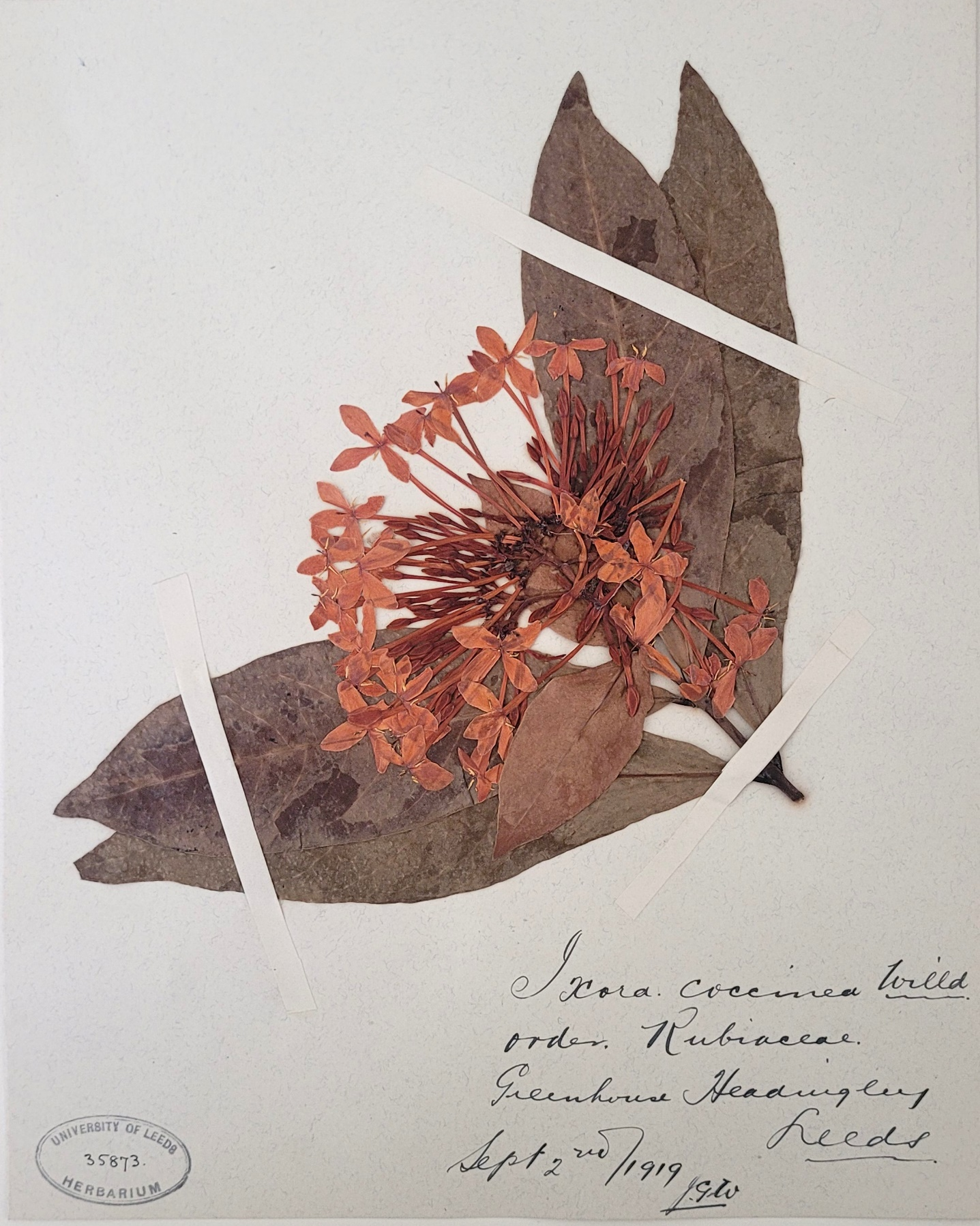
For those interested, each record has the following basic structure:
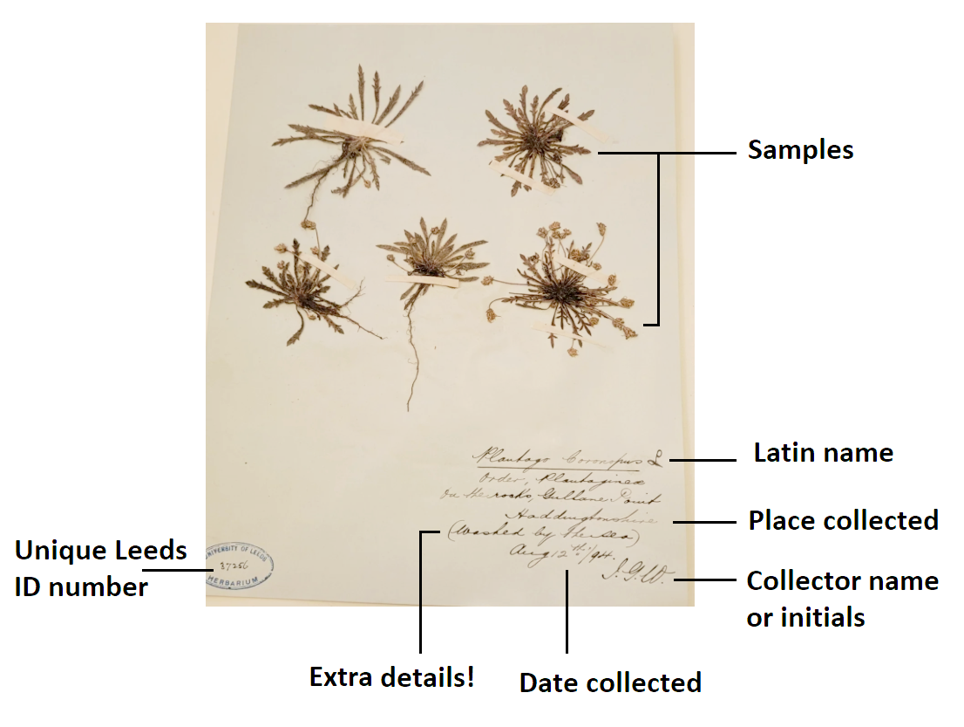
Volunteers manually transcribe all written details on a record, assessing the specimen for physical damage or signs of mould, and logging anything that requires attention. A photograph is taken as a digital reference, and any uncertainties are researched. Cursive is beautiful but it can be difficult to read, and many places have changed names or now belong to a different county. And although Wilkinson did a lot of excellent work, plants are still notoriously difficult to classify. On top of having scientific or Latin names, that were themselves historically used interchangeably with other plants, there are also regional or colloquial synonyms to consider. Even today, botanical naming systems are changing regularly as the science continues to advance and our understanding of familial and geographic relationships expands.
Any extra findings (e.g. potential plant name changes or addresses that no longer exist) are logged. These details are verified by staff members or senior volunteers who then add the information to the museum collection database.
Unbe-leaf-able connections
Whilst rooting around in the herbarium, it is easy to be transported back in time and to wonder about the social, temporal and geographical contexts of each specimen.
How has the surrounding landscape changed since they were collected? Can this plant still be found there? Has climate change affected its growth, or is it faring better now than in the swing of the second Industrial Revolution?
Or simply, wouldn’t it be interesting to see where it was growing? To experience what the collectors may have seen as they strode across windswept Dales, or plucked foliage from a crumbling church wall? In the case of this particular herbarium, we can! Or, at least partially, and if you know where to look!
Luckily, by the 1870s (when some of the earliest herbarium records in this collection had been created), commercial cameras had also been around for a few decades. Leodis.net, managed by Leeds Libraries, is a searchable photographic archive of over 75,000 digital images of the city and surrounding areas going back centuries. Physical copies of these images are stored in Leeds Central Library, and have been digitized over the years by staff, with some assistance by volunteer groups. Excitingly, digitising the herbarium means links between the two collections can now be made. Whilst we can never truly know what the collectors saw, invaluable photographic archives can provide a rough idea.
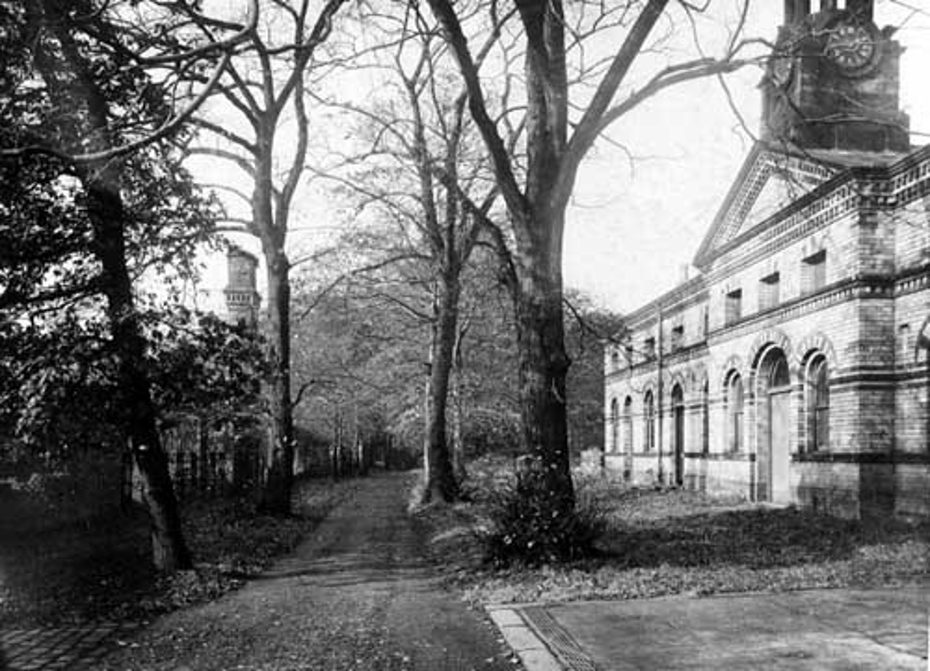
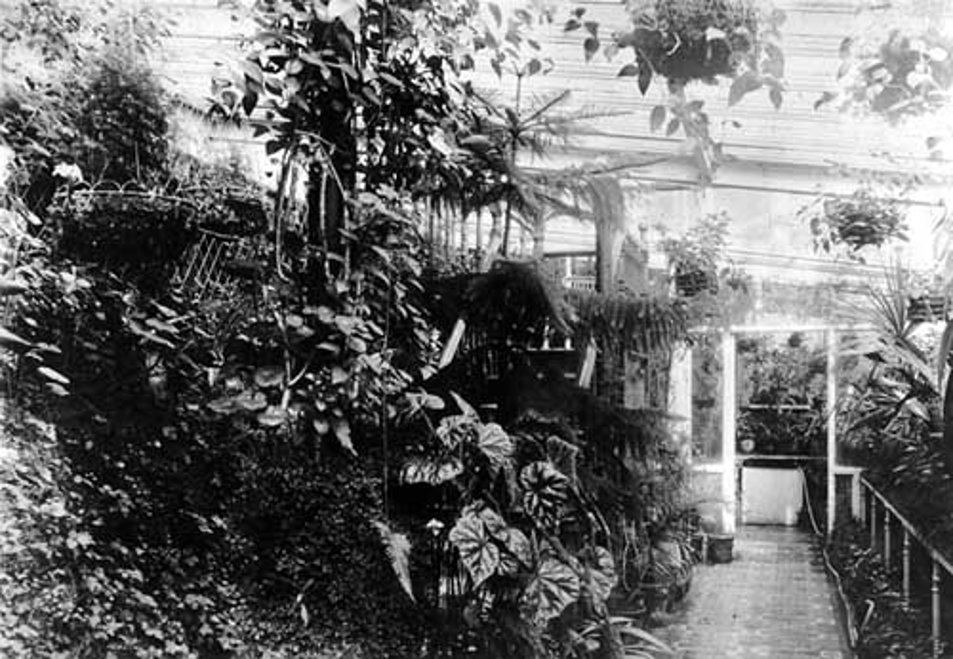
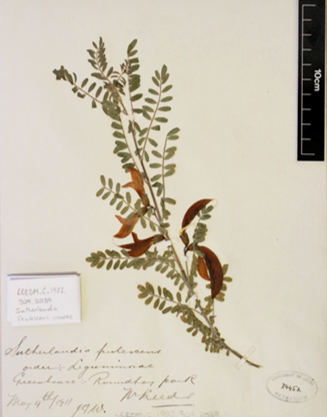
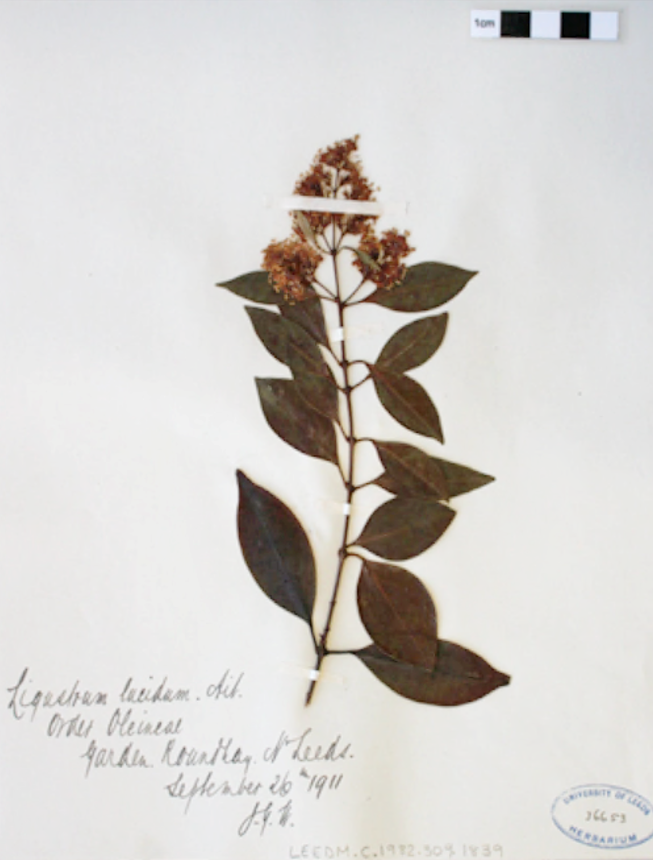
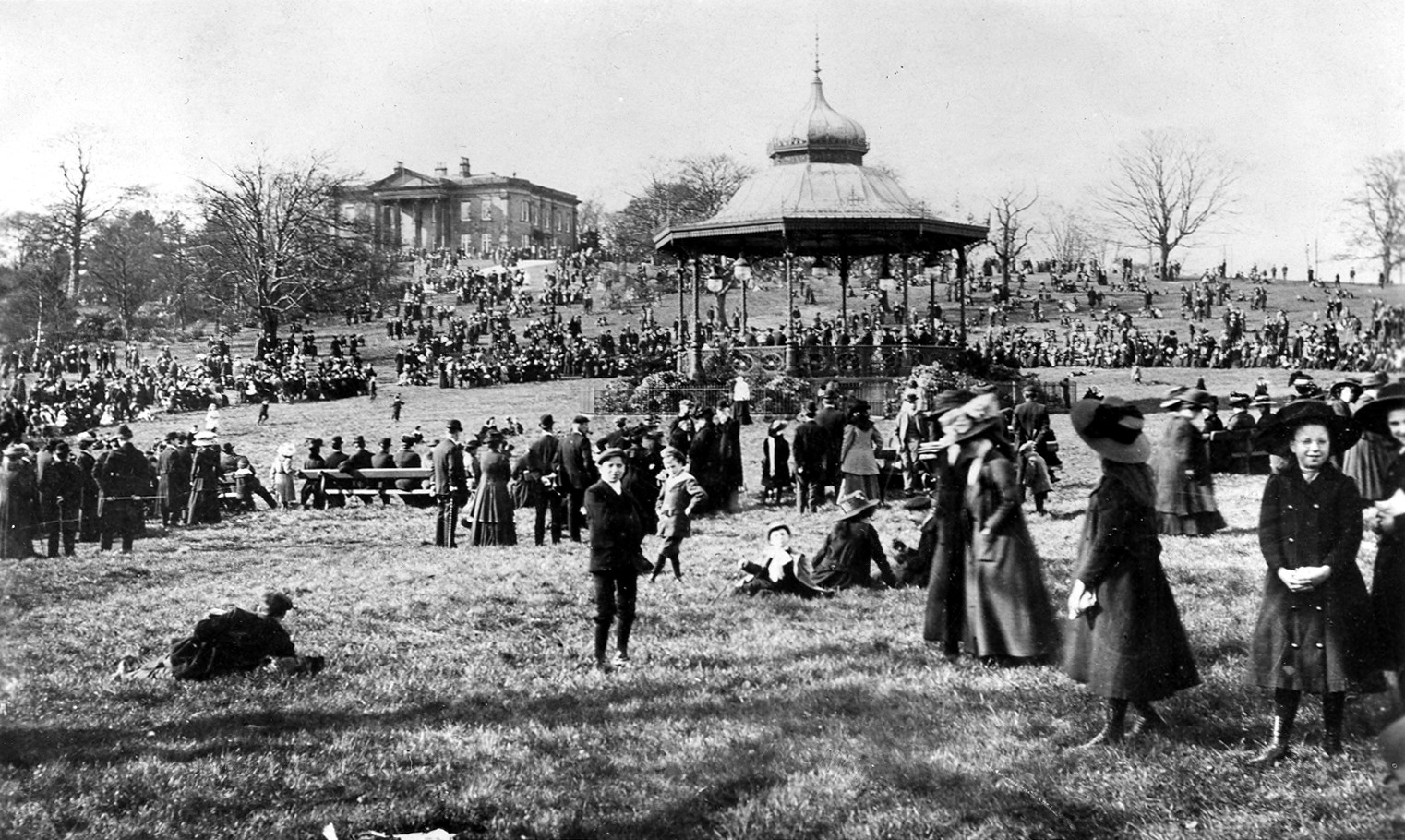
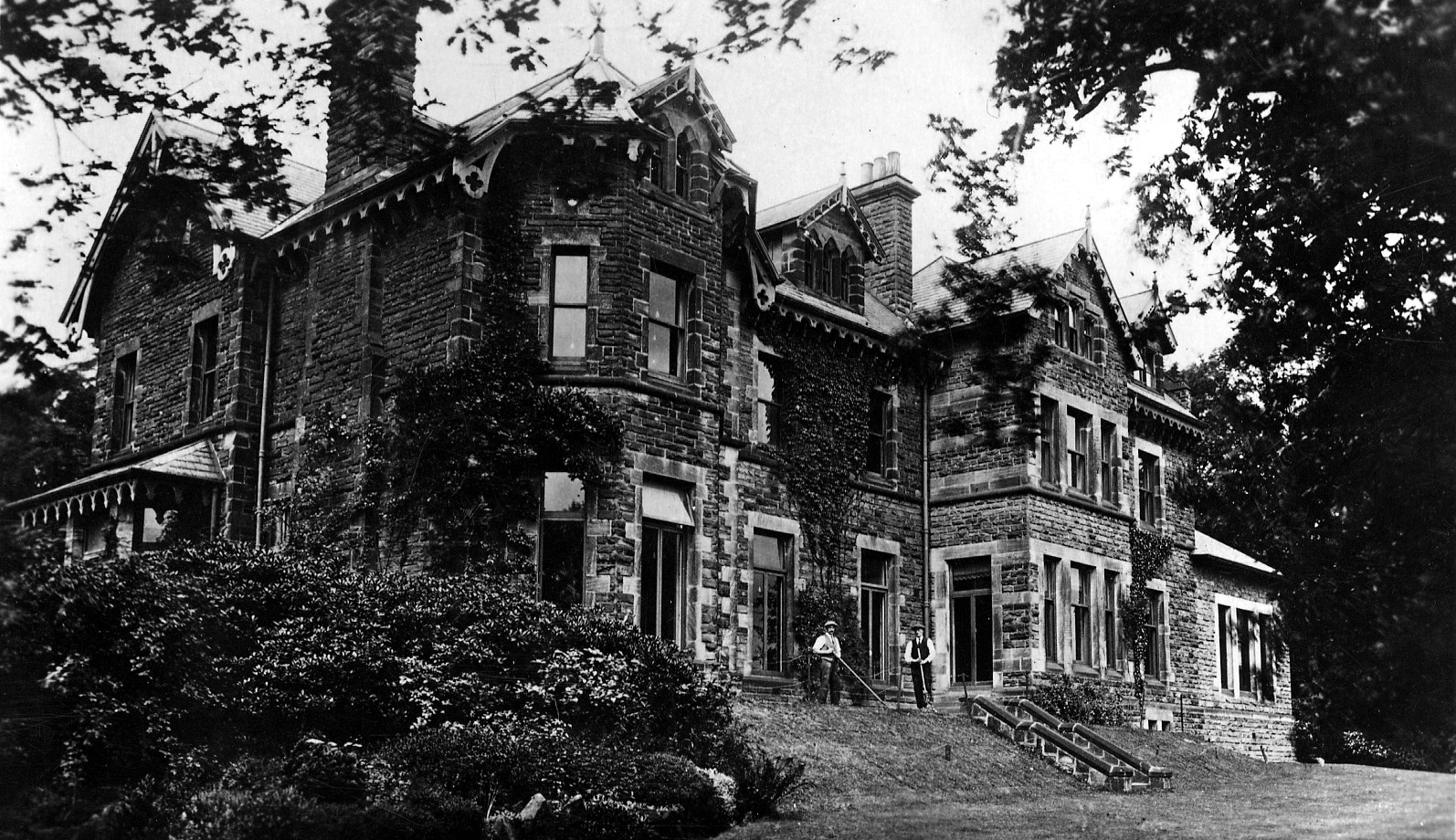
Below are a few interesting specimens from Leeds Museum and Galleries, with corresponding images of the locations they were collected in from the Leodis photographic archive. The images have been paired within +/- 1 year from the listed collection date.
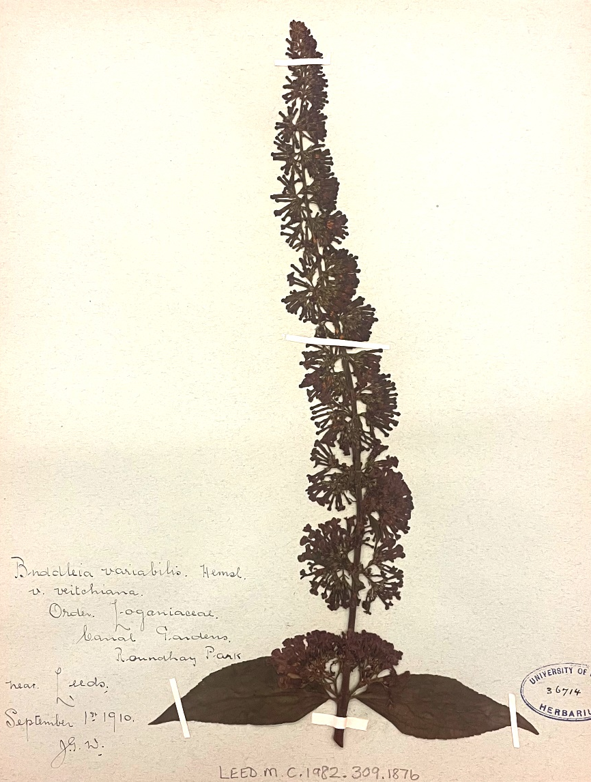
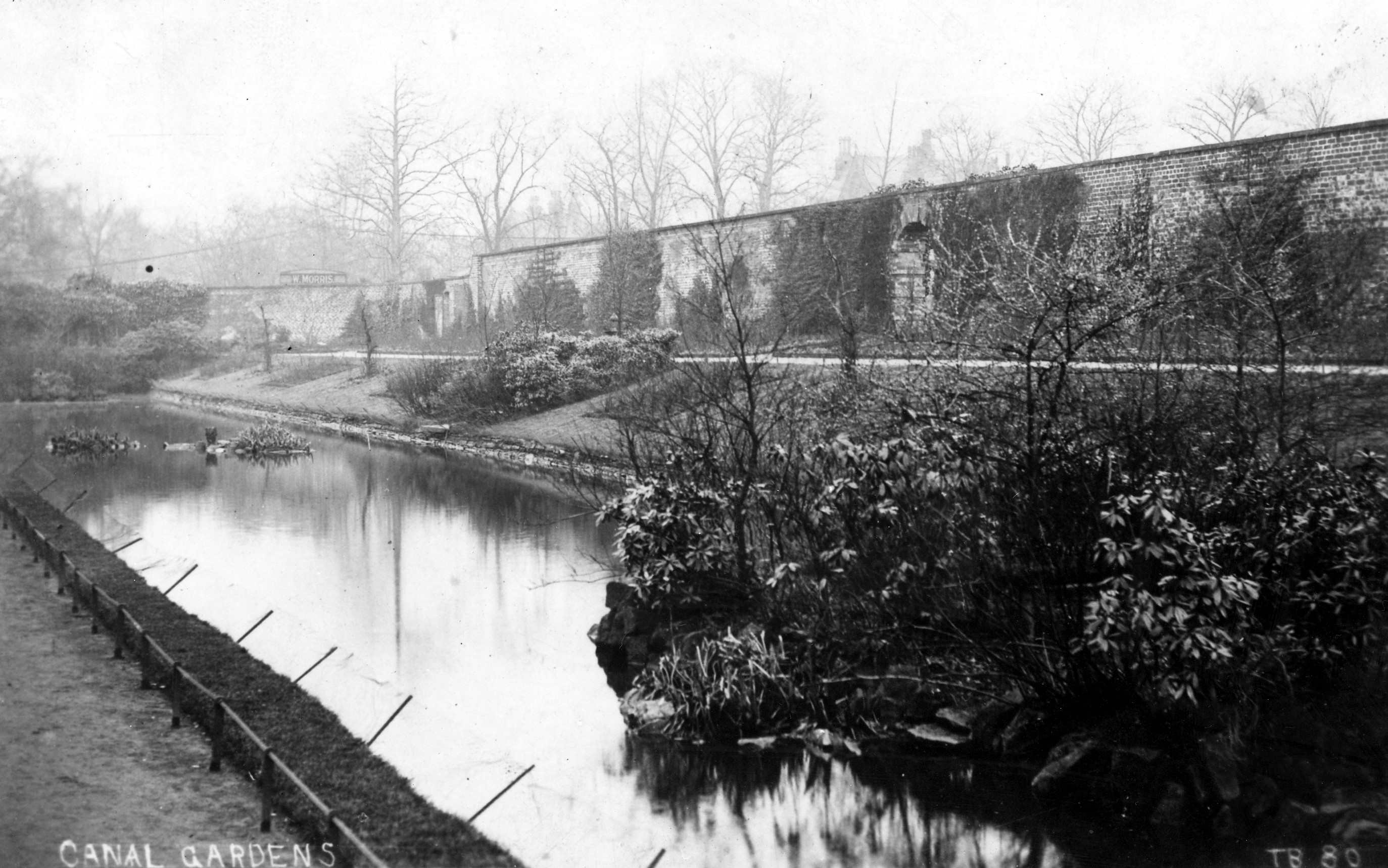
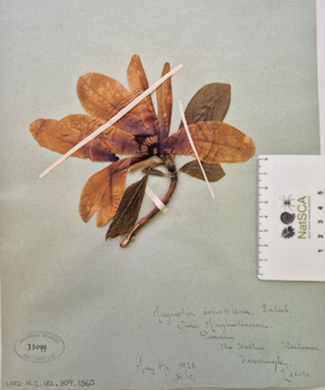
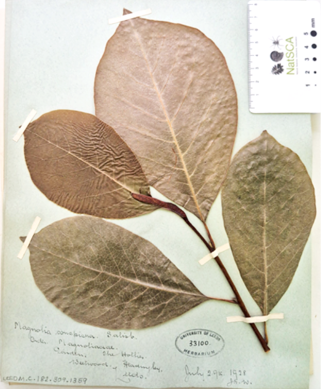
Magnolia (Magnolia conspicua) leaves collected from the garden of The Hollies, Weetwood, Headingley on 17th May 1928 (Left) and 29th July 1928 (Right). © Leeds Museum and Galleries
Museums & Archives – Truly pressed for time
There are dozens more archival photographs matching the herbarium records within 2-5 years of the collection date. Finding these required manually searching through 5000 records by location and keyword, but it is worth noting that there are likely many more that have gone under the radar. Scores of images on Leodis have no known searchable information (‘metadata’ e.g. subject or date taken) and so would not have come up in the initial search.
There are undoubtedly more links to be made! However, there is neither the time nor the funding. Simply maintaining, digitising and linking these collections would be a full-time job, so additional research to identify individual images just isn’t feasible. This is where volunteers and ‘citizen historians’ come in.
There is an ongoing call for people who have grown up in and around Leeds, or know people who have, to contribute identifying information. For some images in the collection, collective memory and people-powered research may be their only hope for being contextualised.
Volunteers also often perform core services, from object handling and care, to running educational workshops and wider social engagement initiatives. Using the example of digitisation, it is vital, and it is a phenomenal amount of (enjoyable!) work. Digitisation helps to preserve these fragile artifacts from wear, handling damage, and disasters such as floods or fires, whilst making them more readily accessible by researchers and curators. It is a crucial part of longevity, and is a great example of just how many people it takes to help cultural institutions achieve their mission to educate and inspire.
Since May 2025, the Dead Plant Society has digitised nearly 1500 records. There are over 250,000 botany records in the Discovery centre, so we only have a quarter of a million or so more to go!
Wilkinson as an observer
After losing his sight, Wilkinson found he was able to describe a scene he had painted three years earlier in detail. In interviews, he states that he could name a Beech tree by touch, using his tongue to feel ‘the margin of the leaves’ which were ‘covered with delicate hairs’.[1,3,7] Inspired, he felt he had ‘found a new outlet for (his) artistic learnings’ and the rest is history.[3]
To some, Wilkinson’s achievements represent making lemonade from life’s lemons, but others may take most inspiration from his ability to observe. William H. Bragg, the Nobel prize-winning physicist, described Wilkinson as capable of ‘noticing things which we do not… through his curious sense of what is round him’.[7] Wilkinson was also described as ‘one who hears the voice of nature’, able to identify birds by their calls and, supposedly, the character of men by their handshakes.[4,7] His ‘acute and sensitive perception’ and ‘rare powers of deduction’ helped him to identify trees by the unique sounds they created in different seasons, or what walls were made of by how they radiated heat.[2,7]
“If I feel a poppy leaf on a hot July morning, it feels cold, but if I feel a leaf of London pride at the same time, it is quite warm, although the plants may be within a yard of each other. When I touch anything, I notice whether it is warm or cold and then ask myself why”.[7]
Wilkinson’s dedication to questioning the world around him honed his ability to observe without seeing, helping him to see patterns beyond the superficial. This, ultimately, helped him to prove geographic and genetic relationships, fixing incorrect botanical classifications.[1] His ability to ‘look beyond’ (for want of a better phrase) sets him apart from his contemporaries, and enables us to have these explorative moments with his collection today.
As Leeds embarks on the next 400 years of its incredible history, let us make a conscious and collective effort to record it thoroughly, never losing our ability to notice our surroundings or to ask ourselves ‘why’.
And, next time you find yourself out in Leeds (particularly in the Roundhay Park area), please spare a thought for John Grimshaw Wilkinson and all the trees he licked in the name of botanical classification.
Author’s Note: If you are interested in volunteering your time, please find the contact details for some of the organisations mentioned in this blog in the Extra Reading section. Alternatively, if you have memories of Leeds which could help contextualise images on Leodis.net, please check out the archive and leave a comment on the relevant images. Every detail, however small, is invaluable and can help stir memories in other people.
References:
(*) denotes physical copies in the Leeds People collection of Leeds Central Library.
1. Wade, G. ‘The new hope for the blind – An interview with Mr. John G. Wilkinson‘, Great Thoughts, Yorkshire Evening Post, [No date, c.1920].*
2. ‘The Blind Botanist’, Yorkshire Evening Post. 14 August 1906.*
3. ‘The Blind Botanist’, The Beacon, January 1926, Vol. X; pg. 9. Available at: https://archive.org/details/beacon910192526unse (Accessed 22 July 2026)
4. New York Botanical Garden. ‘John Grimshaw Wilkinson – The Blind Botanist: Home’, LuEsther T. Mertz Library Plant & Research Guides, 01 July 2026. Available at: https://libguides.nybg.org/c.php?g=1538956 (Accessed 22 July 2026)
5. Headingley Development Trust. ‘The Hollies in the Past‘, 2017. Available at: https://www.headingleyleeds.com/parks-hollies-past (Accessed 22 July 2026).
6. The Thoresby Society (6 February 2026) ‘Leeds’ response to children at risk of tuberculosis 1898-1960′ [Video] Youtube. https://www.youtube.com/watch?v=KPuOfmiX_cQ (Accessed 22 July 2026).
7. ‘Blind Botanist – Leeds Man’s Remarkable Powers‘, Yorkshire Evening News. 07 January 1920.*
Extra Reading & Resources:
- A blog by Callum Rushworth, Dead Plant Society Volunteer
- The Instagram page of the Leeds Dead Plant Society
- ‘Make your own herbarium sheet’ – An educational step-by-step resource for children (or fun adults) from the Royal Horticultural Society.
- Interesting organisations to visit, volunteer with or support:
- Space2
- Leeds Discovery Centre and other Leeds Museums and Galleries
- Friends of Beckett Street Cemetery
- Friends of Roundhay Park
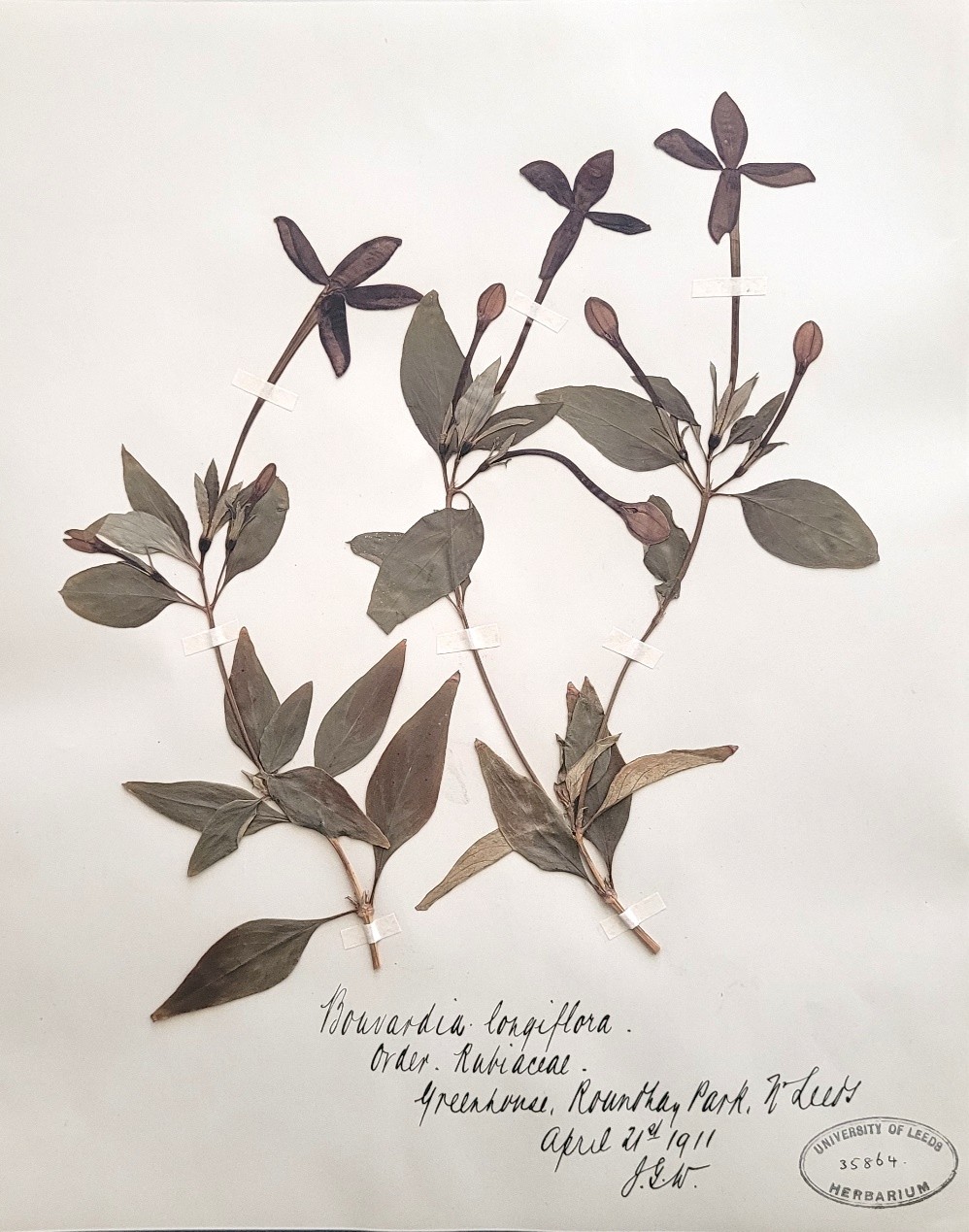
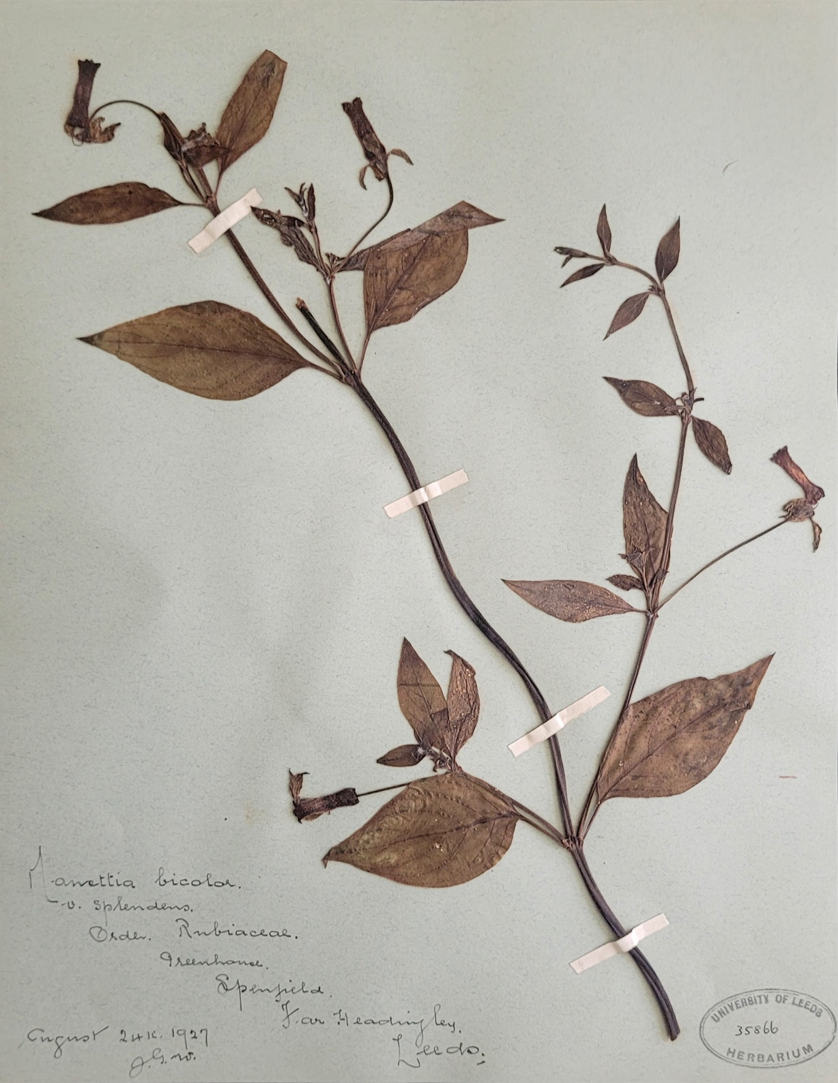
Just for fun – Some favourite herbarium images that don’t have a corresponding Leodis location image just yet. But they may do one day!
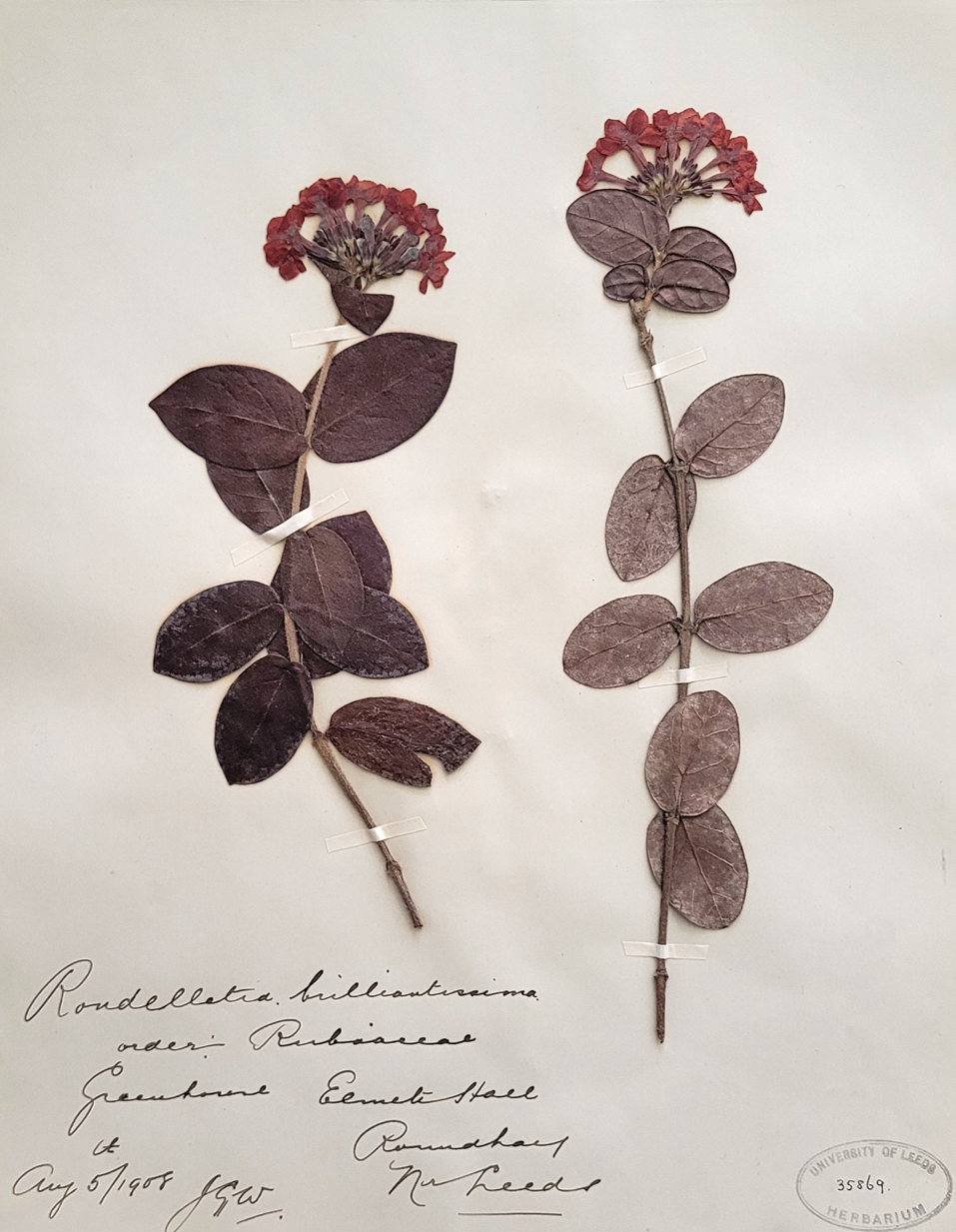
Panama rose (Rondeletia odorata, previously Rondeletia brilliantissima) collected on the 5th August 1908 in Elmete Hall, Roundhay. © Leeds Museum and Galleries